Email: info@mambogorillasafarisuganda.com | Call: +256772666331

How to Experience a Kenya Safari on a Budget

A Kenya safari is an unforgettable way to experience Africa’s wildlife, dramatic landscapes and rich cultural heritage. From watching elephants roam beneath Mount Kilimanjaro to searching for lions across the savannah, Kenya offers incredible wildlife experiences for travellers with different budgets.
The good news is that you do not need to book an expensive luxury lodge to enjoy a memorable safari. With the right destinations, affordable accommodation, shared transport and careful planning, you can experience a Kenya safari on a budget without missing the highlights that make the country special.
At Mambo Gorilla Safaris Uganda, we help travellers explore East Africa through wildlife adventures, primate experiences and tailor-made safari holidays. This guide explains how to plan an affordable Kenya safari, where to go, what to budget for and how to get the best value from your trip.
1. Choose Affordable Kenya Safari Destinations
One of the most effective ways to reduce your safari expenses is to select destinations that match your budget, travel time and wildlife interests. Visiting fewer parks can often provide a better experience than trying to cover the whole country in one trip.
Nairobi National Park
Nairobi National Park is a convenient option for travellers arriving in Kenya’s capital. Its proximity to the city makes it possible to enjoy a wildlife experience without immediately undertaking a long journey to a remote destination.
Visitors may see lions, giraffes, buffaloes, zebras and several other wildlife species, although sightings depend on conditions.
This park can work well for a short safari or as an introduction to Kenya before travelling to another destination. Check the current entrance fee and transport costs before deciding whether it fits your budget.
Masai Mara National Reserve
The Masai Mara is famous for its lions, cheetahs, elephants, other wildlife and the annual wildebeest migration. It is a rewarding destination, but it is not automatically the cheapest choice, especially during busy travel periods.
To make a Masai Mara safari more affordable:
- Join a shared group safari instead of hiring a private vehicle.
- Compare camps and lodges outside the reserve with accommodation inside it.
- Consider travelling outside peak demand periods.
- Choose a realistic number of game drives and overnight stays.
- Confirm whether park or reserve fees, meals and transport are included in your package.
The reserve is managed separately from Kenya Wildlife Service parks, so verify the applicable reserve fees and regulations when planning your trip.
Amboseli National Park
Amboseli is known for its large elephant herds and views of Mount Kilimanjaro when the weather is clear. It is an excellent choice for wildlife photography and travellers hoping to observe elephants in an iconic landscape.
However, park fees and travel expenses can make Amboseli more expensive than some alternatives. Compare the total package price rather than choosing a destination based only on accommodation rates.
Lake Nakuru National Park
Lake Nakuru offers scenic landscapes and opportunities to see rhinos, giraffes, buffaloes and numerous bird species. It can be a useful addition to a safari through Kenya’s Great Rift Valley.
For travellers with limited time, combining Lake Nakuru with suitable accommodation nearby may provide a manageable itinerary without requiring a flight between destinations.
Budget tip: Select one main wildlife destination and, if your time and finances allow, add one nearby attraction. A well-planned two- or three-day safari can be more satisfying than a rushed trip across several distant parks.
2. Travel in a Group to Share Safari Costs
Transport is an important part of the total cost of a Kenya safari. A private four-wheel-drive safari vehicle, guide and fuel can represent a substantial expense when the cost is paid by only one or two travellers.
A shared safari allows several guests to share eligible transport and guiding expenses. Depending on the operator and itinerary, this can make a wildlife trip more affordable.
Before booking a shared safari, ask:
- How many travellers will be in the vehicle?
- Is the vehicle suitable for game drives?
- Are park or reserve fees included?
- Are meals and accommodation included?
- How many game drives are planned?
- Is there a luggage limit?
- What happens if the minimum group size is not reached?
A low advertised price is not necessarily the best deal. Compare the full itinerary and inclusions before making a payment.
If you are travelling with family or friends, request a group quotation as well. Depending on the number of travellers, a private vehicle may offer better value or greater flexibility.
3. Choose Budget-Friendly Accommodation
Accommodation can make a major difference to your safari budget. Kenya offers a range of options, from luxury tented camps to simple guesthouses, budget lodges and campsites.
Kenya Wildlife Service confirms that accommodation options in its parks and reserves include public and special campsites, self-catering accommodation units and other facilities. Availability varies by location. Check the official accommodation information before booking.
Budget campsites
Camping can reduce accommodation expenses and provide a close-to-nature experience. Before reserving a campsite, confirm whether the fee covers only the site or also includes equipment, meals, showers, security and other services.
If you are visiting with children or have limited camping experience, check the facilities and safety arrangements carefully.
Budget lodges and guesthouses
A guesthouse or lodge outside a protected area may cost less than accommodation inside it. However, consider the additional driving time, fuel, transport arrangements and park access schedule.
An inexpensive room far from the park entrance can become a poor-value choice if it requires long daily transfers.
Tented camps
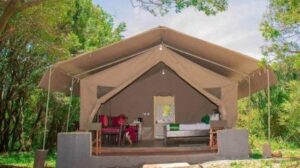
Budget tented camps can offer a safari atmosphere without the price of high-end luxury accommodation. Compare the level of comfort, bathroom arrangements, meal plans, location and included activities.
Money-saving tip: Ask for a package that combines accommodation, meals, transport and game drives. Compare its total cost against booking each component separately before deciding.
4. Travel During a Suitable Low-Demand Period
The time of year can influence accommodation availability, transport prices and the overall cost of your safari.
School holidays, major international travel periods and popular wildlife seasons can increase demand at some destinations. Travelling outside the busiest periods may give you more accommodation choices and better package options.
However, the cheapest period is not necessarily the best for every traveller. Weather, road conditions, wildlife movement and personal interests should also influence your decision.
For example, travellers hoping to see the Great Wildebeest Migration should research the expected wildlife movements in the Masai Mara and compare them with their available budget. The timing of wildlife movements varies, so sightings cannot be guaranteed.
Before confirming your travel dates, compare quotations for alternative dates and ask operators about seasonal differences.
5. Check Park Fees Before Booking
Park and reserve entrance fees are a major component of many Kenya safari budgets. The applicable charge depends on the destination, visitor category, age, activities and current fee schedule.
Kenya Wildlife Service publishes park fees and payment guidance through its official website and payment portal. The Masai Mara is administered separately, so its charges should be checked with the relevant reserve authority.
To avoid unexpected expenses:
- Identify every park or reserve on your itinerary.
- Check the current fee for your visitor category.
- Confirm the number of entry days.
- Ask whether vehicle charges and special activities are included.
- Confirm the payment method and whether advance booking is required.
- Keep receipts and booking confirmations.
Official information is available through the Kenya Wildlife Service website and its official park payment portal.
Do not rely on old blog posts for current park fees. Tariffs can change, so verify them close to your travel date.
6. Avoid Unnecessary Domestic Flights
Domestic flights can save time when travelling between distant safari destinations, but they can also add significantly to the overall budget.
If you have enough time, a road safari may provide better value, particularly when transport costs are shared among several travellers. It can also let you appreciate Kenya’s changing landscapes along the way.
Road travel is not always cheaper, however. Fuel, driver fees, vehicle charges, overnight stops and long-distance transfers all contribute to the final price.
When comparing road and air options, calculate the complete cost rather than comparing only the flight ticket with a vehicle transfer.
For a short safari, focus on destinations that can be combined efficiently. For a longer holiday, you may have more flexibility to include distant parks without rushing.
7. Pack Properly to Avoid Extra Expenses
Good preparation helps prevent unnecessary purchases during your safari. Bring practical items suited to the season and activities you have planned.
Consider packing:
- Comfortable walking shoes.
- Neutral-coloured clothing suitable for outdoor activities.
- A light jacket or warm layer for early morning game drives.
- A waterproof jacket during rainy periods.
- Sunscreen, a hat and sunglasses.
- Insect repellent.
- A reusable water bottle where suitable.
- Binoculars and a camera, if available.
- Personal medication and essential toiletries.
- A small day bag for game drives.
Ask your safari operator whether drinking water, laundry, charging facilities and other essentials are provided. Packing thoughtfully can help you avoid buying replacements at tourist-area prices.
8. Set a Realistic Kenya Safari Budget
There is no single price for a Kenya safari on a budget. The total depends on your destination, travel dates, number of nights, accommodation, group size, transport and visitor category.
Kenya Wildlife Service provides a broad indicative range for safari packages, but actual quotations can fall outside general estimates depending on the itinerary and inclusions. Treat any published figure as a starting point, not a guaranteed price.
Build your budget around the following expenses:
| Expense | What to check |
|---|---|
| International or regional transport | Flights, transfers and baggage charges |
| Safari vehicle | Shared or private transport, fuel and driver-guide |
| Park and reserve fees | Current charges for every destination |
| Accommodation | Number of nights, location and room type |
| Meals and drinking water | Included meals and additional purchases |
| Activities | Game drives and optional experiences |
| Visa and travel documents | Requirements for your nationality and route |
| Insurance | Appropriate travel and medical coverage |
| Tips and personal spending | Optional gratuities and souvenirs |
| Emergency allowance | Unexpected costs or itinerary changes |
Request an itemised quotation so you can see what is included and what you must pay separately. This is one of the best ways to compare safari operators fairly.
9. Sample Three-Day Budget Kenya Safari Itinerary
The following is an illustrative itinerary, not a fixed-price package. It demonstrates how to organise a short safari while limiting unnecessary transfers. Actual driving times and park access should be confirmed for your dates.
Day 1: Arrive in Nairobi and explore Nairobi National Park
Arrive in Nairobi and transfer to your accommodation. If your arrival time and park schedule allow, take a game drive in Nairobi National Park.
Look out for giraffes, buffaloes, zebras and other wildlife. Spend the night in a suitable budget guesthouse or lodge.
Day 2: Travel to Lake Nakuru National Park
Travel towards Lake Nakuru, enjoying the changing landscapes of the Great Rift Valley along the way.
After arriving and completing the necessary park arrangements, enjoy a game drive to look for rhinos, giraffes, buffaloes and birdlife. Stay at a budget accommodation option within a practical distance of the park.
Day 3: Morning game drive and return to Nairobi
Depending on your departure arrangements, enjoy an early game drive before returning to Nairobi.
This itinerary is best suited to travellers who want a short wildlife experience and are comfortable with road travel. If your main priority is the Masai Mara or Amboseli, plan a dedicated itinerary instead of attempting to include all these destinations in three days.
10. Common Mistakes to Avoid on a Budget Safari
A cheap safari can become expensive when important details are overlooked. Avoid these common mistakes:
Choosing the lowest price without checking inclusions: A quotation may exclude park fees, meals, transfers or game drives.
Trying to visit too many parks: Long transfers can increase fuel costs and reduce time spent watching wildlife.
Booking accommodation too far away: Savings on the room may be offset by additional transport expenses.
Ignoring seasonal demand: Popular dates may have limited availability and higher accommodation rates.
Leaving bookings until the last minute: This can reduce your choice of affordable rooms and suitable safari vehicles.
Failing to verify the operator: Confirm the company’s identity, contact details, itinerary, payment terms and cancellation policy before paying.
Underestimating extra expenses: Budget for personal spending, tips, insurance and possible itinerary changes.
11. Can You Combine a Kenya Safari with Gorilla Trekking in Uganda?
Yes. Travellers who want more than a traditional wildlife safari can combine Kenya’s savannah wildlife with gorilla trekking in Uganda.
A multi-country trip may include game drives in Kenya followed by a journey to southwestern Uganda for mountain gorilla trekking in Bwindi Impenetrable National Park. Depending on the itinerary, travellers may also add chimpanzee trekking or other wildlife experiences.
However, combining countries adds transport, accommodation, visa and activity costs. Gorilla permits are a separate expense, and availability should be checked before flights and other non-refundable arrangements are confirmed.
For inspiration, explore these Mambo Gorilla Safaris Uganda itineraries:
- 3 Days Gorilla Trekking in Bwindi
- 10 Days of Wildlife and Primate Trekking in Uganda
- 4 Days Bwindi Gorillas and Lake Mburo
Ask for a combined itinerary that fits your budget and travel dates. A well-planned route can help you balance wildlife experiences with the cost of moving between destinations.
Frequently Asked Questions About Kenya Safaris on a Budget
1. How can I experience a Kenya safari on a budget?
Choose a realistic itinerary, join a shared safari where suitable, compare budget camps and lodges, travel on flexible dates and confirm all park fees and package inclusions before booking.
2. What is the cheapest way to go on safari in Kenya?
There is no single cheapest option for everyone. A shared road safari with budget accommodation may reduce per-person costs, while a nearby park may be more affordable than a long trip to a remote destination. Compare the full cost of each itinerary.
3. How many days do I need for an affordable Kenya safari?
Two to four days can work for a short safari focused on one or two destinations. Longer trips allow more time for wildlife viewing but require a larger budget for transport, accommodation and park fees.
4. Is the Masai Mara suitable for budget travellers?
Yes, depending on your travel dates and choices. Shared transport and accommodation outside the reserve may help reduce costs, but reserve fees and transfers must still be included in your calculations.
5. Is camping cheaper than staying in a lodge?
Camping can be less expensive, but the final cost depends on campsite fees, equipment, meals, transport and facilities. Compare the complete cost rather than the nightly rate alone.
6. When should I book a budget Kenya safari?
Book early enough to compare accommodation, transport and tour options, especially if travelling during a popular holiday period. Check cancellation terms and confirm the availability of your preferred itinerary before making non-refundable payments.
7. Can I combine a Kenya safari with Uganda gorilla trekking?
Yes. A Kenya wildlife safari can be combined with gorilla trekking in Uganda, provided you allow enough time for cross-border travel and arrange the necessary documents, accommodation and gorilla permits.
Plan Your Affordable Kenya Safari with Mambo Gorilla Safaris Uganda
An unforgettable safari does not have to involve luxury accommodation or an unnecessarily complicated itinerary. By choosing suitable destinations, sharing transport, comparing accommodation and checking all fees in advance, you can experience Kenya’s remarkable wildlife while managing your travel budget.
Mambo Gorilla Safaris Uganda can help you explore options for a Kenya wildlife holiday or a wider East African adventure that includes Uganda’s gorillas and other primates.
Contact our team to discuss your preferred destinations, travel dates, number of travellers and approximate budget. We can help you plan an itinerary around your priorities and clarify what is included before you book.
Start planning your East African safari with Mambo Gorilla Safaris Uganda.


