Email: info@mambogorillasafarisuganda.com | Call: +256772666331

How Are Gorilla Families Organized? Understanding Mountain Gorilla Family Life

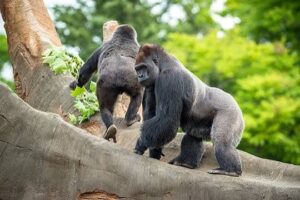
Mountain gorillas are among the most fascinating animals to encounter in the wild. When you visit Uganda for gorilla trekking, you may see a powerful silverback resting nearby, mothers caring for their infants, juveniles playing in the vegetation and other family members feeding or moving through the forest together.
But how are gorilla families organized, and what roles do the different members play?
Mountain gorillas live in social groups commonly called families or groups. These groups often include a dominant silverback, adult females, infants, juveniles and younger or subordinate males. However, family structures vary, and some groups contain several adult males rather than just one.
Understanding gorilla family organization makes a trekking experience more meaningful. Instead of simply observing a group of wild animals, visitors can begin to recognise the relationships, behaviour and social interactions that help mountain gorillas survive.
At Mambo Gorilla Safaris Uganda, we help travellers discover mountain gorillas in their natural habitat through guided trekking experiences in Bwindi Impenetrable National Park and Mgahinga Gorilla National Park.
In this guide, we explain how gorilla families are organized, the role of the silverback, how mothers raise their young, why gorillas sometimes leave or join other groups, and what visitors may observe during a gorilla trekking safari.
Quick Answer: How Are Gorilla Families Organized?
Mountain gorilla families are social groups made up of individuals of different ages and sexes. A typical family includes:
- A dominant silverback: The mature male who usually leads the group and plays a major role in its protection and movement.
- Adult females: Females that form important parts of the group’s social and reproductive structure.
- Infants: Young gorillas that depend heavily on their mothers.
- Juveniles: Growing gorillas that become increasingly independent and often engage in play.
- Blackbacks and subordinate males: Younger or other adult males that may remain in the group, challenge for leadership or eventually leave.
Some families have more than one silverback. Their size and membership can change through births, deaths, females moving between groups, and groups splitting or merging.
1. The Silverback: Leader and Protector of the Gorilla Family
The silverback is usually the most conspicuous member of a mountain gorilla family. His name comes from the silvery hair that develops across his back as he matures.
A male generally develops this silver colouring at around 12 years of age, although maturity and social status depend on more than appearance alone.
In many gorilla families, the dominant silverback plays a central role in group leadership, movement and responses to potential threats.
What does a silverback do?
Leads group movement: The dominant male often influences when the group moves, where it feeds and where it rests. Other family members may also influence movement through their own needs and behaviour.
Provides protection: A silverback may display, vocalise or position himself between the group and a perceived threat. His presence can discourage challenges from other gorillas.
Helps maintain social stability: The dominant male may intervene in conflicts and influence interactions among group members.
Reproduces with females: In many groups, the dominant silverback sires most offspring, although reproductive patterns vary, particularly in groups containing multiple adult males.
Do all gorilla families have only one silverback?
No. Many mountain gorilla groups are led by one dominant silverback, but some contain two or more adult silverbacks.
A subordinate male may remain in the family for an extended period. In some groups, the additional male is related to the dominant silverback; in others, the relationships are different.
The dominant silverback generally holds the highest social position, but the relationships among males can be complex.
For visitors, this means that seeing more than one silverback during a gorilla trek is possible, depending on the family assigned to the group.
2. Adult Female Gorillas: Mothers and Important Family Members
Adult female gorillas are essential to the survival and continuation of a family. They give birth, raise infants and participate in the group’s daily activities.
Female gorillas often move between groups during their lives. These movements can affect family membership and help maintain genetic diversity among mountain gorillas.
How do female gorillas join a family?
As females mature, some leave their birth group and join another family. Others may change groups more than once before settling.
Their movements can be influenced by reproductive opportunities, social relationships, the condition of a group and the presence of particular males.
When a female joins a new family, she becomes part of its changing social network. Her relationships with the silverback and other females can influence her experience within that group.
Do female gorillas have a social hierarchy?
Female relationships can include tolerance, close associations and competition. The exact pattern differs between groups and individuals.
Although the silverback often holds the dominant leadership position, females are not simply passive members of the family. Their movements and social choices contribute to the group’s composition and long-term stability.
During gorilla trekking, visitors may see females feeding, resting, grooming or staying close to their young.
3. Infant Gorillas: The Youngest Family Members
Infant gorillas are among the most captivating members of a mountain gorilla family. They depend on their mothers for nourishment, warmth, protection and early social learning.
Newborn infants generally remain very close to their mothers. As they grow, they begin to explore their surroundings while returning to their mothers when they need reassurance or protection.
How do mother gorillas care for their infants?
A mother carries and nurses her infant, keeps it close and responds to its needs. The infant gradually develops coordination and independence through movement, observation and interaction.
Young gorillas often learn by watching older members of the group. Their early experiences help them develop the physical and social skills they will use throughout their lives.
Can visitors see baby gorillas during trekking?
Yes, visitors may see infants when their assigned family includes young gorillas and the animals are visible during the encounter. However, sightings of particular individuals cannot be guaranteed.
Visitors must keep the required distance, remain quiet and follow the instructions of their guides. They must never attempt to approach, touch or attract an infant gorilla.
A mother and infant should be observed calmly, without interfering with their natural behaviour.
4. Juvenile Gorillas: Play, Learning and Growing Independence
Juveniles are older than infants but have not yet reached full adulthood. They are often among the most active members of a family.
You may see young gorillas chasing each other, climbing, wrestling gently, exploring vegetation or interacting with other juveniles.
Why is play important?
Play helps young gorillas develop coordination, strength and social skills. Through these interactions, they practise movements and learn how to respond to other group members.
Juveniles also learn by observing adults. Their behaviour can offer visitors a glimpse into how mountain gorillas develop within a family.
Do juveniles stay with their families?
Many young gorillas remain with their group as they mature, but their future depends on sex, social relationships and the family’s structure.
Females may eventually transfer to another group. Males may remain as subordinate members for a period before leaving or attempting to establish a group of their own.
The transition is gradual rather than a single event that happens to every gorilla at the same age.
5. Blackbacks and Subordinate Males: Future Leaders?
A blackback is a younger adult male whose back has not yet developed the characteristic silver colouring of a mature silverback.
Blackbacks are physically stronger and more mature than juveniles, but they may not hold the dominant position in their family.
What happens when a male grows up?
As males mature, several outcomes are possible. A male may remain within a family, become a subordinate adult, leave the group or eventually establish dominance in a new or existing group.
If a dominant silverback dies or loses his position, another male may take over. The outcome depends on the available males, their relationships and the circumstances surrounding the change.
Some families experience leadership transitions without splitting. In other cases, competition can lead to changes in membership or the formation of separate groups.
This is one reason gorilla family organization is dynamic rather than fixed.
6. How Large Is a Mountain Gorilla Family?
There is no single size that applies to every mountain gorilla family. Some groups contain only a handful of individuals, while others contain more than 20 or even 30.
Family size depends on births, deaths, transfers between groups, social changes and whether a family contains one or several adult males.
A group with a single dominant silverback and several females may have a different structure from a larger group with multiple silverbacks.
Why do family sizes change?
Gorilla families change naturally over time. New infants increase the number of members, while deaths and transfers can reduce or redistribute the group.
A large family may sometimes split into smaller groups. A male may leave with several members, or an individual may join another family.
For this reason, online lists showing the exact number of members in every habituated family should be treated cautiously unless they are supported by recent, reliable monitoring information.
7. Why Do Gorilla Families Split?
Gorilla families do not always remain together indefinitely. Groups may divide when social relationships, competition or leadership changes make a split possible.
Leadership changes
If a dominant silverback dies, becomes unable to maintain his position or is challenged by another male, the group’s structure may change.
In some circumstances, a successor takes over and the family remains together. In others, some members leave with another male.
Competition between males
In groups with multiple adult males, competition can arise over social position and reproductive opportunities. Depending on the circumstances, this may contribute to a family split.
Females moving between groups
Female transfers also change the size and composition of gorilla families. These movements are a normal part of mountain gorilla social life and help prevent close inbreeding.
Is a family split dangerous?
A split does not automatically mean that the entire group is in danger. It is a natural social process, although confrontations and leadership changes can carry risks for individual gorillas.
Conservation teams and researchers monitor habituated groups to understand changes in membership and respond when necessary.
8. How Are Gorilla Families Named?
Mountain gorilla families are given names so researchers, trackers, conservation authorities and visitors can identify particular groups.
Names may be associated with the group’s history, location, a notable individual or the circumstances surrounding its formation. Naming practices differ by area and group.
In Uganda, visitors may encounter names such as Mubare, Habinyanja, Rushegura, Bitukura, Oruzogo, Nkuringo and Nyakagezi when reading about gorilla trekking.
However, a family name does not guarantee that its membership or leadership remains unchanged. Births, deaths, transfers and group splits can alter a family over time.
For accurate information about a particular group, use current guidance from the responsible wildlife authority rather than relying only on an old family list.
9. How Are Gorilla Families Organized in Bwindi and Mgahinga?
Uganda provides opportunities to observe habituated mountain gorilla families in two national parks.
Bwindi Impenetrable National Park
Bwindi is divided into four main gorilla trekking sectors:
- Buhoma: Located in the northern part of the park and known for its established gorilla trekking history.
- Ruhija: A highland sector offering forest trekking and mountain scenery.
- Rushaga: In the southern part of Bwindi, with several habituated groups and the gorilla habituation experience under its specific permit arrangements.
- Nkuringo: A southern sector known for mountainous terrain and scenic views.
Different habituated families are monitored in these sectors. Their membership and availability can change, and visitors should confirm the current arrangements when booking.
Mgahinga Gorilla National Park
Mgahinga lies in Uganda’s Virunga volcanic landscape and offers another mountain gorilla trekking experience.
The Nyakagezi family is the park’s well-known habituated gorilla group. As with other families, its membership and social relationships may change over time.
Mgahinga can also be appealing to visitors interested in golden monkey tracking and guided mountain activities, subject to availability and park rules.
Which park should you choose?
Bwindi may suit travellers who want a choice of trekking sectors and opportunities to combine gorilla trekking with community experiences or forest activities.
Mgahinga may appeal to visitors who want to explore the volcanic landscape and potentially combine gorilla trekking with golden monkey tracking.
The best choice depends on permit availability, travel dates, transport, accommodation and your wider safari plans.
10. Can You Choose Which Gorilla Family to Visit?
This is an important question for travellers planning a gorilla trekking safari.
You should not assume that you can select a specific gorilla family in advance. The responsible park authority manages family allocation and trekking arrangements, and the family you visit depends on the rules and availability in place for your travel date.
Allocation may take into account factors such as permit arrangements, the location of the groups, the day’s operational plan and visitors’ abilities where relevant.
If you have a preference for a particular sector, discuss it when arranging your permit and accommodation. However, a preference for a sector is not a guarantee that you will visit a named family.
This is particularly important when booking accommodation. Bwindi’s sectors are spread across a large area, so your lodging should be arranged around the confirmed trekking location.
11. What Can You Learn About Gorilla Families During a Trek?
Gorilla trekking is more than an opportunity to take photographs. It can also help visitors appreciate how a social group behaves in its natural environment.
During your encounter, you may observe:
- A silverback resting or moving with the group.
- Mothers feeding or caring for infants.
- Juveniles playing or exploring.
- Family members feeding on vegetation.
- Grooming and other social interactions.
- Vocalisations, movement and changes in group activity.
Not every behaviour will be visible on every trek. The animals decide where they go and what they do, so visitors must remain patient and follow the guide’s instructions.
Your guide can help interpret what you see without disturbing the gorillas.
12. Responsible Gorilla Trekking Helps Protect Family Life
Mountain gorillas are endangered, and responsible tourism is important to their long-term conservation.
Gorilla trekking takes place under rules designed to reduce disturbance and protect both people and wildlife. Visitors must follow the instructions of park personnel throughout the experience.
Essential rules to remember
- Maintain the distance required by the guide and wildlife authority.
- Never touch, feed or attempt to attract a gorilla.
- Keep your voice low and avoid sudden movements.
- Follow all instructions about photography and flash.
- Do not litter or leave anything in the forest.
- Follow hygiene and health precautions before the trek.
- Tell your operator if you feel unwell before the activity.
- Never enter the forest to search for gorillas without authorisation.
These measures matter because gorillas can be vulnerable to human diseases and unnecessary disturbance. Respectful behaviour helps protect the family and preserves the quality of the experience for future visitors.
Frequently Asked Questions About Gorilla Family Organization
1. How are gorilla families organized?
Mountain gorilla families usually include a dominant silverback, adult females, infants, juveniles and younger or subordinate males. Some groups have multiple adult silverbacks, and family composition can change over time.
2. Is the silverback always the father of every infant?
Not necessarily. In many groups, the dominant silverback fathers most offspring, but reproductive patterns vary, especially in groups with multiple adult males.
3. How many gorillas live in one family?
Family sizes vary widely. Some groups have only a few individuals, while others contain more than 20 or 30. Births, deaths, transfers and group splits affect the total.
4. Do gorilla families stay together forever?
No. Families can change when members are born, die, transfer to another group or leave during a leadership change. Some groups also split into smaller units.
5. Why do female gorillas leave their birth families?
Females may transfer to other groups as they mature. This can improve reproductive opportunities and help reduce close inbreeding.
6. What happens when a silverback dies?
The outcome varies. Another male may take over, a subordinate male may become dominant, or the family may divide. The result depends on the group’s composition and circumstances.
7. Are all gorilla families led by one silverback?
No. Many families have one dominant silverback, but some contain several adult males. Even in multi-male groups, one male often holds the dominant position.
8. Can I choose a gorilla family before my trek?
Do not assume you can choose a specific family. Allocation is managed according to current park procedures and availability. You can discuss your preferred trekking sector when planning, but a named family cannot be guaranteed.
9. Where can I see mountain gorilla families in Uganda?
Mountain gorilla trekking is available in Bwindi Impenetrable National Park and Mgahinga Gorilla National Park, subject to permits and current operating arrangements.
10. How can I book a gorilla trekking safari in Uganda?
Choose your preferred travel dates, confirm permit availability, arrange accommodation near the correct trekking sector and plan transport. A local safari operator can help coordinate these details.
Discover Mountain Gorilla Families with Mambo Gorilla Safaris Uganda
Understanding how gorilla families are organized makes a mountain gorilla encounter even more special. The silverback’s leadership, the care mothers provide, the play of young gorillas and the changing relationships among group members all reveal a complex social world.
Uganda offers visitors the opportunity to learn about this world in Bwindi Impenetrable National Park and Mgahinga Gorilla National Park. The right itinerary allows you to enjoy the trek while respecting the gorillas and the forest habitats they depend on.
Mambo Gorilla Safaris Uganda can help you plan a gorilla trekking safari based on your travel dates, budget, preferred park and other interests. You can also ask about combining gorilla trekking with chimpanzee tracking, wildlife viewing and cultural experiences.
Ready to plan your Uganda gorilla safari? Visit Mambo Gorilla Safaris Uganda to enquire about available trips and customised itineraries.
Observe responsibly, follow your guides’ instructions and help protect mountain gorillas for future generations.


