Email: info@mambogorillasafarisuganda.com | Call: +256772666331

Top 10 Animals With the Best Sense of Hearing in Africa

Have you ever wondered which animals have the best sense of hearing?
In the wild, hearing can be just as important as eyesight. Animals use sound to find food, communicate with family members, detect predators, locate prey and navigate their surroundings. Some can hear sounds that humans cannot detect, while others have specialized ears that help them identify exactly where a sound is coming from.
Africa is home to an extraordinary variety of animals with remarkable hearing abilities. From elephants communicating across long distances to owls detecting prey in darkness, the animal kingdom demonstrates just how sophisticated hearing can be.
At Mambo Gorilla Safaris Uganda, we believe that understanding wildlife makes a safari even more fascinating. Uganda’s protected areas are home to elephants, lions, leopards, hippos, chimpanzees, mountain gorillas and many other species. Uganda Wildlife Authority manages 10 national parks and numerous wildlife reserves and sanctuaries across the country.
In this guide, we explore 10 animals with remarkable hearing abilities, how they use sound to survive and where you may encounter some of them on an African safari.
What Makes an Animal’s Hearing Exceptional?
Before naming the animals, it is important to understand that there is no single measurement that determines which animal has the “best” hearing.
Exceptional hearing can mean:
- Hearing very quiet sounds
- Detecting very low-frequency sounds
- Detecting very high-frequency sounds
- Locating the direction of a sound accurately
- Hearing sounds over long distances
- Using sound to hunt
- Using echolocation to navigate
- Communicating through frequencies humans cannot hear
For example, elephants are famous for their ability to communicate using very low-frequency sounds, while bats use high-frequency sound and echolocation to navigate and hunt.
Therefore, the animals below should be viewed as examples of remarkable hearing adaptations, rather than a strict scientific ranking from first to tenth.
1. African Elephant
The African elephant is one of the most fascinating animals when it comes to hearing and communication.
Elephants have large ears that help them detect sounds in their environment. They can communicate using vocalizations and low-frequency sounds that can travel considerable distances.
This ability is particularly valuable because elephants often live in large social groups and may need to communicate across substantial distances.
According to the Uganda Wildlife Authority, elephants are highly social animals that live in family groups led by matriarchs and travel across large landscapes in search of food and water.
Elephants also use their ears for purposes beyond hearing. Their large ears help with body-temperature regulation, making them particularly well adapted to warm African environments.
Why elephant hearing matters
An elephant’s hearing helps it:
- Communicate with other elephants
- Detect potential threats
- Maintain contact with its family
- Respond to sounds in its surroundings
- Interpret the environment around it
Uganda is home to both savannah and forest elephants, with elephants occurring in landscapes including Kidepo, Murchison-Semliki and the Greater Virunga Landscape.
Seeing elephants on a Uganda safari is therefore not simply about watching a large animal—it is an opportunity to observe highly social wildlife communicating within its environment.
2. Bats
Bats are among the most famous animals associated with extraordinary hearing because many species use echolocation.
Echolocation allows a bat to produce sounds and interpret returning echoes to understand its surroundings.
This can help bats:
- Detect obstacles
- Locate insects
- Navigate in darkness
- Determine the position of objects
- Hunt efficiently at night
Some bat species produce ultrasonic sounds beyond the hearing range of humans.
This is one reason bats can be so successful in environments where visibility is limited.
Uganda’s wildlife diversity includes numerous bat species, and UWA’s 2026 State of Wildlife Resources report specifically includes bats among the country’s broader biodiversity assessments.
3. Owls
Owls are another group of animals famous for exceptional hearing.
Their hearing is especially important because many owls hunt at night.
Instead of relying entirely on eyesight, an owl can use sound to help locate prey in darkness or vegetation.
The structure of an owl’s facial disc helps funnel sound toward its ears. In some owl species, the ears are positioned asymmetrically, which can assist with determining where a sound originates.
This is an extraordinary adaptation for a nocturnal predator.
An owl may hear movement from prey beneath vegetation and use that information to help determine where to strike.
Why owl hearing is impressive
Owls use hearing to:
- Locate prey
- Hunt in low-light conditions
- Determine the direction of sounds
- Detect movement hidden by vegetation
For an animal that often hunts when humans can barely see, hearing becomes a critical hunting tool.
4. African Wild Dog
The African wild dog has large, rounded ears that contribute to its ability to detect sounds while living and hunting in social packs.
African wild dogs are highly social predators. Communication within the pack is therefore extremely important.
Their large ears are one of their most recognizable physical features. National Geographic identifies African wild dogs by their characteristic large, rounded ears and complex social behavior.
Sound can help members of a pack remain aware of one another and respond to changes in their surroundings.
African wild dogs are also among Uganda’s large carnivores of conservation interest, alongside lions, leopards, spotted hyenas and cheetahs.
5. Lion
The African lion is another impressive animal when it comes to using sound.
Everyone recognizes the roar of a lion, but vocalization is only one part of how lions use sound.
Lions communicate through a variety of sounds, including:
- Roars
- Grunts
- Growls
- Moans
- Puffs
- Contact calls
Sound is especially important for animals that live in social groups.
A lion’s hearing also contributes to awareness of its surroundings and can help it detect movement made by prey or other animals.
Uganda is home to lions in Queen Elizabeth National Park, Kidepo Valley National Park and Murchison Falls National Park, according to the Uganda Wildlife Authority’s 2026 wildlife report.
For safari travellers, hearing a lion before seeing it can be one of the most memorable experiences in the African bush.
6. Leopard
Leopards are famously elusive and often active during periods of lower light.
Their senses are essential to a lifestyle based on stealth, hunting and avoiding larger competitors.
The Uganda Wildlife Authority describes leopards as solitary, elusive and often nocturnal animals. They occur in several Ugandan national parks, including Kidepo Valley, Murchison Falls, Queen Elizabeth and Lake Mburo.
A leopard’s sensory abilities—including hearing—help it detect activity around it while remaining difficult to detect itself.
This is particularly important for a solitary predator.
Why hearing is useful to leopards
Hearing can help a leopard:
- Detect prey movement
- Become aware of approaching threats
- Locate activity in vegetation
- Remain alert while resting
- Hunt under low-light conditions
That combination of stealth and sensory awareness makes the leopard one of Africa’s most fascinating predators.
7. Hippopotamus
Hippos spend much of their time in and around water, but that does not mean sound is unimportant to them.
They communicate through a variety of vocalizations and are highly social animals.
Their environment presents unique sensory challenges. Water, mud, vegetation and large social groups all require animals to remain aware of what is happening around them.
Hippopotamuses are among the mammals included in Uganda’s national wildlife monitoring and conservation work.
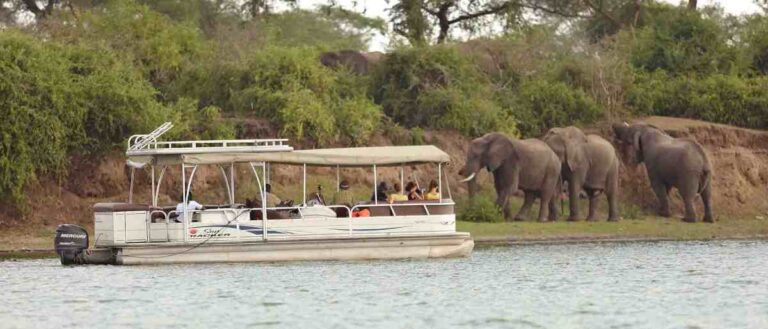
A boat safari can provide an excellent opportunity to observe hippos while also appreciating the sounds of a healthy aquatic ecosystem.
8. Mountain Gorilla
When people think about mountain gorillas, they often focus on their strength, intelligence and social behavior.
But hearing and communication are also important parts of gorilla life.
Mountain gorillas live in close-knit social groups and use different sounds, body movements and behaviors to communicate.
During gorilla trekking, visitors may hear vocalizations, vegetation movement and other sounds before they have a clear view of the gorillas.
Uganda’s mountain gorillas live primarily in Bwindi Impenetrable National Park and Mgahinga Gorilla National Park. UWA states that Uganda holds more than half of the world’s mountain gorilla population.
Gorilla trekking itself can be an immersive sensory experience because you are not simply looking for gorillas—you are entering their forest environment and listening carefully for signs of their presence.
UWA notes that gorilla trekking in Uganda can take approximately 2 to 7 hours, depending on the circumstances of the trek, with visitors receiving one hour of observation once they locate a habituated gorilla family.
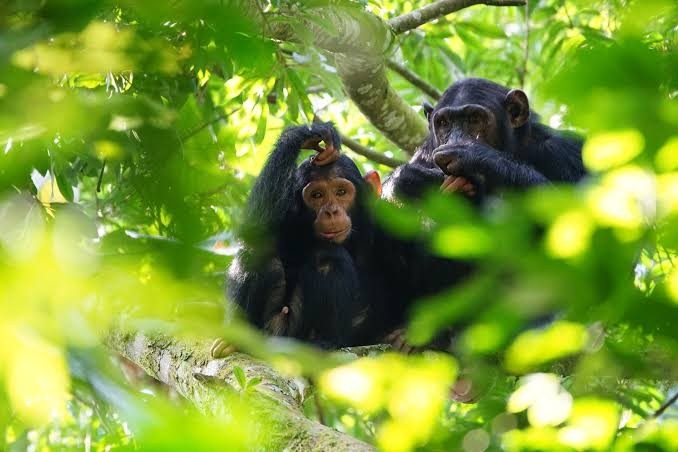
9. Chimpanzee
Chimpanzees are highly intelligent and social primates with sophisticated communication systems.
They live in communities and use vocalizations, facial expressions, gestures and body language to communicate.
Their loud calls can help individuals maintain contact through dense forest environments.
This is particularly useful in tropical forests where visibility can be limited by vegetation.
Uganda is an important destination for chimpanzee trekking. UWA identifies Kibale National Park as one of the country’s key chimpanzee tracking destinations.
For visitors exploring Uganda’s forests, hearing chimpanzees calling from the canopy can be just as exciting as seeing them.
10. Spotted Hyena
The spotted hyena is often misunderstood, but it is one of Africa’s most fascinating social carnivores.
Hyenas communicate using an impressive variety of sounds.
The famous “laugh” associated with spotted hyenas is actually a vocalization that can communicate information about social interactions and individual status.
Their calls and other sounds are important in maintaining relationships within their social groups.
Spotted hyenas are also among Uganda’s recognized large carnivores. UWA’s conservation strategy identifies them alongside lions, leopards, cheetahs and African wild dogs as important large carnivore species.
How Do Animals Use Hearing to Survive?
Hearing performs several important functions in the animal kingdom.
1. Finding Food
Predators can listen for movement made by prey.
Owls, for example, rely heavily on sound while hunting at night.
2. Detecting Predators
Prey species need to detect danger before it gets too close.
A sudden sound in vegetation can be an early warning that another animal is nearby.
3. Communication
Social animals use sound to maintain contact with members of their group.
Elephants, lions, gorillas, chimpanzees and hyenas all have complex social lives in which communication is important.
4. Finding Family Members
In large groups or dense habitats, visual contact is not always possible.
Sound allows animals to remain connected even when vegetation or terrain blocks visibility.
5. Finding a Mate
Vocal communication can also play a role in reproduction.
Animals may use calls to advertise their presence or communicate reproductive status.
6. Navigation
Some animals, especially bats, use sound to navigate through their surroundings.
This is one of the clearest examples of hearing becoming an active navigation system rather than simply a way of detecting danger.
Why African Animals Need Excellent Hearing
Africa contains some of the world’s most diverse ecosystems.
Animals live in:
- Open savannahs
- Tropical rainforests
- Wetlands
- Mountains
- Woodlands
- Semi-arid landscapes
- Rivers and lakes
Each environment creates different sensory challenges.
In a dense forest, visibility may be limited, making sound particularly useful.
On an open savannah, animals may be able to see great distances but still need hearing to detect movement, communication and approaching danger.
This is why hearing has evolved in so many different forms across African wildlife.
Hearing and the Uganda Safari Experience
One of the most enjoyable aspects of a Uganda safari is realizing that wildlife viewing involves more than looking through binoculars.
You listen.
You hear birds calling from the trees.
You hear hippos grunting in the water.
You hear monkeys moving through branches.
You may hear an elephant before you see it.
You may hear chimpanzees calling through the forest canopy.
And during gorilla trekking, you may hear movement in dense vegetation before the gorilla family becomes visible.
Uganda is particularly suited to this type of immersive wildlife experience because the country combines savannah parks, forests, wetlands and mountain ecosystems.
UWA currently lists national parks including Murchison Falls, Queen Elizabeth, Kidepo Valley, Kibale, Bwindi Impenetrable and Mgahinga Gorilla National Parks, among others.
Where Can You Experience Remarkable Wildlife Hearing in Uganda?
Bwindi Impenetrable National Park
Bwindi is famous worldwide for mountain gorilla trekking.
It is also a rich forest ecosystem where visitors can experience the sounds of primates, birds and other forest wildlife.
UWA identifies four main gorilla trekking sectors: Buhoma, Ruhija, Rushaga and Nkuringo.
Mgahinga Gorilla National Park
Mgahinga provides another opportunity to experience Uganda’s mountain gorillas in the Virunga Mountains.
The park is also known for other primate and mountain wildlife experiences.
Queen Elizabeth National Park
Queen Elizabeth is an important destination for wildlife viewing and is home to animals including lions, leopards, elephants, hippos and numerous other species.
The park’s Ishasha sector is particularly famous for its tree-climbing lions.
Murchison Falls National Park
Murchison Falls combines savannah wildlife with the dramatic Nile River environment.
Elephants, hippos, lions and many other species can be encountered during a safari.
Kibale National Park
Kibale is one of Uganda’s major destinations for chimpanzee tracking and offers an immersive forest experience.
Why Hearing Makes a Safari More Exciting
A safari is sometimes described as a visual experience.
But the sounds of the wilderness add another dimension.
Imagine sitting quietly in a vehicle at sunrise.
You hear birds calling.
A distant animal moves through the grass.
Leaves rustle.
Somewhere beyond the vehicle, a larger animal makes a low call.
You cannot immediately see what made the sound.
That moment of uncertainty is part of what makes wildlife watching so exciting.
A safari teaches you to listen before you look.
Can You Hear a Gorilla Before Seeing It?
It is possible to hear signs of gorilla activity before obtaining a clear visual sighting, particularly in dense forest.
However, visitors should never attempt to approach gorillas independently based on sound.
Gorilla trekking is conducted under established park procedures with trained guides and trackers.
UWA states that gorilla trekking in Uganda takes place in Bwindi Impenetrable National Park and Mgahinga Gorilla National Park and requires moderate fitness.
Following the instructions of your guide helps protect both visitors and gorillas.
Can Humans Hear What Animals Hear?
No.
Human hearing is limited compared with the sensory capabilities of many animal species.
Some animals detect frequencies above the human hearing range, while others are especially sensitive to low-frequency sounds.
This means that an apparently quiet environment may be full of sounds that humans simply cannot detect.
For wildlife researchers, understanding animal communication and hearing can provide valuable information about behavior, social relationships and habitat use.
How to Improve Your Wildlife-Watching Experience
If you want to appreciate animal hearing during your Uganda safari, try these simple practices.
Stay quiet
Avoid unnecessary talking when approaching wildlife.
Listen before taking photographs
Instead of immediately reaching for your camera, spend a few moments listening to the environment.
Follow your guide
Experienced safari guides know how to interpret animal behavior and environmental sounds.
Use binoculars
Hearing may tell you that an animal is nearby, while binoculars can help you locate it visually.
Be patient
Wild animals do not operate according to a human timetable.
Sometimes you hear an animal several minutes before you see it.
Respect wildlife
Never make loud noises to attract animals.
Responsible wildlife viewing is better for both visitors and wildlife.
Why Choose Mambo Gorilla Safaris Uganda?
At Mambo Gorilla Safaris Uganda, we help travellers explore Uganda’s wildlife through carefully planned safari experiences.
Our itineraries can combine gorilla trekking with wildlife viewing and other primate experiences.
Depending on your interests and available time, your Uganda safari can include:
- Gorilla trekking
- Chimpanzee trekking
- Game drives
- Boat cruises
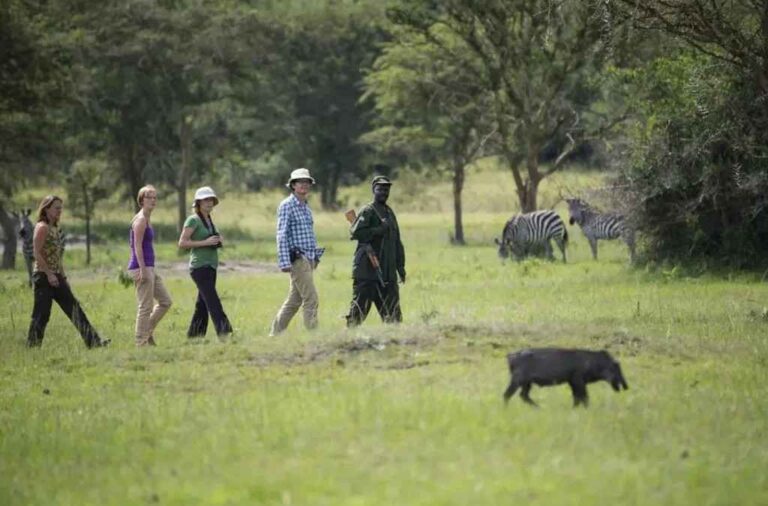
- Nature walks
- Cultural experiences
- Bird watching
- Wildlife photography
For travellers interested in gorillas, Mambo offers a 3-day Bwindi gorilla safari, while longer itineraries can combine gorilla trekking with other wildlife and primate destinations.
A Uganda safari does not have to be limited to one park.
You can create an itinerary that allows you to experience the different habitats and wildlife sounds of the country.