Email: info@mambogorillasafarisuganda.com | Call: +256772666331

Trekking the Rwenzori Mountains in Uganda: Routes, Difficulty and Travel Tips

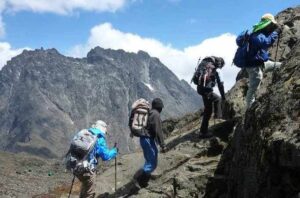
Trekking the Rwenzori Mountains is one of the most rewarding mountain adventures in Africa. Located in western Uganda along the border with the Democratic Republic of Congo, the Rwenzori range is famous for its rugged peaks, mist-covered valleys, giant lobelias, unusual alpine vegetation and spectacular high-altitude landscapes.
Often called the Mountains of the Moon, the Rwenzoris offer a very different experience from Uganda’s traditional wildlife safaris. Instead of spending your days on game drives, you explore mountain forests, cross streams and bogs, climb steep trails and gradually enter a remarkable world of alpine plants and rocky summits.
The highest point is Margherita Peak on Mount Stanley, approximately 5,109 metres above sea level. Reaching it is a serious mountaineering undertaking that requires appropriate fitness, acclimatization, equipment and experienced mountain guides.
However, you do not have to climb the highest peak to appreciate the Rwenzoris. Shorter hikes and multi-day treks allow visitors to experience the mountains at different elevations and levels of difficulty.
At Mambo Gorilla Safaris Uganda, we can help you incorporate a Rwenzori mountain adventure into a wider Uganda itinerary that may also include gorilla trekking, chimpanzee tracking, wildlife viewing and cultural experiences.
Why Go Trekking in the Rwenzori Mountains?
The Rwenzori Mountains are among Africa’s most distinctive trekking destinations because of their combination of dramatic scenery, biodiversity and demanding trails.
Here are some of the main reasons to consider a Rwenzori trek:
- Spectacular mountain scenery: Enjoy views of rugged peaks, valleys, waterfalls and high-altitude landscapes.
- Unique vegetation: Explore montane forests, bamboo zones, giant heathers, lobelias and groundsels.
- A serious hiking challenge: Test your endurance on multi-day mountain routes.
- High-altitude adventure: Experienced climbers can plan an ascent toward Margherita Peak.
- Wildlife and birdlife: Look out for forest birds, primates and other wildlife where conditions permit.
- A different Uganda safari: Combine mountain trekking with gorillas, chimpanzees or savannah wildlife.
The Rwenzoris are especially attractive to travelers who enjoy remote landscapes and want more than a conventional safari experience.
Where Are the Rwenzori Mountains Located?
The Rwenzori Mountains are in western Uganda, close to the border with the Democratic Republic of Congo. Much of the Ugandan side is protected within Rwenzori Mountains National Park.
Kasese is an important gateway for travelers heading to the mountain region. Depending on your chosen route, your trek may begin near Nyakalengija or on the Kilembe side.
Travelers can reach the region by road from Kampala or Entebbe, or investigate domestic flight options serving the Kasese area when available.
Allow enough time for transportation before the trek begins. Many multi-day routes require an early start, equipment checks and a meeting with your guides and support team.
1. Choose the Right Rwenzori Trekking Route
Choosing the right route is one of the most important decisions when planning a Rwenzori adventure.
Your choice should reflect your available time, physical fitness, mountain experience, preferred scenery and whether you want to attempt a summit.
The Central Circuit Trail
The Central Circuit is a classic route into the Rwenzori Mountains, starting from the Nyakalengija area.
It takes trekkers through forest, river valleys, bamboo and higher alpine terrain. Longer itineraries can reach the high mountain region and, with the appropriate itinerary and arrangements, form part of an expedition toward Mount Stanley.
The route is known for steep ascents, muddy trails, river crossings and changing weather.
A six-day Central Circuit itinerary is one option for exploring the mountain environment without attempting the highest summit. Longer itineraries may be required for a summit objective.
For details about available routes and packages, consult Rwenzori Mountaineering Services.
The Kilembe Trail
The Kilembe Trail approaches the mountains from the Kilembe side and is another established option for multi-day trekking.
The route passes through varied vegetation zones and spectacular mountain scenery. Depending on the itinerary, trekkers can pursue lower-altitude hiking or a longer high-altitude expedition.
Longer Kilembe itineraries may include an attempt on Margherita Peak, provided conditions, the route, equipment and the participant’s ability allow.
Visit Rwenzori Trekking Services for current route information and available packages.
Shorter Rwenzori Hikes
Not everyone has the time or experience for a week-long mountain expedition.
Shorter guided hikes can introduce visitors to the lower slopes, forest habitats, waterfalls and mountain scenery without committing to a summit attempt.
These options are worth considering if you want to experience the Rwenzoris as part of a wider Uganda holiday.
Before booking, confirm the actual route, maximum elevation, daily walking time and accommodation arrangements. Shorter hikes can still be physically demanding, especially on wet or steep trails.
2. Consider Climbing Margherita Peak
Margherita Peak is the highest point in the Rwenzori Mountains and one of Uganda’s most ambitious trekking objectives.
At approximately 5,109 metres, the summit offers a serious high-altitude challenge. It should not be treated as an ordinary hiking destination.
An expedition typically involves several days of trekking and acclimatization before the summit attempt. Conditions can include cold temperatures, snow, ice, exposed terrain and rapidly changing weather.
What makes Margherita Peak challenging?
- High altitude and reduced oxygen availability
- Long days of physical exertion
- Steep and uneven terrain
- Cold, wet and unpredictable weather
- Potential snow and ice conditions
- The need for appropriate technical equipment and training
Summit attempts require experienced guides, appropriate equipment and a route plan suited to current conditions. Some sections may require technical mountaineering skills and specialist protection.
You should be prepared for the possibility that the summit may not be safe to attempt. Turning back when conditions or your health require it is an essential part of responsible mountaineering.
Who should attempt Margherita Peak?
This objective is best considered by people who are physically prepared for a demanding multi-day expedition and who understand the challenges of high-altitude mountaineering.
Previous mountain experience is valuable. If you are new to trekking, consider a lower-altitude route before planning a summit expedition.
Discuss your experience honestly with the trekking operator so that the route, equipment and support arrangements match your abilities.
3. Discover the Rwenzori’s Unique Alpine Vegetation
One of the most memorable aspects of trekking the Rwenzori Mountains is the changing vegetation.
As you climb, the environment shifts from montane forest to bamboo and other vegetation zones before reaching the unusual high-altitude landscapes that make the Rwenzoris famous.
Trekkers may encounter giant lobelias, groundsels, moss-covered terrain and striking plants adapted to cold nights and changing mountain conditions.
These landscapes give the Rwenzoris a distinctive character compared with many other African mountains.
Take time to appreciate the plants and scenery rather than focusing only on reaching the next camp or summit. A knowledgeable guide can help explain the ecological changes along the route.
4. Explore Mountain Valleys, Rivers and Waterfalls
The Rwenzori landscape includes river valleys, streams, waterfalls and rugged mountain slopes.
On established trails, you may cross small streams, follow river valleys or pass viewpoints overlooking forested slopes and higher mountain terrain.
Water and mud are common features of many routes, so waterproof footwear and suitable clothing are important.
Conditions vary according to recent rainfall and the selected trail. Crossings that appear simple in photographs may become more difficult when water levels rise.
Always follow your guide’s instructions and use designated crossing points.
5. Experience the Wildlife and Birdlife of the Rwenzoris
The Rwenzori Mountains support a range of wildlife adapted to their different habitats.
Depending on your route and luck, you may encounter forest birds, primates and signs of other animals. Wildlife viewing is generally more incidental than on a traditional savannah safari, so it is important not to expect guaranteed sightings.
Bird enthusiasts may enjoy looking for species associated with the Albertine Rift and mountain forests.
Bring binoculars if bird watching is one of your interests, and allow time to observe the environment quietly.
Do not approach, feed or disturb wildlife. Your guide can help you observe animals responsibly and explain the ecological importance of the mountain habitats.
6. How Difficult Is Trekking the Rwenzori Mountains?
The difficulty depends on the route, elevation, duration, weather and your own fitness.
Shorter nature walks may be suitable for visitors who are reasonably active and comfortable walking on uneven ground. Longer mountain treks are much more demanding and may involve several consecutive days of hiking, steep ascents, muddy bogs, river crossings and cold nights.
Summit expeditions are substantially more challenging because of the altitude and technical terrain.
Fitness preparation
Before your trip, work on:
- Regular walking and hiking
- Uphill training
- Cardiovascular endurance
- Leg and core strength
- Balance on uneven surfaces
- Training with a loaded daypack
If possible, complete progressively longer hikes before departure. Your preparation should reflect the difficulty of the specific itinerary rather than a generic fitness target.
Acclimatization
Spending time at increasing elevations can help your body adjust to altitude, although it does not eliminate the risk of altitude sickness.
Headache, nausea, dizziness, unusual fatigue or breathlessness may indicate a problem. Symptoms that worsen, particularly breathlessness at rest, confusion or difficulty walking normally, require urgent attention.
Tell your guide immediately if you feel unwell. Do not continue ascending while experiencing possible altitude sickness, and follow the guide’s emergency procedures.
7. Best Time to Trek the Rwenzori Mountains
The Rwenzoris can be visited throughout the year, but rainfall and weather conditions can have a major impact on the trekking experience.
Many hikers prefer the generally drier periods, often around June to August and December to February. These are seasonal patterns rather than guarantees of dry weather.
The mountains receive substantial rainfall, and conditions can change quickly even during a preferred trekking season.
When choosing your dates, consider:
- The route you want to hike
- Whether you plan to attempt a summit
- Current trail and weather conditions
- Availability of guides and accommodation
- The amount of flexibility in your schedule
For high-altitude expeditions, route suitability and current mountain conditions are more important than relying on a calendar alone.
Book early for your preferred dates, and ask your operator what happens if severe weather makes a planned section unsafe.
8. What to Pack for a Rwenzori Mountains Trek
Packing appropriately is essential because conditions can range from warm and humid forest to cold, wet and potentially icy high-altitude terrain.
Your exact equipment list should come from your trekking operator and reflect the maximum elevation and route.
Clothing
- Waterproof jacket and trousers
- Warm insulating layers
- Moisture-wicking base layers
- Comfortable trekking trousers
- Warm hat and gloves
- Several pairs of hiking socks
- Dry clothing for camp
Footwear and equipment
- Well-fitted, waterproof hiking boots
- Trekking poles
- A comfortable daypack
- Waterproof pack liners or dry bags
- Headlamp with spare batteries
- Reusable water bottles or a hydration system
- Sleeping equipment appropriate for the itinerary
- Gaiters where recommended
Personal and safety items
- Sunscreen and sunglasses
- Personal medication
- Basic blister-care supplies
- Insect repellent for lower elevations
- Snacks recommended by your guide
- Camera or phone protected against rain
- Any required technical climbing equipment
Do not assume that equipment for a lower-altitude hike is sufficient for a summit expedition. Technical equipment must be suitable for the route and used by people who know how to use it.
9. How Much Does a Rwenzori Trek Cost?
The cost of trekking the Rwenzori Mountains depends on the route, number of days, group size, accommodation, support services and whether you are attempting a high-altitude summit.
Your quotation may include:
- National park entry fees
- Trekking guides
- Porters and other support staff
- Meals during the trek
- Mountain accommodation or camping arrangements
- Transfers to and from the trailhead
- Equipment rental, where available
- Technical climbing support for summit expeditions
International flights, accommodation before or after the trek, personal equipment, tips and optional activities may be charged separately.
As an example of published operator pricing, Rwenzori Mountaineering Services lists a six-day Central Circuit trek from approximately US$1,200 per person and a seven-day Central Circuit itinerary including Margherita Peak from approximately US$1,365 per person. These are operator-specific advertised prices, not universal rates, and should be reconfirmed before booking.
Check current details directly with the operator through its official package listings.
Request an itemized quotation so you understand the included services, equipment arrangements, cancellation terms and additional costs.
10. How to Get to the Rwenzori Mountains
Most visitors travel to western Uganda before beginning their trek.
By road
A road transfer from Kampala or Entebbe to Kasese can take much of a day, depending on traffic, route and stops.
Many travelers spend a night near the mountain before the trek begins, allowing time to rest, check equipment and attend the pre-trek briefing.
By air
Domestic flights to the Kasese area may be available depending on airline schedules and operating conditions. Confirm current routes, baggage limits and transfer arrangements before booking.
Transfers to the trailhead
Your trailhead depends on the selected route. The Central Circuit and Kilembe Trail have different starting points and logistics.
Confirm where your trek begins, when you must arrive and whether your package includes transfers from your hotel or the nearest town.
11. Can You Combine Rwenzori Trekking With Other Uganda Safaris?
Yes. The Rwenzori Mountains can be combined with several of Uganda’s major wildlife and nature destinations.
Rwenzori Mountains and Queen Elizabeth National Park
This is a strong combination for travelers who want mountain hiking followed by a traditional wildlife safari.
After the trek, you can explore Queen Elizabeth National Park through guided game drives and a boat cruise on the Kazinga Channel, depending on your itinerary.
Rwenzori Mountains and Kibale Forest
Combine mountain scenery with chimpanzee tracking in Kibale Forest National Park. This is an attractive option for travelers interested in primates, forests and hiking.
Rwenzori Mountains and Bwindi Impenetrable National Park
For a longer adventure, combine a Rwenzori trek with mountain gorilla trekking in Bwindi. The two experiences are very different: one focuses on mountain hiking and the other on a guided forest trek to observe gorillas.
Allow sufficient time for road transfers, rest and the physical demands of both activities.
Rwenzori Mountains and Murchison Falls National Park
If you have additional days, add Murchison Falls for game drives, river scenery and a boat excursion on the Nile. This creates a broader itinerary but involves considerable travel between regions.
Mambo Gorilla Safaris Uganda can help you plan a route that balances trekking with other activities rather than trying to fit too many destinations into a short holiday.
Suggested 7-Day Rwenzori Trekking Itinerary
A seven-day schedule may suit certain established trekking packages, but not every seven-day itinerary reaches Margherita Peak. Always check the precise route, summit plan and inclusions before booking.
Day 1: Travel to the Rwenzori Region
Travel to Kasese or the appropriate starting area for your selected route.
Meet your trekking team, check your equipment and attend the necessary briefing. Rest before beginning the trek.
Day 2: Begin the Mountain Trek
Enter the mountain environment with your guide and support team.
The route may pass through farmland, forest and river valleys before reaching the first overnight camp or hut.
Day 3: Ascend Through Changing Vegetation
Continue through forest and higher mountain vegetation. Walking time and elevation gain depend on your itinerary and the location of the overnight camp.
Take regular breaks, drink water and report any symptoms of altitude sickness.
Day 4: Explore the Higher Mountain Environment
Continue toward the upper sections of the selected route, following the guide’s plan and allowing time for acclimatization where needed.
The scenery may include bogs, giant lobelias, rocky slopes and spectacular mountain views.
Day 5: Continue the Trek or Follow the Planned Summit Itinerary
On a non-summit trek, continue exploring the mountain route and prepare for the return journey.
For a summit expedition, the schedule must follow the actual route and acclimatization plan. A summit attempt should never be forced to fit an unsuitable timetable.
Day 6: Begin the Descent
Descend according to the planned route, taking care on steep, wet and uneven terrain.
The descent can be physically demanding, so maintain a steady pace and follow your guide’s instructions.
Day 7: Complete the Trek and Transfer
Complete the planned descent to the trailhead and transfer to your accommodation or next destination.
Depending on the route, actual trekking duration and road conditions, you may need additional days.
Important: This is an illustrative outline, not a guaranteed itinerary for a specific route. Confirm daily camps, elevations, summit plans and transfer arrangements with your chosen trekking operator.
Responsible Trekking in the Rwenzori Mountains
The Rwenzori Mountains contain sensitive high-altitude habitats and are an important conservation area.
Help protect the mountains by following these practices:
- Stay on authorized routes and follow your guide.
- Carry rubbish out of the mountains.
- Avoid damaging plants or removing natural objects.
- Respect wildlife and maintain an appropriate distance.
- Use designated camps and facilities.
- Respect local communities and the work of mountain support staff.
- Follow park regulations and safety instructions.
Hiring local guides and porters through reputable operators can also support livelihoods in communities around the mountains.
Why Plan Your Rwenzori Adventure With Mambo Gorilla Safaris Uganda?
Trekking the Rwenzori Mountains requires more planning than a typical sightseeing trip. You need to choose a suitable route, prepare physically, arrange the right equipment, confirm accommodation and understand the support available on the mountain.
Mambo Gorilla Safaris Uganda can help you plan a wider Uganda holiday that includes a Rwenzori adventure alongside other destinations, subject to route availability and the appropriate specialist trekking arrangements.
Your itinerary may include:
- Rwenzori Mountains hiking
- Queen Elizabeth National Park
- Kibale chimpanzee tracking
- Bwindi gorilla trekking
- Murchison Falls National Park
- Scenic destinations in western Uganda
For technical climbing and mountain operations, ensure that your itinerary is arranged with appropriately qualified, authorized trekking providers.
Start planning your Uganda adventure with Mambo Gorilla Safaris Uganda. Share your preferred dates, trekking experience, fitness level, group size and other destinations you wish to visit so the itinerary can be matched to your needs.
Frequently Asked Questions About Trekking the Rwenzori Mountains
How high are the Rwenzori Mountains?
The highest point is Margherita Peak on Mount Stanley, approximately 5,109 metres above sea level.
How many days are needed to trek the Rwenzori Mountains?
Shorter hikes can take a few days, while longer mountain routes commonly require around six to nine days or more. Summit expeditions need an itinerary that allows adequate acclimatization and time for technical sections.
Is trekking the Rwenzori Mountains difficult?
Yes, the difficulty ranges from moderate guided walks to strenuous multi-day treks and technical summit climbs. Wet conditions, mud, steep trails and altitude can make the experience demanding.
Can beginners trek the Rwenzori Mountains?
Beginners may be able to enjoy a suitable shorter hike if they are reasonably fit and choose an appropriate route. Margherita Peak is a much more demanding objective and requires serious preparation, appropriate equipment and qualified support.
What is the best time to trek the Rwenzori Mountains?
Many trekkers prefer the generally drier periods around June to August and December to February. Weather is unpredictable in the mountains, so confirm current conditions and prepare for rain throughout the year.
Do I need a guide to trek the Rwenzoris?
Use the authorized trekking arrangements required for your selected route and follow park regulations. High-altitude routes and summit expeditions require experienced mountain guides and appropriate technical support.
How much does a Rwenzori trek cost?
The price depends on the duration, route, services, accommodation and summit objective. Request a current, itemized quotation from an established operator before booking.
Can I combine Rwenzori trekking with gorilla trekking?
Yes. You can combine a Rwenzori trek with gorilla trekking in Bwindi or Mgahinga, but you should allow enough days for road transfers, rest and both activities.
What should I pack for a Rwenzori trek?
Essential items include waterproof hiking boots, layered clothing, a waterproof jacket and trousers, warm gloves and hat, a headlamp, a daypack and personal medication. Your operator should provide a route-specific equipment list, especially for a summit expedition.
Final Thoughts: Plan Your Rwenzori Mountains Trek
Trekking the Rwenzori Mountains offers a remarkable opportunity to explore one of Africa’s most distinctive mountain landscapes. From forest trails and giant alpine plants to demanding high-altitude routes, the mountains offer experiences for travelers with different levels of time and trekking experience.
The key to a successful adventure is choosing the right route, preparing physically, allowing adequate time for acclimatization and using appropriate professional support.
Whether you prefer a shorter mountain hike or a challenging summit expedition, careful planning will help you enjoy the Rwenzoris responsibly.
Plan your Rwenzori Mountains adventure with Mambo Gorilla Safaris Uganda and consider combining your trek with Uganda’s gorilla trekking, chimpanzee tracking and wildlife safari experiences for a more complete East African holiday.


