Email: info@mambogorillasafarisuganda.com | Call: +256772666331

Why You Need to See African Silverback Gorillas in Uganda

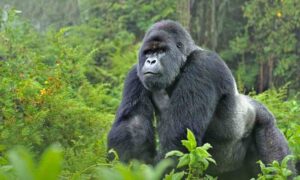
Imagine walking through the ancient forests of southwestern Uganda, surrounded by towering trees, dense vegetation and the sounds of the African rainforest. After hours of tracking through the forest, your guide suddenly signals that the gorillas are nearby.
You look through the vegetation and see a magnificent African silverback gorilla.
He sits quietly among the foliage, watching his family while younger gorillas play nearby. The experience is powerful, intimate and completely different from seeing wildlife in a zoo or from a safari vehicle.
This is the extraordinary experience offered by gorilla trekking in Uganda.
At Mambo Gorilla Safaris Uganda, we specialize in organizing memorable gorilla trekking adventures in Uganda, including safaris to Bwindi Impenetrable National Park and Mgahinga Gorilla National Park. Our itineraries can also combine gorilla trekking with chimpanzee tracking, game drives, boat cruises, cultural encounters and other East African safari experiences.
If you are wondering why you need to see African silverback gorillas in Uganda, this guide explains why a Uganda gorilla safari deserves a place on your travel plans.
What Is an African Silverback Gorilla?
A silverback is a mature male gorilla that develops distinctive silver or gray hair across his back as he reaches adulthood.
The silver coloring is one of the most recognizable characteristics of mature male gorillas.
But the importance of a silverback goes beyond his appearance.
A dominant silverback can play a central role in the social organization of a gorilla family. He may lead the group, protect family members, make decisions about movement and respond to potential threats.
During a gorilla trek, observing these natural behaviors can give you an extraordinary insight into the social lives of mountain gorillas.
Why See African Silverback Gorillas in Uganda?
1. See Mountain Gorillas in Their Natural Habitat
One of the most important reasons to visit Uganda is the opportunity to encounter mountain gorillas in their natural forest environment.
Uganda’s gorilla trekking takes place in Bwindi Impenetrable National Park and Mgahinga Gorilla National Park. UWA identifies Bwindi as home to roughly half of the world’s mountain gorilla population.
Instead of simply observing an animal, you walk through the habitat in which it naturally lives.
The forest becomes part of the experience.
You may hear birds calling overhead, see monkeys moving through the vegetation and discover fresh signs that gorillas have recently passed through the forest.
Then, after following the trackers, you may finally encounter the gorilla family.
2. Experience the Power of a Silverback at Close Range
A mature silverback can be an impressive sight.
His size, muscular body and silver-colored back immediately distinguish him from younger males and females.
Yet what makes the encounter memorable is not simply his physical appearance.
You may see the silverback:
- Resting beside his family
- Feeding on vegetation
- Moving through the forest
- Watching younger gorillas
- Interacting with other adults
- Responding to members of the group
- Monitoring his surroundings
Because these are wild animals, every encounter is different.
You never know exactly what the gorilla family will be doing when you arrive.
3. Observe a Gorilla Family, Not Just One Animal
Gorilla trekking is about much more than finding a silverback.
You are tracking a habituated gorilla family.
A family may include:
- A dominant silverback
- Other adult males
- Adult females
- Juveniles
- Infants
Watching these different age groups interact is one of the most fascinating parts of the experience.
A youngster may play nearby while a mother cares for an infant. Another gorilla may be feeding while the silverback rests and watches the group.
These moments help visitors understand that gorillas are highly social animals with complex relationships.
Uganda’s Two Gorilla Trekking Destinations
Uganda offers two destinations where travelers can participate in mountain gorilla trekking.
Bwindi Impenetrable National Park
Bwindi is Uganda’s best-known gorilla trekking destination.
According to Uganda Wildlife Authority, Bwindi is divided into four main trekking sectors:
- Buhoma
- Ruhija
- Rushaga
- Nkuringo
The different sectors provide access to different habituated gorilla families and offer varied forest landscapes.
Mambo Gorilla Safaris Uganda organizes gorilla trekking experiences in Bwindi and can help travelers select an itinerary based on their travel dates, preferred route and wider safari plans.
Our existing 3 Days Bwindi Gorilla Tour is designed around gorilla trekking and can also include a cultural encounter with the Batwa community.
Mgahinga Gorilla National Park
Mgahinga Gorilla National Park lies within the Virunga Mountains and provides another opportunity to trek mountain gorillas in Uganda.
UWA describes Mgahinga as an alternative to the denser forests of Bwindi and notes that it issues a limited number of gorilla trekking permits each day.
For travelers who want to explore the Virunga landscape, Mgahinga can be incorporated into a customized Uganda safari.
Why Bwindi Is Special for Gorilla Trekking
Bwindi is not simply a place to see gorillas.
It is an extraordinary ecosystem characterized by dense vegetation, steep terrain, highland forest and exceptional biodiversity.
The environment makes the trek part of the adventure.
You may walk along narrow forest trails, climb slopes and pass through thick vegetation before encountering the gorilla family.
The physical journey makes the eventual encounter even more rewarding.
How Gorilla Trekking with Mambo Gorilla Safaris Works
When you book a Uganda gorilla safari with Mambo Gorilla Safaris, we help coordinate the essential parts of your journey.
Your safari can include:
- Gorilla permit arrangements
- Safari transportation
- Professional driver-guide
- Accommodation
- Meals
- Park activities
- Airport transfers
- Cultural experiences
- Chimpanzee trekking
- Game drives
- Boat cruises
Mambo’s existing Bwindi packages demonstrate how gorilla trekking can be combined with cultural experiences, wildlife viewing and other activities.
What Happens on Gorilla Trekking Day?
Gorilla trekking normally begins in the morning with a briefing at the relevant park headquarters.
The ranger guides explain the rules and procedures before you enter the forest.
You then begin tracking your assigned gorilla family.
The trek may involve:
- Steep slopes
- Dense vegetation
- Muddy trails
- Uneven ground
- Forest paths
- Changes in elevation
The exact experience depends on where the gorilla family is located that day.
UWA states that gorilla treks can take approximately 2 to 7 hours, depending on the circumstances of the trek. Once the habituated family is located, visitors are given one hour of observation.
Is Gorilla Trekking Difficult?
Gorilla trekking requires a reasonable level of physical fitness.
Bwindi is a mountainous forest environment, so the terrain can be challenging.
However, the difficulty varies from trek to trek.
Some groups may find their assigned gorilla family relatively close to the starting point, while others may need to walk considerably farther.
At Mambo Gorilla Safaris Uganda, we encourage travelers to prepare appropriately and tell us about any relevant mobility or fitness considerations before the safari.
What Makes Seeing a Silverback So Memorable?
The most powerful part of the experience is the unpredictability.
You cannot script a wildlife encounter.
The silverback may be:
- Sitting quietly
- Feeding
- Walking through the vegetation
- Resting
- Interacting with another gorilla
- Watching over the group
You may also hear the gorillas before you see them.
The forest suddenly becomes quiet as everyone focuses on locating the family.
Then you catch your first glimpse through the vegetation.
That moment is what many travelers remember long after returning home.
Gorilla Trekking Is About More Than Photography
It is tempting to think about gorilla trekking simply as an opportunity to take photographs.
Photography is certainly part of the experience, but the encounter is much more meaningful when you take time to watch the gorillas’ behavior.
Look at how the family interacts.
Observe the youngsters.
Watch the females feeding or caring for infants.
Notice the silverback’s movements and reactions.
The forest experience itself is part of what makes the safari special.
What Other Wildlife Can You See in Bwindi?
Although mountain gorillas are the main attraction, Bwindi is rich in biodiversity.
Depending on the area and conditions, visitors may encounter:
- Black-and-white colobus monkeys
- L’Hoest’s monkeys
- Blue monkeys
- Forest birds
- Butterflies
- Chameleons
- Other forest wildlife
Bwindi therefore offers much more than a single wildlife encounter.
Combine Silverback Gorilla Trekking with Chimpanzee Tracking
If you are interested in great apes, consider combining gorilla trekking with chimpanzee tracking.
Mambo Gorilla Safaris Uganda offers longer wildlife and primate itineraries that combine destinations such as Kibale Forest, Queen Elizabeth National Park and Bwindi.
A longer itinerary can therefore give you the opportunity to encounter:
Chimpanzees + Mountain Gorillas + Savanna Wildlife
This is an excellent option for travelers who want a broader Uganda primate safari.
Combine Gorillas with Queen Elizabeth National Park
Another popular option is to combine Bwindi with Queen Elizabeth National Park.
After spending time in the mountain forest, you can experience Uganda’s savanna environment.
Activities can include:
- Game drives
- Kazinga Channel boat cruises
- Bird watching
- Wildlife viewing
- Nature experiences
You may encounter elephants, buffaloes, antelopes, lions and other wildlife depending on the area and conditions.
Mambo’s existing safari programs already combine Bwindi with other Ugandan destinations, allowing travelers to experience both primates and traditional wildlife viewing.
Combine Gorilla Trekking with Lake Mburo
Travelers with additional time can also combine Bwindi with Lake Mburo National Park.
Mambo Gorilla Safaris offers a 4-day Bwindi and Lake Mburo itinerary combining gorilla trekking with wildlife activities, a nature experience and a boat cruise.
This creates a contrasting safari experience:
Mountain forest → Gorilla trekking → Savannah → Wildlife and lake activities
Choose a Flying Gorilla Safari with Mambo Gorilla Safaris
If you do not want to spend many hours traveling by road to southwestern Uganda, Mambo Gorilla Safaris also offers a flying gorilla safari to Bwindi.
The company’s existing flying safari is designed for travelers who prefer to reduce the long road journey and fly toward the Bwindi/Kisoro area before continuing to the lodge and trekking sector.
This can be particularly useful for travelers with limited time.
Best Time to See Silverback Gorillas in Uganda
Gorilla trekking is possible throughout the year.
Travelers often consider drier periods attractive because forest trails may be easier to navigate.
However, Uganda’s mountain forests can receive rain at different times of the year, and conditions can change quickly.
Rather than choosing your travel dates only around gorilla trekking, consider your complete itinerary.
If you want to combine:
- Gorillas
- Chimpanzees
- Wildlife
- Bird watching
- Boat cruises
- Cultural experiences
Mambo Gorilla Safaris can help build the itinerary around your preferred travel period.
What to Pack for a Silverback Gorilla Trek
Proper preparation makes a major difference.
Hiking boots
Choose sturdy, comfortable boots with good traction.
Long trousers
These help protect your legs from vegetation.
Long-sleeved shirt
A lightweight long-sleeved shirt can be useful in the forest.
Waterproof jacket
Rain can occur even when the morning begins with clear skies.
Gardening gloves
These can help protect your hands when moving through vegetation.
Insect repellent
Useful for additional comfort in the forest.
Drinking water
Carry sufficient water for the trek.
Snacks
Light energy-rich snacks can be useful during a long trek.
Camera
Bring spare batteries or a power bank where appropriate.
Small backpack
A comfortable daypack is ideal.
Gorilla Trekking Rules You Should Know
Gorilla tourism is carefully managed to protect both visitors and gorillas.
During your trek:
- Follow your ranger guide’s instructions.
- Maintain the required distance.
- Never attempt to touch a gorilla.
- Do not feed wildlife.
- Avoid unnecessary noise.
- Do not litter.
- Follow photography instructions.
- Do not attempt to attract gorillas toward you.
- Respect the family’s space.
The objective is to observe the gorillas without unnecessarily disturbing their natural behavior.
Why Responsible Gorilla Tourism Matters
Mountain gorillas are an important conservation success story, but their habitat still needs protection.
Tourism creates a direct connection between visitors and conservation.
By participating in a properly managed gorilla trek, travelers contribute to an industry that supports protected-area management, guides, trackers, accommodation providers and communities surrounding Uganda’s tourism destinations.
Responsible tourism therefore matters.
At Mambo Gorilla Safaris Uganda, we encourage travelers to respect park rules and support conservation-focused tourism throughout their safari.
How Mambo Gorilla Safaris Makes Your Gorilla Safari Easier
Planning a gorilla safari involves coordinating many different elements.
You may need to arrange:
- Gorilla permits
- Accommodation
- Transportation
- Park activities
- Professional guiding
- Airport transfers
- Meals
- Chimpanzee permits
- Game drives
- Boat cruises
- Cultural activities
Mambo Gorilla Safaris Uganda can bring these components together into one customized itinerary.
Our Uganda safari options range from short gorilla trekking trips to longer wildlife and primate adventures. Our existing programs include a 3-day Bwindi gorilla safari, flying gorilla safaris and longer wildlife-and-primate itineraries.
Sample 3-Day Mambo Gorilla Safari
Day 1: Kampala or Entebbe – Bwindi
Meet your Mambo Gorilla Safaris guide and begin your journey toward southwestern Uganda.
Travel through the Ugandan countryside with suitable stops along the way.
Continue to Bwindi and check into your lodge.
Day 2: Gorilla Trekking
After breakfast, travel to the park headquarters for briefing.
Enter the forest with the ranger guides and begin searching for your assigned gorilla family.
Once you locate the family, spend your permitted observation period watching the gorillas in their natural habitat.
Return to the lodge after the trek and relax.
Day 3: Bwindi – Kampala or Entebbe
After breakfast, begin your journey back to Kampala or Entebbe.
If your schedule allows, Mambo can extend your safari with additional destinations and activities.
Sample 7-Day Mambo Gorilla and Wildlife Safari
For travelers with more time, a longer itinerary can combine Uganda’s primates and wildlife.
Day 1
Arrival in Entebbe
Day 2
Entebbe – Kibale National Park
Day 3
Chimpanzee trekking in Kibale
Day 4
Kibale – Queen Elizabeth National Park
Day 5
Game drive and Kazinga Channel boat cruise
Day 6
Queen Elizabeth – Bwindi
Day 7
Gorilla trekking and onward travel
This is only a sample. Mambo Gorilla Safaris can customize the route according to your interests, accommodation preferences, available time and permit availability.