Email: info@mambogorillasafarisuganda.com | Call: +256772666331

Why Aren’t Bwindi Chimpanzees Habituated for Tourism?

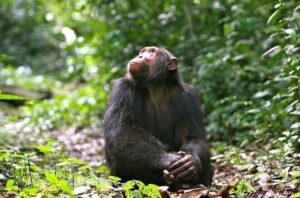
Bwindi Impenetrable National Park is famous for its endangered mountain gorillas, but it is also home to chimpanzees and other fascinating forest wildlife. This raises an interesting question for travellers planning a Uganda primate safari: why are Bwindi chimpanzees not generally habituated for tourism, and can visitors track them?
Chimpanzee habituation is a gradual process in which wild chimpanzees become accustomed to the presence of human observers without being forced into close contact. It requires time, careful monitoring, specialised knowledge, and measures to protect both the animals and the people involved.
Unlike Bwindi’s habituated mountain gorilla families, its chimpanzees are not generally established as a regular tourist-tracking attraction. Travellers should therefore not book a Bwindi gorilla trek expecting a guaranteed chimpanzee encounter.
In this guide, Mambo Gorilla Safaris Uganda explains what chimpanzee habituation means, why it matters for research and conservation, why habituation must be carefully managed, and where you can experience chimpanzee tracking in Uganda.
What Is Chimpanzee Habituation?
Chimpanzee habituation is the process through which wild chimpanzees gradually become accustomed to the non-threatening presence of researchers or other authorised observers.
Wild chimpanzees naturally tend to avoid unfamiliar humans. When people enter their habitat, the animals may move away, hide in dense vegetation, make warning calls, or change their behaviour.
During habituation, trained researchers and trackers spend time locating and observing a chimpanzee community. They follow carefully managed procedures intended to reduce the animals’ fear of human presence without feeding, taming, or deliberately attracting them.
Habituation does not mean that chimpanzees become domesticated or completely predictable. They remain wild animals capable of making their own decisions and responding to perceived threats.
The process is important because it can allow researchers to observe chimpanzees more consistently and, at suitable sites, enable carefully regulated chimpanzee tourism.
Why Aren’t Bwindi Chimpanzees Generally Habituated for Tourism?
The important distinction is that the presence of chimpanzees in a national park does not automatically mean that those chimpanzees are available for tourist tracking.
Bwindi’s chimpanzees live in a complex forest environment, and current destination information indicates that they are not generally habituated for tourism in the same way as the park’s mountain gorillas.
Several considerations help explain why habituation requires careful planning.
1. Chimpanzee Research Requires Time and Resources
Habituating a wild chimpanzee community can take considerable time. Researchers must locate the animals, monitor their movements, understand their reactions to observers, and assess whether their behaviour is changing in response to human presence.
Dense forest, difficult terrain, and the chimpanzees’ mobility can make this work challenging.
Research programmes also need trained personnel, reliable monitoring, appropriate funding, and clear procedures for protecting the animals.
A habituation project cannot be judged successful simply because chimpanzees have been seen by researchers. Their welfare and natural behaviour must remain central to the process.
2. Chimpanzees Need Protection From Human Disturbance
Chimpanzees are intelligent, social primates. Their daily activities include feeding, grooming, resting, travelling, communicating, and caring for their young.
Repeated human presence can affect wildlife if encounters are poorly managed. Habituation therefore requires careful decisions about where people can go, how they behave, and how much disturbance the animals experience.
Researchers and conservation authorities must consider whether a proposed activity is appropriate for the chimpanzee community and its habitat.
The objective should not simply be to make chimpanzees easier for tourists to see. It should be to understand and protect the animals while ensuring that any observation programme is responsibly managed.
3. Disease Transmission Is a Serious Concern
Chimpanzees are great apes, like humans, and can be vulnerable to some human infectious diseases.
People visiting great apes may introduce pathogens even when they do not intend to cause harm. Respiratory infections are a particular concern for close-contact wildlife tourism.
This is why responsible primate tourism requires health precautions, appropriate distances, controlled visitor numbers, and rules against approaching or touching the animals.
Any chimpanzee habituation programme must account for these risks before regular tourist visits are considered.
4. Tourism Requires Careful Management
Where chimpanzee tracking is offered, it should operate under approved arrangements with trained guides and clear visitor rules.
These measures help manage the number of people entering the forest, reduce disturbance, and improve the safety of visitors and wildlife.
A chimpanzee community being studied by researchers is not automatically suitable for tourist visits. Research access, conservation priorities, animal behaviour, and the requirements of a commercial tourism programme may differ.
For Bwindi, travellers should confirm the current status of chimpanzee activities with the relevant conservation authorities rather than assume that a habituation project means tourist permits are available.
Does Bwindi Impenetrable National Park Have Chimpanzees?
Yes. Bwindi is known primarily for its mountain gorillas, but chimpanzees also occur in the forest.
However, the presence of chimpanzees does not guarantee that visitors will see them during a gorilla trekking safari. Chimpanzees move through the forest, can remain hidden by dense vegetation, and are not generally offered as a routine habituated tracking experience in Bwindi.
If your main goal is to observe chimpanzees in the wild, it is better to plan around a destination with an established chimpanzee-tracking programme.
If you visit Bwindi primarily for mountain gorillas, treat any unexpected wildlife sightings as a bonus rather than a promised activity.
Where Can You Track Chimpanzees in Uganda?
Uganda has several established chimpanzee-tracking destinations. The best option depends on your itinerary, permit availability, accommodation, and the kind of primate experience you want.
1. Kibale Forest National Park
Kibale Forest National Park is one of Uganda’s best-known destinations for chimpanzee tracking.
The park supports a rich diversity of primates, and visitors can join authorised guided tracking activities to look for chimpanzees in their natural habitat.
Chimpanzees are highly mobile, so sightings and the length of the walk vary. Visitors must follow their guides’ instructions and comply with the applicable health and wildlife rules.
Uganda Wildlife Authority also offers a Chimpanzee Habituation Experience at designated sites and under specific arrangements. Confirm the location, permit availability, duration, and current requirements before booking.
2. Budongo Forest
Budongo Forest, near Murchison Falls National Park, is another important location for chimpanzee research and tracking experiences.
It offers an opportunity to explore a different forest environment and can be combined with a wider wildlife safari in northwestern Uganda.
Because activities and access arrangements can vary, confirm current chimpanzee-tracking availability with the relevant operator before building your itinerary around Budongo.
3. Kalinzu Forest Reserve
Kalinzu Forest, in southwestern Uganda, is another destination associated with chimpanzee tracking.
Its location can make it a practical option for travellers combining primate activities with a safari in the Queen Elizabeth National Park area.
Confirm the current tracking arrangements, fees, and availability before travel.
4. Kyambura Gorge in Queen Elizabeth National Park
Kyambura Gorge, sometimes called the Valley of Apes, is a forested gorge within Queen Elizabeth National Park where visitors may track chimpanzees with authorised guides.
The experience combines primate viewing with the wider scenery and wildlife of Queen Elizabeth National Park. Chimpanzee sightings are not guaranteed, and the terrain can involve descents and climbs.
For travellers who want both chimpanzees and classic savannah wildlife, Kyambura Gorge may be a useful addition to a wider Uganda itinerary.
What Is the Difference Between Gorilla Habituation and Chimpanzee Habituation?
Although the basic idea is similar, gorilla and chimpanzee habituation activities differ according to the species, location, management arrangements, and permits available.
| Feature | Gorilla habituation | Chimpanzee habituation |
|---|---|---|
| Main purpose | Gradually accustom selected gorillas to authorised human presence | Gradually accustom selected chimpanzees to authorised human observers |
| Animal behaviour | Mountain gorillas live in social groups and often feed or rest on the ground | Chimpanzees move through trees and on the ground, and can be highly mobile |
| Tourist access | Available under specific arrangements in Uganda | Available at designated sites under specific arrangements |
| Duration | Depends on the permit and programme | Depends on the permit and programme |
| Conservation priorities | Welfare, health protection, research, and responsible tourism | Welfare, health protection, research, and responsible tourism |
Neither experience guarantees a particular animal behaviour or an easy encounter. Both require visitors to respect the rules and accept that the animals remain wild.
Why Is Chimpanzee Habituation Important for Conservation?
Chimpanzee habituation can contribute to conservation and scientific understanding when carefully managed.
Supporting Scientific Research
Researchers can study chimpanzee social relationships, communication, feeding patterns, movement, and responses to environmental changes.
Long-term observation can help scientists understand the needs of chimpanzee communities and identify conservation concerns.
Improving Knowledge of Wildlife Behaviour
Chimpanzees display complex social behaviour, including cooperation, competition, communication, and parental care. Carefully managed observation allows researchers to document these behaviours in their natural habitat.
Supporting Responsible Tourism
At suitable destinations, chimpanzee tracking can create employment for guides, trackers, park staff, drivers, accommodation providers, and other local service providers.
Tourism revenue may also support conservation activities, depending on how the programme and associated fees are managed.
These benefits are not automatic. Habituation and tourism must be balanced against disturbance, disease risks, the needs of the animals, and the interests of communities living near protected areas.
Can You Combine Gorilla Trekking in Bwindi With Chimpanzee Tracking?
Yes. Combining gorilla trekking in Bwindi with chimpanzee tracking elsewhere in Uganda is an excellent way to experience two different great apes in their natural habitats.
The most suitable destination depends on how much time you have and where your itinerary takes you.
Example: A 5-Day Gorilla and Chimpanzee Safari
Day 1: Travel to Kibale Forest
Travel to the Kibale area and check in to your accommodation. Depending on your arrival time, you may have time to relax or enjoy a nearby activity.
Day 2: Chimpanzee Tracking in Kibale
Join an authorised chimpanzee-tracking activity with trained guides. Learn about chimpanzee behaviour and explore the forest before continuing your journey according to your itinerary.
Day 3: Transfer to Bwindi
Travel to your selected Bwindi trekking sector. The journey can be long, so plan sufficient time for transfers and check-in.
Day 4: Gorilla Trekking in Bwindi
Attend the park briefing, hike with your ranger guide and trackers, and observe your assigned habituated gorilla family according to the applicable rules.
Day 5: Departure or Safari Extension
Return to your departure point or continue to another destination if your schedule allows.
This is an illustrative itinerary, not a guaranteed package. Actual driving times, activities, permit availability, and accommodation should be confirmed before booking. A longer itinerary may be more comfortable, especially if you want to add Queen Elizabeth National Park or Murchison Falls.
Explore a longer option through Mambo Gorilla Safaris Uganda’s 10-day wildlife and primate trekking safari in Uganda.
What Should You Know Before Booking a Chimpanzee Safari?
Before confirming your trip, ask your safari operator the following questions:
- Is chimpanzee tracking available at the destination on my travel dates?
- Is the activity standard chimpanzee tracking or a Chimpanzee Habituation Experience?
- Which permit or booking arrangement is required?
- How long does the activity usually take?
- What are the current health and visitor rules?
- Is transport to and from the forest included?
- What accommodation and meals are included in the package?
- Are there any age, fitness, or mobility considerations?
These questions help you choose an experience that matches your interests and avoid assuming that all chimpanzee activities are the same.
Frequently Asked Questions About Bwindi Chimpanzee Habituation
Why are Bwindi chimpanzees not generally habituated for tourism?
Current destination information indicates that Bwindi chimpanzees are not generally habituated as a regular tourist-tracking attraction. Research and conservation work may take place in the forest, but visitors should not assume that tourist habituation permits are available. Confirm the latest position with the relevant authorities before travelling.
Can I see chimpanzees during gorilla trekking in Bwindi?
It is possible for chimpanzees to occur in the wider forest environment, but sightings are not guaranteed. A gorilla trekking permit does not include a guaranteed chimpanzee encounter.
What is chimpanzee habituation?
Chimpanzee habituation is a gradual process in which wild chimpanzees become accustomed to the non-threatening presence of authorised human observers. It is different from domestication and must be managed to minimise disturbance and health risks.
Where is the best place to track chimpanzees in Uganda?
Kibale Forest National Park is one of Uganda’s best-known destinations for chimpanzee tracking. Budongo Forest, Kalinzu Forest, and Kyambura Gorge are other locations associated with chimpanzee-tracking experiences. Availability and arrangements should be confirmed before booking.
How long does chimpanzee habituation take?
The time required varies according to the chimpanzee community, forest conditions, research methods, and the animals’ responses to observers. It is not possible to promise a fixed timeline for every group.
Is chimpanzee habituation safe for the animals?
Habituation carries potential risks, including disturbance and disease transmission. Carefully managed programmes use monitoring and visitor rules to reduce these risks, but responsible management remains essential.
Can I combine chimpanzee tracking with mountain gorilla trekking?
Yes. Travellers can plan a safari that includes chimpanzee tracking at an established destination and gorilla trekking in Bwindi or Mgahinga. The itinerary should account for transfer times and separate permit requirements.
Plan Your Uganda Primate Safari With Mambo Gorilla Safaris Uganda
Bwindi’s chimpanzees are an important part of the forest’s biodiversity, but their presence should not be confused with a guaranteed tourist-tracking experience. Understanding the difference between research, habituation, and established tourism activities helps you plan a realistic and responsible safari.
If you want to see mountain gorillas and chimpanzees on the same holiday, Mambo Gorilla Safaris Uganda can help you explore suitable destinations, check permit arrangements, and plan transport and accommodation around your travel dates.
Discover our Uganda wildlife and primate trekking safari or visit Mambo Gorilla Safaris Uganda to begin planning your trip.
Protect wildlife, respect local guidance, and choose primate experiences that prioritise conservation and animal welfare.


