Email: info@mambogorillasafarisuganda.com | Call: +256772666331

Gorilla and Chimpanzee Habituation Experience Safaris from South Africa

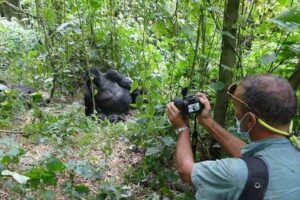
Are you dreaming of travelling from South Africa to experience mountain gorillas and chimpanzees in their natural habitat? A gorilla and chimpanzee habituation experience safari from South Africa to Uganda offers a remarkable opportunity to explore two of Africa’s most fascinating primates while learning about their behaviour, forest habitats and conservation.
Uganda is an outstanding destination for travellers seeking a deeper primate experience. In Bwindi Impenetrable National Park, visitors can join a guided gorilla habituation experience, while Kibale National Park offers a chimpanzee habituation experience. Both activities provide more time with the primates than standard tracking, making them especially appealing to wildlife enthusiasts, photographers and nature lovers.
At Mambo Gorilla Safaris Uganda, we can help you plan a tailor-made journey from South Africa, including airport transfers, accommodation, ground transportation and advance arrangements for the required permits.
What Is a Gorilla and Chimpanzee Habituation Safari?
A habituation safari allows visitors to accompany trained park staff and researchers as they observe primates that are becoming accustomed to human presence.
Unlike ordinary gorilla trekking or chimpanzee tracking, where viewing time is limited to a maximum of one hour after finding the animals, habituation experiences can allow up to four hours with the gorillas or chimpanzees. Actual encounters depend on the animals, forest conditions and park regulations.
During a habituation experience, you may learn about:
- Primate feeding, movement and social interactions.
- How researchers and trackers monitor individual animals.
- The process of gradually familiarising wild primates with human presence.
- The importance of protecting forest habitats.
- The challenges involved in long-term wildlife conservation.
Habituation is a conservation process, not a petting or touching experience. Visitors must follow the instructions of their guides and maintain the required distance from the animals.
Why Choose Uganda for a Safari from South Africa?
Uganda combines mountain rainforest, diverse wildlife and rich cultural experiences within one destination. It is particularly attractive to travellers who want to experience both gorilla and chimpanzee habituation on the same trip.
1. Experience mountain gorilla habituation in Bwindi
Bwindi Impenetrable National Park, in southwestern Uganda, protects an important population of endangered mountain gorillas. Its steep forested hills provide the setting for one of Africa’s most memorable wildlife experiences.
The gorilla habituation experience is conducted in the Rushaga area of southern Bwindi. Accompanied by authorised guides and relevant park staff, visitors enter the forest to search for a selected gorilla group and observe its behaviour.
The trek can be physically demanding because of steep slopes, thick vegetation, muddy paths and changing weather. A reasonable level of fitness is recommended.
2. Discover chimpanzee habituation in Kibale
Kibale National Park is one of Uganda’s best-known destinations for chimpanzee encounters. Its tropical forest supports chimpanzees and other primates, as well as numerous bird species.
During chimpanzee habituation, visitors join trained staff in the forest to follow and observe chimpanzees as they go about their daily activities. Depending on the encounter, you may see them feeding, grooming, communicating, moving through the canopy or interacting with other members of their community.
Chimpanzees are highly active, and finding and following them can involve extended walking through forest terrain.
3. Support conservation through responsible tourism
Well-managed wildlife tourism can contribute to protected-area management, conservation employment and livelihoods in communities around national parks.
By choosing authorised activities, respecting park rules and using responsible local tourism providers, visitors can help support the long-term protection of Uganda’s forests and wildlife.
How to Travel from South Africa to Uganda
Most international visitors begin their journey by flying from South Africa to Entebbe International Airport in Uganda. Flight routes, connections and schedules vary according to the departure city and travel dates, so confirm your preferred itinerary with an airline or travel agent.
Once you arrive, your safari can continue by road or, where available and suitable, by scheduled or charter flight to an airstrip serving the relevant park.
Travel planning tips for South African visitors
- Book permits early: Gorilla and chimpanzee habituation permits are limited, so check availability before committing to non-refundable flights.
- Check passport and entry requirements: Confirm Uganda’s current visa and passport requirements for your nationality through official immigration channels before departure.
- Allow enough travel time: The national parks are far from Entebbe, and overland transfers can take several hours.
- Arrange travel insurance: Choose a policy that covers your planned activities and any medical evacuation requirements.
- Plan for changing weather: Uganda’s tropical forests can be wet even during generally drier periods.
- Confirm flight connections: Leave a sensible buffer between international flights and any separate domestic or charter arrangements.
Best Time for Gorilla and Chimpanzee Habituation in Uganda
Habituation experiences operate according to park management, permit availability and forest conditions. Uganda can be visited throughout the year, but many travellers prefer the relatively drier periods, commonly June to September and December to February.
During drier conditions, trails may be less muddy and walking can be easier. However, the forest remains humid, and rainfall is possible in every season.
The wetter months can bring lush vegetation and challenging trekking conditions. Rather than choosing dates based on weather alone, consider permit availability, your overall travel schedule and how comfortable you are walking in a tropical rainforest.
Our recommendation: Confirm both habituation permits first, then coordinate your international flights, accommodation and transfers around the confirmed dates.
Sample 6-Day Gorilla and Chimpanzee Habituation Safari from South Africa
This sample itinerary is a starting point for planning. Because the parks are separated by a substantial road journey, exact travel times and the order of activities should be confirmed when your permits and flights are arranged.
Day 1: Arrive in Entebbe, Uganda
Arrive at Entebbe International Airport and meet your safari representative for a transfer to your hotel.
Depending on your arrival time, relax at the hotel or enjoy a short visit to a suitable local attraction. Your guide can review the safari arrangements, check your equipment and explain the following days’ travel plans.
Overnight: Entebbe.
Day 2: Travel to Bwindi Impenetrable National Park
After breakfast, begin the journey to the Rushaga area of Bwindi, where the gorilla habituation experience takes place.
Travel by a private 4×4 safari vehicle through Uganda’s countryside, with appropriate stops for meals and rest. A road transfer can take much of the day, depending on the route and conditions.
On arrival, check in at your lodge, prepare for the next morning and enjoy dinner.
Overnight: Rushaga or a nearby suitable lodge.
Day 3: Gorilla Habituation Experience in Bwindi
Start early with breakfast before travelling to the designated briefing point. Park staff will explain the trekking rules, safety requirements and expected conduct in the forest.
Accompanied by authorised guides and relevant habituation staff, you will enter the forest to locate the gorilla group. Walking conditions vary, and the duration of the search cannot be guaranteed.
Once the gorillas are located, the habituation experience can provide up to four hours of observation, subject to park rules and the circumstances of the encounter.
Watch the gorillas as they feed, rest, move through the vegetation and interact with one another. Follow all instructions about distance, photography and behaviour.
Return to your lodge after the activity for rest and dinner.
Overnight: Rushaga or a nearby suitable lodge.
Day 4: Transfer to Kibale National Park
After breakfast, depart Bwindi for Kibale National Park. This is a substantial road transfer through western Uganda, with the journey time depending on your route, weather and stops.
Arrive at your lodge near Kibale, settle in and prepare for the next day’s chimpanzee habituation experience.
Overnight: Kibale or Fort Portal area.
Day 5: Chimpanzee Habituation Experience in Kibale
Have an early breakfast and proceed to the designated briefing location.
After the briefing, enter the forest with authorised guides and habituation staff to search for and observe the chimpanzees. You may learn about their social relationships, feeding behaviour, communication and the work involved in monitoring them.
The experience can allow up to four hours with the chimpanzees, subject to current park rules and the conditions of the encounter. The walk may be strenuous, and sightings or specific behaviours cannot be guaranteed.
Return to your lodge later in the day and enjoy a well-earned evening of relaxation.
Overnight: Kibale or Fort Portal area.
Day 6: Return to Entebbe and Departure
After breakfast, travel back towards Entebbe for your onward flight.
Because the drive can be lengthy, coordinate your departure flight carefully. Depending on your international schedule, an additional night in Entebbe may be the safer and more comfortable option.
End of safari.
Can You Complete Both Habituation Experiences in Five Days?
A five-day itinerary may be possible with carefully coordinated permits and transfers, but it can be rushed. Travellers arriving from South Africa should consider a sixth day or an additional overnight stay to reduce pressure from long road journeys and international flight connections.
For a more relaxed safari, ask Mambo Gorilla Safaris Uganda to customise the itinerary to your arrival and departure times.
Gorilla Habituation vs. Standard Gorilla Trekking
| Feature | Gorilla habituation | Standard gorilla trekking |
|---|---|---|
| Location | Rushaga area, Bwindi | Designated sectors in Bwindi or Mgahinga |
| Viewing time | Up to four hours | Up to one hour |
| Main emphasis | Observing the habituation process | Visiting an established habituated group |
| Experience style | Longer, research-focused encounter | Usually shorter encounter after the trek |
| Physical effort | Can be demanding | Varies with the gorilla group’s location |
Both activities take place under park rules and with authorised personnel. Neither guarantees an easy walk or a particular wildlife encounter.
Chimpanzee Habituation vs. Standard Chimpanzee Tracking
Standard chimpanzee tracking focuses on locating and observing a habituated chimpanzee community for the permitted viewing period. The chimpanzee habituation experience offers a longer opportunity to observe chimpanzees while learning about the process of getting them accustomed to human presence.
Kibale is a leading choice for chimpanzee experiences in Uganda. The right option depends on your interests, budget, fitness and available dates.
What Is Included in a Habituation Safari Package?
Your final package should be based on your confirmed itinerary and written quotation. Depending on the arrangement, a Mambo Gorilla Safaris Uganda package may include:
- Airport transfers in Uganda.
- Private 4×4 safari transportation and an English-speaking driver-guide.
- Accommodation and meals specified in the itinerary.
- Gorilla habituation permit, if explicitly included.
- Chimpanzee habituation permit, if explicitly included.
- Activities and park fees stated in the quotation.
- Drinking water during road transfers.
International flights from South Africa, Uganda entry fees or visas, travel insurance, tips, personal purchases and any extra accommodation may be excluded unless stated otherwise.
Important: Always confirm the permit category, availability, price, inclusions and cancellation conditions in writing. Permit fees and regulations can change, and a general safari quotation should not be assumed to include both habituation permits.
What to Pack for Gorilla and Chimpanzee Habituation
Prepare for early starts, changing weather and walking in thick forest.
Recommended items include:
- Waterproof hiking boots with good grip.
- Long-sleeved shirts and long trousers.
- A lightweight waterproof jacket.
- Gardening-style gloves for gripping vegetation.
- A small daypack.
- Drinking water and any food recommended by your operator.
- Insect repellent and personal medication.
- A camera with spare batteries and suitable storage.
- Binoculars, if desired.
- A walking stick or porter assistance where available and appropriate.
Follow the instructions of park staff on hygiene, illness reporting, photography and maintaining a safe distance from the primates.
Who Should Choose a Habituation Experience?
These safaris are particularly suitable for wildlife enthusiasts, photographers, conservation-minded travellers and visitors who want more time to observe primate behaviour.
However, the activities involve walking on uneven ground, sometimes on steep or muddy trails. Gorilla habituation has a minimum age requirement of 15 years; chimpanzee tracking and habituation generally have a minimum age requirement of 12 years under Uganda Wildlife Authority guidance. Confirm current rules before booking, particularly for family travel.
If you have mobility concerns or are unsure whether the terrain is suitable, discuss your needs with your safari planner before paying for permits.
How to Book a Gorilla and Chimpanzee Habituation Safari from South Africa
Planning early is essential because habituation permits are limited and the two experiences take place in different national parks.
To organise your trip:
- Choose your intended travel dates and the number of travellers.
- Contact Mambo Gorilla Safaris Uganda to check both habituation permits.
- Confirm the permit costs, cancellation terms and package inclusions.
- Agree on your accommodation category and ground transport.
- Book your international flights after coordinating the confirmed safari dates.
- Review Uganda’s entry requirements, insurance arrangements and packing list.
You can also explore our 10 Days of Wildlife and Primate Trekking in Uganda for inspiration if you would like to extend your trip beyond the two habituation experiences.
For travellers who prefer to reduce long road journeys, ask about the feasibility and cost of flying to a suitable airstrip near Bwindi. Your route and the transfer to Kibale will still need to be planned around the confirmed activities.
Frequently Asked Questions
1. Can I travel from South Africa to Uganda for gorilla habituation?
Yes. Travellers from South Africa can plan a Uganda safari that includes gorilla habituation in Bwindi Impenetrable National Park. Flights and connections depend on your departure city and travel dates.
2. Can I combine gorilla and chimpanzee habituation in one safari?
Yes. Both experiences can be combined in a multi-day Uganda itinerary, typically visiting Bwindi first or second and Kibale for the other activity. Permit availability and travel time determine the final schedule.
3. How long do you spend with the gorillas during habituation?
The permitted viewing period can be up to four hours after the gorillas are located. The overall trek can take longer, and the actual encounter depends on the circumstances and park rules.
4. How long does chimpanzee habituation last?
The chimpanzee habituation experience can also allow up to four hours with the chimpanzees. The full activity includes briefing, walking and searching for the group, so the day starts early.
5. How much does a gorilla and chimpanzee habituation safari cost?
The total price depends on the current permits, number of travellers, accommodation standard, transport, meals, travel dates and other inclusions. Request an itemised quotation and verify that both habituation permits are included before making payment.
6. What is the best time for habituation safaris in Uganda?
The drier periods, commonly June to September and December to February, are popular. However, both experiences can be planned at other times, subject to availability and conditions.
7. Do I need a guide for the habituation experiences?
Yes. Visitors must follow the park’s authorised guiding and habituation arrangements. Independent entry into the forest to find or approach the primates is not permitted.
8. Can children join a habituation safari?
Minimum age requirements apply. Gorilla habituation generally requires participants to be at least 15 years old, while chimpanzee activities generally have a minimum age of 12 years. Confirm current regulations and permit conditions before booking.
9. Can I add other wildlife experiences to the safari?
Yes. Depending on your available time, you may be able to add a wildlife safari, a community visit or a nature walk. Additional destinations require extra travel time and should be planned around your primate permits.
Plan Your Uganda Primate Adventure with Mambo Gorilla Safaris Uganda
A gorilla and chimpanzee habituation safari from South Africa is an opportunity to explore Uganda’s rainforests and learn about two remarkable primate species through guided, conservation-focused experiences.
From the mountain gorillas of Bwindi Impenetrable National Park to the chimpanzees of Kibale National Park, each experience offers a different perspective on primate behaviour and forest conservation.
Contact Mambo Gorilla Safaris Uganda to discuss your preferred dates, check habituation permit availability and request a tailor-made itinerary from Entebbe.
Visit Mambo Gorilla Safaris Uganda to start planning your Uganda safari.


