Email: info@mambogorillasafarisuganda.com | Call: +256772666331

How to Get to Amboseli National Park in Kenya: A Complete Travel Guide

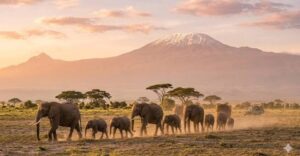
Amboseli National Park is one of Kenya’s most famous safari destinations, known for its large elephant herds, open savannah landscapes and spectacular views of Mount Kilimanjaro. Located in southern Kenya near the Tanzania border, the park is an excellent choice for travelers looking for an unforgettable African wildlife safari.
If you are wondering how to get to Amboseli National Park, the most common options are traveling by road from Nairobi or taking a scheduled or charter flight, subject to availability. You can also reach Amboseli as part of a longer Kenya safari connecting destinations such as Tsavo West National Park and the Maasai Mara.
Choosing the best route depends on your starting point, budget, accommodation, preferred park gate and available time.
At Mambo Gorilla Safaris Uganda, we help travelers plan customized East African safari experiences, including Kenya wildlife adventures and itineraries that can be combined with Uganda’s mountain gorillas and other wildlife attractions.
Where Is Amboseli National Park Located?
Amboseli National Park is in Kajiado County in southern Kenya, close to the Tanzania border and beneath the impressive backdrop of Mount Kilimanjaro.
The park is particularly famous for its elephants, open plains, wetlands and opportunities for wildlife photography.
Its location makes it accessible from Nairobi and suitable for inclusion in a wider Kenya safari itinerary.
According to Kenya Wildlife Service, the park has several road access points, including Iremito, Kimana and Meshanani gates, as well as Kimana Airstrip for light aircraft. <Cite refs={[“turn408046search0”]}/>
Quick Answer: How Do You Get to Amboseli National Park?
There are two main ways to travel to Amboseli National Park.
- By road: Drive from Nairobi via Emali to Iremito Gate, or via Namanga to Meshanani Gate. Kenya Wildlife Service lists these routes at approximately 204 km and 220 km respectively.
- By air: Take a suitable scheduled or charter flight to an Amboseli-area airstrip, then arrange a transfer to your lodge or camp.
- From another safari destination: Travel overland from a nearby park or town, depending on the route, gate and accommodation.
For many travelers, a road transfer from Nairobi is the most practical option. Flying may be more convenient if you have limited time or prefer to avoid a long drive.
1. How to Get to Amboseli National Park by Road
Traveling by road is a popular way to reach Amboseli because it allows you to experience Kenya’s countryside on the way to the park.
The journey from Nairobi generally takes around four to five hours, depending on traffic, road conditions, stops and your chosen gate. Allow additional time during busy periods or when the final approach includes rough road sections.
There are two commonly used approaches from Nairobi.
Route A: Nairobi to Emali to Iremito Gate
This route follows the Nairobi–Mombasa highway toward Emali before turning onto the road toward Loitokitok and continuing to Iremito Gate.
Kenya Wildlife Service lists the distance at approximately 204 km. The route is a popular option for travelers heading to accommodation in the northern part of the park.
The journey typically involves:
- Departing Nairobi and joining the Nairobi–Mombasa highway.
- Traveling toward Emali.
- Turning onto the Emali–Loitokitok road.
- Following the signs toward Iremito Gate.
- Completing the park entry formalities before continuing to your accommodation.
The final approach may involve gravel or uneven road surfaces, depending on the section and current conditions.
Who should choose this route?
It can be convenient for travelers staying near the northern section of Amboseli, including accommodation around Ol Tukai. Confirm the best gate with your lodge before departing.
Route B: Nairobi to Namanga to Meshanani Gate
Another option is to travel south from Nairobi toward Namanga, near the Kenya–Tanzania border, before continuing toward Meshanani Gate.
Kenya Wildlife Service lists this route at approximately 220 km.
The journey generally follows this sequence:
- Leave Nairobi and travel toward Namanga.
- Continue from Namanga toward Amboseli.
- Follow the designated route to Meshanani Gate.
- Complete park entry formalities and proceed to your lodge or camp.
The final section includes gravel road, so journey times may vary with weather and road conditions.
Who should choose this route?
This approach may suit travelers whose accommodation or itinerary is better served by Meshanani Gate. It may also be useful when approaching from the Namanga area, subject to border and road arrangements.
Which road route is better?
Neither route is automatically best for every traveler. The most suitable option depends on your accommodation, current road conditions and intended activities.
Before departure, confirm the recommended gate with your lodge or safari operator. This helps avoid unnecessary driving and makes it easier to arrive within park operating hours.
2. How to Fly to Amboseli National Park
Flying is another option for travelers who want to reduce road travel time.
Kenya Wildlife Service identifies Kimana Airstrip as an air access point for light aircraft and also lists other airstrips in the surrounding area. Actual flight availability depends on the operator, season and schedule. <Cite refs={[“turn408046search0”]}/>
Where can you fly from?
Depending on the service available for your travel dates, flights may operate from Nairobi-area airports, including Wilson Airport.
Before booking, confirm:
- The departure airport
- The arrival airstrip
- Flight schedule and duration
- Baggage weight and size limits
- Whether the flight is scheduled or chartered
- Whether your lodge provides an airstrip transfer
Do not assume that every flight operates daily or that every lodge is close to the same airstrip.
What happens after landing?
Most travelers arrange a road transfer from the airstrip to their accommodation. Depending on the lodge location, this transfer may pass through wildlife habitat and offer opportunities to see animals.
However, wildlife sightings during a transfer are not guaranteed, and you should confirm whether any park fees or transfer charges are included in your booking.
Is flying worth the cost?
Flying can be worthwhile when you have limited vacation time, are planning a luxury safari or want to avoid several hours on the road.
Driving may be more economical, particularly for families or groups sharing a vehicle. Compare the full cost of flights, transfers, baggage and park access before making a decision.
3. Can You Reach Amboseli Using Public Transport?
Public transport may take you toward nearby towns, but it is not generally the most convenient way to complete a safari journey into Amboseli.
Even if you reach Emali, Kimana or Namanga by bus or matatu, you will still need to arrange reliable transport to your accommodation and the relevant park entrance.
Before considering public transport, establish:
- Where the vehicle drops you off
- Whether onward transfers are available
- Whether your accommodation can arrange a pickup
- How you will manage luggage
- Whether your arrival time is compatible with park access hours
For international visitors, families and travelers with limited time, a prearranged safari transfer is usually simpler and more reliable.
4. How to Get to Amboseli From Other Safari Destinations
Amboseli can be included in a longer Kenya safari rather than visited only from Nairobi.
The best route depends on your previous destination and where you plan to go afterward.
From Tsavo West National Park
Amboseli can be combined with Tsavo West in a multi-park safari. Kenya Wildlife Service identifies a road connection between the two parks through the Kimana area. <Cite refs={[“turn408046search0”]}/>
The exact journey time depends on the gates used, road conditions and accommodation locations.
If you are combining the parks, confirm the best exit and entry gates before booking. This is especially important when staying in camps far from the main access roads.
From the Maasai Mara
Amboseli and the Maasai Mara are both popular Kenya safari destinations, but they are in different parts of the country.
Travel between them can take much of a day by road, depending on the route, traffic and stops. Flying may reduce travel time if suitable services are available.
For a combined safari, consider the order of destinations, the number of nights at each park and the cost of transfers before finalizing the itinerary.
From Tanzania
Amboseli is close to the Tanzania border, and the Namanga area is an important crossing point for regional travel.
If you are arriving from Tanzania, check the correct border crossing, vehicle arrangements, immigration requirements and onward transport to your accommodation. Border access does not replace the need for valid travel documents or a confirmed park transfer.
5. Which Amboseli Gate Should You Use?
Choosing the right entrance can make a difference to your journey because the park covers a large area and lodges are spread across different locations.
Kenya Wildlife Service lists Iremito, Kimana and Meshanani as road access points. <Cite refs={[“turn408046search0”]}/>
| Gate | General approach | Planning consideration |
|---|---|---|
| Iremito Gate | Via Emali | Often convenient for accommodation in the northern park area |
| Kimana Gate | Via the Kimana area | Useful for certain eastern approaches and routes connecting toward Tsavo West |
| Meshanani Gate | Via Namanga | May suit western approaches and some itineraries arriving from the border area |
The nearest gate is not always the best choice if you are also considering road conditions, the lodge’s preferred access route or a planned activity.
Ask your accommodation provider to confirm the recommended entrance and the latest directions before leaving Nairobi.
6. What Can You See After Arriving in Amboseli?
Once you arrive, Amboseli offers a classic East African safari experience.
The park is best known for its elephants and views of Mount Kilimanjaro, but it also has a range of habitats that support diverse wildlife and birdlife.
Elephants and other wildlife
Amboseli is particularly famous for its elephant herds. Depending on conditions, game drives may also offer opportunities to see buffaloes, zebras, wildebeest, giraffes, antelopes and other wildlife.
Predator sightings vary, so it is best to approach each game drive as a wildlife exploration rather than expecting a particular animal.
Mount Kilimanjaro views
The mountain provides one of Amboseli’s most recognizable backdrops. Visibility depends on weather and cloud cover, so clear views are not guaranteed throughout the day.
Early mornings can offer attractive photographic conditions when the skies are clear.
Observation Hill and wetlands
Observation Hill provides panoramic views of parts of the park. Amboseli’s swamps and wetlands also attract wildlife and birds, making them important areas during game drives.
Follow your guide’s advice about permitted walking areas and park regulations.
Maasai cultural experiences
The wider Amboseli region is associated with Maasai communities whose traditions and pastoral livelihoods are part of the area’s cultural landscape.
Some lodges and local operators arrange community visits. Choose respectful experiences that are locally led and confirm the activities and costs in advance.
7. How Many Days Do You Need in Amboseli?
The right length of stay depends on your budget, travel schedule and wildlife interests.
One night and two days
A short stay may suit travelers with limited time.
- Day 1: Travel to Amboseli, check in and enjoy a game drive if arrival time allows.
- Day 2: Take an early game drive before departing.
This itinerary is possible, but it leaves limited time for travel delays or a wider range of activities.
Two nights and three days
For many visitors, two nights offer a more relaxed experience.
- Day 1: Arrive and enjoy an afternoon game drive.
- Day 2: Explore the park through morning and afternoon game drives.
- Day 3: Enjoy an optional early game drive before departure.
This option provides more flexibility for wildlife viewing and photography.
Three nights or longer
A longer stay may be ideal for photographers, families and travelers who want a slower pace. It gives you more opportunities to explore different areas of the park and enjoy time at your lodge.
8. Best Time to Visit Amboseli National Park
Amboseli can be visited throughout the year, but seasonal conditions affect the landscape, road conditions and wildlife viewing.
During generally drier periods, animals may be easier to locate around remaining water sources. During wetter periods, the landscape may become greener, although rain can affect travel and visibility.
When choosing travel dates, consider:
- Your preferred wildlife experiences
- Road conditions and the final approach to your lodge
- Your budget and accommodation availability
- Photography goals
- Your wider Kenya safari itinerary
Mount Kilimanjaro may be hidden by clouds at any time of year. If mountain photography is a priority, allow more than one opportunity for viewing.
9. What Should You Pack for an Amboseli Safari?
Pack according to the weather, activities and length of your stay.
Useful items include:
- Lightweight neutral-coloured clothing
- A warm layer for early morning game drives
- Comfortable closed shoes
- Sun hat or cap
- Sunglasses
- Sunscreen
- Insect repellent
- Binoculars
- Camera and spare batteries
- Reusable water bottle
- Personal medication
- Small daypack
If you are traveling by light aircraft, check baggage limits before packing. Some aircraft have strict restrictions on luggage size, weight and bag type.
10. Important Travel Tips Before Going to Amboseli
A little preparation can help you avoid delays and make the most of your safari.
Confirm the gate and route. Check with your lodge or operator rather than relying only on a general map.
Allow enough travel time. Nairobi traffic and road conditions can make journeys longer than expected.
Check park operating hours. Kenya Wildlife Service states that park gates generally open at 6:00 AM and close at 6:00 PM, with overnight visitors subject to applicable arrangements. Confirm current rules before travel. <Cite refs={[“turn408046search0”]}/>
Arrange park entry and transfers. Confirm which fees are included in your safari package and which are payable separately.
Carry essential supplies. Fuel and other services may be limited near the park. Plan fuel stops and supplies before entering remote areas.
Respect wildlife. Follow your guide’s instructions, remain in authorized areas and avoid disturbing animals.
Check current conditions. Road surfaces, access routes and flight schedules can change. Confirm them close to your departure date.
Why Book Your Amboseli Safari With Mambo Gorilla Safaris Uganda?
Planning an Amboseli safari involves more than selecting a route. You need to coordinate transport, park access, accommodation, game drives and the rest of your travel itinerary.
Mambo Gorilla Safaris Uganda can help you plan a customized East African holiday based on your interests, travel dates, group size and budget.
Your itinerary can focus on Amboseli or combine it with other destinations, depending on the time available.
If you want to explore more of East Africa, you can discuss a wider trip that includes Kenya’s wildlife parks and Uganda’s gorilla and primate experiences.
Visit Mambo Gorilla Safaris Uganda to explore safari options and request a customized itinerary.
Frequently Asked Questions About Getting to Amboseli National Park
How far is Amboseli National Park from Nairobi?
Kenya Wildlife Service lists approximately 204 km from Nairobi to Iremito Gate via Emali and 220 km to Meshanani Gate via Namanga. Actual distance and travel time depend on your route and final destination within the park.
How long does it take to drive from Nairobi to Amboseli?
Allow roughly four to five hours under typical conditions, but Nairobi traffic, stops and road conditions can extend the journey.
Can I fly to Amboseli National Park?
Yes. Kimana Airstrip is listed by Kenya Wildlife Service as an air access point for light aircraft. Confirm flight availability, baggage limits and transfers for your dates.
Which gate is best for entering Amboseli?
Iremito, Kimana and Meshanani are established road access points. The best option depends on your accommodation, route and current road conditions.
Can I visit Amboseli on a day trip from Nairobi?
A day trip is possible in principle, but it involves a substantial amount of road travel and leaves limited time for wildlife viewing. An overnight stay is generally more rewarding.
Is Amboseli accessible from Tanzania?
Yes, itineraries can approach the region via the Namanga border area, subject to current border and immigration arrangements. Confirm your crossing and onward transfer before travel.
Can I combine Amboseli with Tsavo West?
Yes. The two parks can be combined in a multi-day safari. The most suitable route depends on the gates used, accommodation and current road conditions.
What is the best way to get to Amboseli for a first-time visitor?
For many first-time visitors, a prearranged road transfer from Nairobi is straightforward. Flying can be a useful alternative if time is limited and suitable flights are available.
Final Thoughts: Plan Your Journey to Amboseli National Park
Getting to Amboseli National Park is relatively straightforward when you choose the right route and arrange transport in advance. Road travel from Nairobi via Emali or Namanga is a popular option, while light aircraft provide an alternative for travelers who prefer to save time.
Before you depart, confirm your lodge’s recommended gate, the current road conditions, park access arrangements and any flight or transfer details.
With thoughtful planning, your journey to Amboseli can be the beginning of an unforgettable Kenya safari featuring elephants, savannah landscapes, wildlife photography and views of Mount Kilimanjaro.
Plan your Amboseli safari with Mambo Gorilla Safaris Uganda and explore options for a customized Kenya or East African wildlife holiday.


