Email: info@mambogorillasafarisuganda.com | Call: +256772666331

Religious Churches to Visit in Kampala: Rubaga, Namirembe & Bahá’í Temple

Kampala is the vibrant capital of Uganda and one of the best places to begin discovering the country’s history, culture, religion and people.
While many travelers visit Uganda for mountain gorilla trekking, chimpanzee tracking and wildlife safaris, Kampala offers a different kind of experience. Its historic hills are home to remarkable churches, cathedrals, mosques and other places of worship that reveal important chapters of Uganda’s cultural and religious heritage.
Among the best religious churches and places of worship to visit in Kampala are Rubaga Cathedral, Namirembe Cathedral and the Bahá’í Temple. These landmarks combine history, architecture, spirituality and sightseeing, making them worthwhile additions to a Kampala city tour.
If you are planning a Uganda safari with Mambo Gorilla Safaris, a visit to these religious attractions can easily be incorporated before or after your wildlife or gorilla trekking adventure.
Quick Guide to Religious Sites in Kampala
| Religious attraction | Location | Main attraction |
|---|---|---|
| Rubaga Cathedral | Rubaga Hill | Catholic history, architecture and Kampala views |
| Namirembe Cathedral | Namirembe Hill | Anglican heritage and historic architecture |
| Bahá’í Temple | Kikaaya Hill | Bahá’í architecture, gardens and peaceful surroundings |
| Uganda National Mosque | Old Kampala Hill | Islamic architecture and city views |
| Namugongo Martyrs Shrine | Namugongo | Christian pilgrimage and history |
| Kibuli Mosque | Kibuli Hill | Islamic heritage and architecture |
Whether you are interested in Christian heritage, Islamic architecture, religious diversity, history or cultural tourism, Kampala has plenty to explore.
1. Rubaga Cathedral – A Historic Catholic Landmark in Kampala
St. Mary’s Cathedral Rubaga, commonly known as Rubaga Cathedral, is one of Kampala’s most important religious and historical landmarks.
Located on Rubaga Hill, the cathedral is recognizable by its impressive twin towers and prominent position overlooking the city.
The cathedral has a deep connection with the history of Catholicism in Uganda and the country’s Christian heritage. Its architecture, religious significance and hilltop setting make it an important stop for travelers exploring Kampala.
Rubaga is particularly interesting for visitors who want to combine religious tourism, history and architecture in one experience.
What can you see at Rubaga Cathedral?
Depending on visitor access and the activities taking place, travelers can appreciate:
- The cathedral’s distinctive architecture
- Historic religious features
- Stained-glass details
- The surrounding grounds
- Kampala’s landscape from Rubaga Hill
- Important elements of Uganda’s Catholic heritage
The cathedral is also associated with the history of the Uganda Martyrs, adding another important dimension to a visit.
Why include Rubaga Cathedral on your Kampala tour?
Rubaga Cathedral is an excellent stop for travelers who want to understand how Christianity became part of Uganda’s modern history.
It also provides a natural opportunity to explore one of Kampala’s historic hills while discovering the city’s architectural heritage.
2. Namirembe Cathedral – Discover Uganda’s Anglican Heritage
St. Paul’s Cathedral Namirembe, commonly known as Namirembe Cathedral, is another major religious landmark in Kampala.
Standing on Namirembe Hill, the cathedral has an important place in the history of the Anglican Church in Uganda.
The history of the cathedral dates back to the early development of the Anglican mission in Uganda, while the present structure was completed in the early twentieth century.
Today, Namirembe remains both an active place of worship and an important historical attraction.
What makes Namirembe Cathedral special?
Visitors can discover:
- Historic Anglican heritage
- Distinctive cathedral architecture
- Stained-glass features
- Historic memorials and chapels
- The cathedral’s elevated position
- Views across Kampala
- Connections to Uganda’s Christian history
The cathedral can also be visited as part of a broader historical tour of Kampala.
Namirembe and Rubaga in one tour
Because Rubaga and Namirembe are both located on historic Kampala hills, travelers interested in religious heritage can include both cathedrals in the same city excursion.
This makes it possible to compare two important Christian traditions while learning about their roles in Uganda’s history.
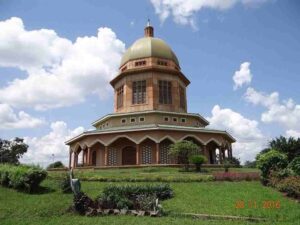
3. Bahá’í Temple – The Mother Temple of Africa
The Bahá’í Temple in Kampala offers a completely different experience from Rubaga and Namirembe.
Located on Kikaaya Hill, the temple is surrounded by expansive gardens and green spaces that provide a peaceful environment away from the busy city.
It is the Mother Temple of Africa and is one of Kampala’s most distinctive religious and architectural attractions.
The building itself has a remarkable design, while the surrounding gardens provide an attractive setting for visitors interested in nature, architecture, photography and quiet reflection.
Why visit the Bahá’í Temple?
A visit gives travelers the opportunity to:
- Appreciate distinctive religious architecture
- Learn about the Bahá’í Faith
- Explore landscaped gardens
- Enjoy a peaceful environment
- Take photographs where permitted
- Experience Kampala’s religious diversity
- Appreciate views from Kikaaya Hill
The Bahá’í Temple is especially worthwhile for travelers looking for something different from traditional cathedral and mosque visits.
Rubaga Cathedral, Namirembe Cathedral or Bahá’í Temple?
These three attractions should not necessarily be viewed as alternatives. They represent different religious traditions and offer different visitor experiences.
Rubaga Cathedral
Best suited to travelers interested in Catholic history, Christian heritage and historic architecture.
Namirembe Cathedral
Particularly interesting for travelers interested in Anglican history, Christianity and historic cathedral architecture.
Bahá’í Temple
A distinctive choice for travelers interested in religious diversity, architecture, gardens and peaceful surroundings.
If your schedule allows, visiting all three creates a more complete picture of Kampala’s religious and cultural landscape.
4. Uganda National Mosque – Explore Old Kampala
Another important religious landmark is the Uganda National Mosque, located on Old Kampala Hill.
Its prominent position and impressive Islamic architecture make it one of the city’s recognizable landmarks.
The mosque can be included in a wider Kampala city tour alongside historic churches and other cultural attractions.
For visitors interested in Uganda’s religious diversity, including the National Mosque provides a broader perspective beyond Christian heritage.
5. Namugongo Martyrs Shrine – An Important Christian Pilgrimage Site
The Uganda Martyrs Shrine at Namugongo is one of Uganda’s most important Christian pilgrimage destinations.
The site commemorates the Uganda Martyrs and attracts pilgrims and visitors interested in the religious history of Uganda.
For travelers interested in Christian heritage, Namugongo can complement visits to Rubaga Cathedral and Namirembe Cathedral.
It can also be incorporated into a broader cultural itinerary around Kampala.
6. Kibuli Mosque – Another Important Religious Landmark
Located on Kibuli Hill, Kibuli Mosque is another significant place of worship in Kampala.
The mosque contributes to the city’s diverse religious landscape and can be included in an itinerary focused on religious, cultural and historical attractions.
Travelers interested in seeing different places of worship can combine Kibuli Mosque with the Uganda National Mosque and Kampala’s historic cathedrals.
Why Visit Religious Sites in Kampala?
A Uganda safari is not only about wildlife.
While gorilla trekking, chimpanzee tracking and game drives are major attractions, understanding Uganda’s culture can make your journey much more meaningful.
A Kampala religious tour allows travelers to explore several aspects of the country.
Discover Uganda’s history
Historic religious institutions are closely connected with Uganda’s social and cultural development.
Experience architectural diversity
Kampala’s churches, cathedrals, mosques and temples display different architectural traditions.
Understand religious diversity
Visiting different places of worship provides an opportunity to appreciate the variety of religious traditions present in Uganda.
Explore Kampala’s historic hills
Many of the city’s most important religious landmarks are located on hills, giving travelers an opportunity to experience both cultural attractions and Kampala’s landscape.
Add culture to your safari
A religious and cultural tour is an excellent way to begin or finish a Uganda wildlife or gorilla safari.
Best Religious and Cultural Places to Combine in Kampala
If you have a full day available, you can combine religious attractions with other major Kampala experiences.
A possible itinerary could include:
Morning
Rubaga Cathedral
Begin at Rubaga Hill and explore the cathedral and surrounding area.
Late morning
Namirembe Cathedral
Continue to Namirembe Hill to discover the cathedral and its Anglican heritage.
Lunch
Enjoy a Ugandan meal at a suitable restaurant in Kampala.
Afternoon
Bahá’í Temple
Visit Kikaaya Hill and explore the temple and its gardens.
Late afternoon
Depending on your interests and available time, continue to:
- Uganda National Mosque
- Namugongo Martyrs Shrine
- Uganda Museum
- Kasubi Royal Tombs
- Kabaka’s Palace
- National Theatre
- Local markets
- Craft markets
A Mambo Gorilla Safaris guide can help you build the experience around the time available and your wider Uganda safari itinerary.
How Many Days Do You Need to Explore Kampala?
You can experience several major Kampala attractions in one day, but two days provide more flexibility.
One day in Kampala
A one-day city tour can focus on:
- Rubaga Cathedral
- Namirembe Cathedral
- Bahá’í Temple
- Uganda National Mosque
- One or two additional cultural attractions
Two days in Kampala
With two days, you can slow down and include additional experiences such as:
- Kasubi Royal Tombs
- Uganda Museum
- Kabaka’s Palace
- Namugongo Martyrs Shrine
- Local markets
- Craft shopping
- Traditional food experiences
- More time at religious sites
The best itinerary depends on whether Kampala is the main destination or a stop before your safari.
Best Time to Visit Religious Sites in Kampala
Kampala is a year-round destination, but religious sites remain active places of worship.
Visitors should therefore plan their visits respectfully.
Important visitor tips
- Dress modestly.
- Respect people who are praying.
- Keep noise low.
- Ask permission before photographing people.
- Follow photography restrictions.
- Follow instructions from guides and site staff.
- Avoid interrupting religious services.
- Respect local customs.
- Check opening or visiting arrangements before traveling.
If you specifically want to attend a religious service, confirm the current service schedule beforehand.
Combine a Kampala City Tour with a Uganda Gorilla Safari
One of the best ways to experience Uganda is to combine culture and wildlife in the same trip.
Mambo Gorilla Safaris offers Uganda safari experiences that include gorilla trekking, wildlife viewing, chimpanzee tracking and other activities.
This means travelers can begin with a Kampala cultural experience before continuing to Uganda’s forests and national parks.
Kampala + Bwindi Gorilla Trekking
After exploring Kampala’s religious and cultural attractions, continue southwest to Bwindi Impenetrable National Park for mountain gorilla trekking.
Mambo Gorilla Safaris offers a 3-day Bwindi gorilla tour that combines gorilla trekking with a cultural encounter.
This is an excellent option for travelers who want to combine Uganda’s cultural heritage with one of the world’s most memorable wildlife experiences.
Kampala + Queen Elizabeth National Park
You can also combine Kampala with Queen Elizabeth National Park.
Mambo’s 3-day Queen Elizabeth itinerary includes game drives and a boat cruise on the Kazinga Channel, with opportunities to see wildlife such as elephants, buffaloes, lions, leopards and hippos.
Kampala + Murchison Falls National Park
Travelers can also continue north to Murchison Falls National Park.
Mambo’s 3-day Murchison Falls safari includes wildlife viewing, a boat cruise and a visit to the dramatic Murchison Falls.
Kampala + Kibale Forest
For primate enthusiasts, Kampala can be combined with a journey to Kibale Forest National Park for chimpanzee tracking and forest experiences.
Kampala + Multiple Uganda National Parks
Travelers with more time can combine Kampala with several destinations.
Mambo’s 10-day wildlife and primate itinerary combines Murchison Falls, Kibale, Queen Elizabeth, Bwindi and Lake Mburo, creating a broad Uganda safari experience.
Why Choose Mambo Gorilla Safaris for Your Uganda Adventure?
A local safari company can help you combine different parts of your Uganda holiday into one itinerary.
Mambo Gorilla Safaris specializes in experiences centered around Uganda’s gorillas, chimpanzees, wildlife, birding and cultural attractions.
The company offers different safari durations and itineraries, including gorilla trekking, wildlife safaris and combined primate and wildlife adventures.
Whether you have one day for Kampala or several weeks for Uganda, your itinerary can be structured around the experiences that interest you most.
Your Uganda trip can include:
- Kampala city tours
- Religious and cultural attractions
- Gorilla trekking
- Chimpanzee tracking
- Game drives
- Boat cruises
- Bird watching
- Nature walks
- Cultural encounters
- Rhino tracking
- Lake experiences
- Multi-park Uganda safaris
For example, Mambo’s 4-day Bwindi and Lake Mburo itinerary combines gorilla trekking, cultural experiences, nature walks, game viewing and a boat cruise.
Responsible Tourism When Visiting Religious Sites
Religious tourism should always be approached respectfully.
Remember that churches, mosques and temples are not simply tourist attractions. They are places where people worship, pray and participate in important religious ceremonies.
As a responsible visitor:
- Respect worshippers.
- Dress appropriately.
- Follow site rules.
- Avoid intrusive photography.
- Do not disturb religious ceremonies.
- Listen to your guide.
- Support local communities where appropriate.
- Leave the environment clean.
Responsible travel helps preserve Uganda’s cultural heritage for future generations.