Email: info@mambogorillasafarisuganda.com | Call: +256772666331

Top 10 Deadliest Animals in the World: Dangerous Wildlife and Safari Animals

When people hear the phrase deadliest animals in the world, they often imagine lions, crocodiles, elephants, or other powerful predators. But the animals responsible for the greatest number of human deaths are not necessarily the biggest or strongest.
Mosquitoes, for example, transmit diseases such as malaria that cause hundreds of thousands of deaths every year. Snakes are also responsible for a substantial global burden, with the World Health Organization estimating that snakebite envenoming causes tens of thousands of deaths annually.
At the same time, Africa has some of the world’s most powerful and potentially dangerous wildlife. Elephants, hippos, Nile crocodiles, lions, buffaloes and leopards can all pose serious risks when people approach them incorrectly or encounter them without appropriate guidance.
If you are planning a Uganda wildlife safari or gorilla trekking adventure, understanding dangerous wildlife is important. It helps you appreciate animals from a safe distance while allowing you to enjoy Uganda’s extraordinary landscapes and biodiversity responsibly.
This guide explores the top 10 deadliest animals in the world, explains why they are dangerous, and highlights some of the animals you may encounter during a safari in Uganda with Mambo Gorilla Safaris.
What Makes an Animal One of the Deadliest in the World?
There is no single scientific ranking of the world’s deadliest animals.
An animal can be considered dangerous because of:
- The number of human deaths associated with it
- Venom or poison
- Disease transmission
- Aggressive defensive behavior
- Physical strength
- Frequency of human encounters
- The severity of injuries it can cause
This means a tiny mosquito can have a far greater global health impact than a lion, while a hippo may present a greater concern during a particular encounter near water.
For this reason, the list below combines global public-health impact and direct human danger, rather than pretending that every animal can be accurately ranked using one measurement.
Top 10 Deadliest Animals in the World
1. Mosquitoes
Why are mosquitoes among the deadliest animals in the world?
Mosquitoes are tiny, but their impact on human health is enormous.
Certain mosquito species transmit diseases including:
- Malaria
- Dengue
- Yellow fever
- Zika
- Chikungunya
- West Nile virus
According to the World Health Organization, malaria alone causes hundreds of thousands of deaths each year, making mosquito-borne disease one of the world’s major causes of preventable mortality.
Unlike a lion or crocodile, a mosquito does not need to attack a person physically to become dangerous. Its importance comes from its role as a disease vector.
Mosquitoes and Uganda safaris
Travelers visiting Uganda should take mosquito-bite prevention seriously. The CDC recommends measures such as wearing long sleeves and trousers, using an appropriate insect repellent, and using screened or air-conditioned accommodation where available.
2. Humans
Humans are capable of causing enormous harm to other humans through warfare, violence, crime, environmental destruction and other activities.
However, including humans in a list of dangerous animals depends heavily on how “deadliest” is defined. This is one reason why global lists of dangerous animals can vary significantly.
For wildlife travelers, the more useful lesson is that human behavior also affects wildlife. Responsible tourism helps minimize disturbance to animals and their habitats.
3. Venomous Snakes
Snakes are among the world’s most medically significant dangerous animals.
The World Health Organization estimates that approximately 5.4 million people are bitten by snakes each year, with around 1.8 to 2.7 million cases of envenoming and approximately 81,410 to 137,880 deaths annually.
Snakebite is particularly important in tropical and subtropical regions, including parts of Africa.
Why are venomous snakes dangerous?
Depending on the species, snake venom can cause:
- Paralysis
- Severe bleeding
- Tissue destruction
- Kidney failure
- Breathing difficulties
- Permanent disability
- Death
Most snakes do not actively seek out humans. Many bites occur when snakes are accidentally stepped on, cornered or handled.
Snake safety during an African safari
Never attempt to touch, catch or kill a snake you encounter during a safari.
Instead:
- Keep your distance.
- Alert your guide.
- Allow the snake a clear escape route.
- Follow your guide’s instructions.
Professional safari guides understand wildlife behavior and can help visitors maintain a safe distance.
4. Dogs
Dogs are among the most important animals in the global rabies burden.
The World Health Organization estimates that rabies causes tens of thousands of human deaths annually, and dogs are responsible for up to 99% of human rabies transmission.
Rabies is particularly serious because once clinical symptoms appear, it is virtually 100% fatal. However, prompt post-exposure treatment can prevent the disease from developing.
Staying safe around dogs in Uganda
The CDC advises travelers to Uganda to avoid contact with unfamiliar animals and notes that rabies-infected dogs are found in Uganda.
Do not:
- Pet unfamiliar dogs
- Feed stray animals
- Allow animals to lick open wounds
- Approach animals that appear sick or aggressive
If you are bitten or scratched by a potentially rabid animal, seek medical attention immediately.
5. Freshwater Snails
Freshwater snails may not look dangerous, but some species play an important role in the transmission of schistosomiasis.
Schistosomiasis is a parasitic disease associated with freshwater environments in many tropical regions.
This demonstrates an important point: an animal does not have to be large, aggressive or venomous to have a major effect on human health.
Travelers in Uganda
The CDC advises travelers to Uganda to avoid swimming in freshwater lakes, ponds and rivers where schistosomiasis may occur.
During your Uganda safari, enjoy lakes and rivers from appropriate viewing areas and follow local safety guidance.
6. Kissing Bugs
Kissing bugs, also known as triatomine bugs, are associated with the transmission of Chagas disease, particularly in parts of the Americas.
Their inclusion on global lists of dangerous animals illustrates why “deadliest” should not simply mean “most aggressive.”
Many dangerous animals affect humans indirectly through disease transmission rather than through attacks.
7. Sandflies
Sandflies can transmit leishmaniasis, a group of parasitic diseases occurring in various tropical and subtropical regions.
Like mosquitoes, sandflies are dangerous primarily because of the pathogens they can transmit.
Travelers can reduce exposure to biting insects by:
- Wearing long clothing
- Using insect repellent
- Sleeping in protected accommodation
- Following destination-specific health advice
8. Roundworms
Some parasitic roundworms can infect humans and cause serious disease.
Unlike large predators, these organisms are dangerous because they live inside or interact with the human body.
Their impact reinforces the importance of hygiene, sanitation, safe food and safe water when traveling.
9. Scorpions
Scorpions are found in many parts of the world, and some species possess medically significant venom.
A scorpion sting can cause severe pain and, depending on the species and victim, serious medical complications.
How to avoid scorpion encounters
When staying in rural or wilderness environments:
- Shake out shoes before putting them on.
- Avoid reaching into dark crevices.
- Keep personal belongings off the ground where practical.
- Follow lodge and guide safety instructions.
Never deliberately handle a scorpion.
10. Tapeworms and Other Parasites
Certain tapeworm infections can cause severe disease in humans.
As with several other animals and organisms on this list, their danger is associated primarily with disease rather than physical attacks.
This is why a meaningful discussion of the deadliest animals in the world needs to include both wildlife encounters and disease transmission.
The Most Dangerous Animals You May Encounter on an African Safari
The global list above is very different from a list of animals that can pose a serious risk during a safari.
Africa’s large mammals are generally not looking for opportunities to attack people. However, wild animals are unpredictable, particularly when they feel threatened, surprised, cornered or are protecting young.
Here are some of the animals you should understand before an African wildlife safari.
1. African Elephant
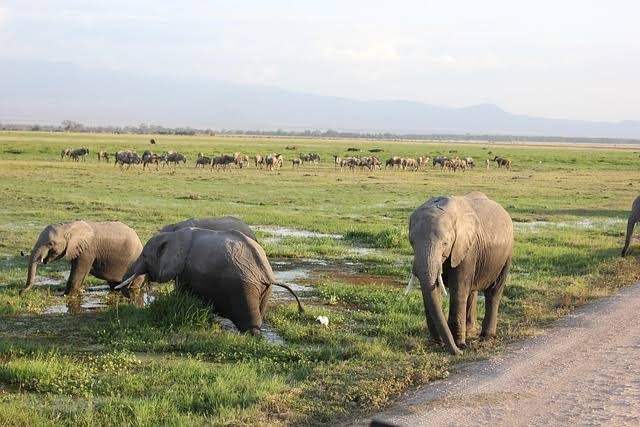
The African elephant is one of the world’s largest land mammals and one of Africa’s most impressive safari animals.
Elephants are usually peaceful when left undisturbed, but they can become dangerous when they perceive a threat.
Warning signs can include:
- Ears being spread widely
- Loud trumpeting
- Mock charges
- Rapid movement toward a perceived threat
- Protective behavior around calves
Never approach a wild elephant on foot unless you are participating in an activity specifically managed by trained professionals.
During a game drive, remain inside the safari vehicle unless your guide has identified a safe location for you to leave it.
2. Hippopotamus
The hippopotamus is one of Africa’s most powerful animals.
Despite spending much of its time in water, a hippo is not a harmless aquatic animal. Hippos can become highly defensive around their territory, particularly in and around water.
They have enormous jaws and powerful teeth capable of causing severe injuries.
Hippo safety
If you encounter hippos:
- Never approach them closely.
- Do not attempt to get between a hippo and the water.
- Listen to your guide.
- Keep a safe distance during boat excursions.
- Never assume that a calm-looking hippo is safe to approach.
Uganda’s waterways can provide spectacular opportunities to see hippos, particularly around areas such as Queen Elizabeth National Park.
Mambo Gorilla Safaris’ Queen Elizabeth safari includes a boat cruise on the Kazinga Channel, where visitors can observe hippos, crocodiles, elephants, buffaloes and numerous bird species from the water.
3. Nile Crocodile
The Nile crocodile is one of Africa’s most formidable predators.
It can remain remarkably still in water, making it difficult for an inexperienced observer to recognize its presence.
Nile crocodiles are associated with rivers, lakes and other aquatic habitats.
How to stay safe around crocodiles
Never:
- Swim in water known to contain crocodiles.
- Approach a crocodile for photographs.
- Sit at the edge of a river without guidance.
- Feed crocodiles.
- Assume that shallow water is automatically safe.
During a Uganda safari, follow your guide’s instructions around all waterways.
4. African Buffalo
The African buffalo is a powerful member of Africa’s famous Big Five.
Buffaloes can appear calm while grazing, but they are wild animals and can become dangerous when threatened or wounded.
A safari vehicle provides an important safety barrier between visitors and wildlife.
Never attempt to approach buffaloes on foot for a closer photograph.
5. Lion
The African lion is one of the world’s most recognizable predators.
Lions are powerful carnivores capable of taking down large prey.
However, seeing a lion on safari does not mean that an attack is imminent. In properly managed game-viewing situations, visitors normally observe lions from safari vehicles under the direction of trained guides.
Lion safety
Stay inside the vehicle unless your guide tells you otherwise.
Avoid shouting, sudden movements or attempts to attract a lion’s attention.
Never attempt to approach a lion for a selfie.
6. Leopard
Leopards are powerful, elusive predators known for their ability to climb trees and conceal themselves in vegetation.
They are generally secretive and often avoid people.
Their strength, stealth and adaptability make them fascinating safari animals.
If you are lucky, you may spot one resting in a tree or moving through the savannah.
7. Rhinoceros
Rhinos are large, powerful herbivores with excellent hearing and a strong defensive response when they perceive a threat.
They should always be treated as wild animals rather than approaching them simply because they are herbivores.
Mambo Gorilla Safaris offers itineraries that combine Uganda wildlife experiences with rhino tracking at Ziwa Rhino Sanctuary, providing travelers with an opportunity to learn about one of Africa’s most iconic species.
Dangerous Animals in Uganda: Where Might You See Them?
Uganda is an exceptional destination for wildlife enthusiasts because its protected areas contain a remarkable variety of mammals, birds, reptiles and primates.
Some of the country’s major safari destinations include:
Murchison Falls National Park
Murchison Falls provides opportunities to see animals such as:
- Elephants
- Lions
- Buffaloes
- Giraffes
- Antelopes
- Nile crocodiles
- Hippopotamuses
Mambo Gorilla Safaris’ Uganda itineraries combine game drives and Nile boat cruises, giving visitors opportunities to experience wildlife from both land and water.
Queen Elizabeth National Park
Queen Elizabeth National Park is particularly well known for its diverse wildlife.
Mambo’s Queen Elizabeth itinerary highlights animals including:
- Lions
- Elephants
- Buffaloes
- Leopards
- Hippos
- Nile crocodiles
- Antelopes
- Warthogs
- Tree-climbing lions in Ishasha
The Kazinga Channel boat cruise is another major attraction, providing close viewing opportunities of hippos, crocodiles, elephants and buffaloes from the water.
Ishasha Sector
Ishasha is famous for its unusual tree-climbing lions.
Mambo Gorilla Safaris combines Ishasha wildlife viewing with Bwindi gorilla trekking on its multi-day itinerary, allowing travelers to experience both Uganda’s savannah wildlife and mountain gorillas in one journey.
Are Gorillas Among the Deadliest Animals in the World?
No.
Mountain gorillas are extremely powerful wild animals, but describing them simply as “deadly” gives a misleading impression.
Gorillas are generally peaceful and social animals. Visitors participating in regulated gorilla trekking follow strict rules designed to minimize stress and maintain safe distances.
During a gorilla trek, visitors should:
- Follow the instructions of park rangers and guides.
- Maintain the required distance from gorillas.
- Avoid sudden movements.
- Never attempt to touch a gorilla.
- Avoid using flash photography where prohibited.
- Never feed gorillas.
- Stay calm and follow ranger instructions.
Mambo Gorilla Safaris offers gorilla trekking experiences in Bwindi Impenetrable National Park, including a 3-day gorilla tour combining trekking with a Batwa cultural encounter.
How to Stay Safe Around Dangerous Animals on Safari
The most important safari safety rule is simple:
Listen to your guide.
Professional guides understand animal behavior, park regulations and the terrain much better than first-time visitors.
You should also:
1. Never approach wildlife
A photograph is not worth putting yourself or an animal at risk.
2. Stay inside the safari vehicle
Unless your guide has specifically confirmed that it is safe to leave the vehicle, remain inside.
3. Do not feed wild animals
Feeding wildlife can alter natural behavior and create dangerous interactions.
4. Keep quiet when appropriate
Loud noises can disturb animals and may provoke defensive reactions.
5. Keep your distance
Use a camera with a zoom lens rather than trying to move closer.
6. Do not touch wild animals
Even apparently calm animals can react unexpectedly.
7. Take insect precautions
Mosquitoes and other insects can transmit diseases. The CDC recommends protective clothing and appropriate insect repellent for travelers in Uganda.
8. Take animal bites and scratches seriously
If you are bitten or scratched by an animal, wash the wound immediately with soap and clean water and seek medical attention. Rabies prevention depends on prompt treatment after a possible exposure.
Are African Safaris Dangerous?
An African safari is a wildlife experience, so visitors should understand that they are entering natural habitats where wild animals live.
However, a properly organized safari is designed around wildlife-management and safety procedures.
Your guide will help determine:
- Where to stop
- How close to approach animals
- When to remain inside the vehicle
- Where walking is appropriate
- How to behave around specific species
- How to respond to unusual animal behavior
The goal is not to eliminate the wildness of the experience, but to experience wildlife responsibly.
Why Uganda Is an Excellent Destination for Wildlife and Gorilla Safaris
Uganda offers something unusual: travelers can combine traditional savannah wildlife viewing with some of Africa’s most remarkable primate experiences.
A longer Uganda itinerary can combine destinations such as:
- Murchison Falls National Park
- Kibale Forest National Park
- Queen Elizabeth National Park
- Bwindi Impenetrable National Park
- Lake Mburo National Park
Mambo Gorilla Safaris offers a multi-destination wildlife and primate itinerary incorporating these destinations, with activities including game drives, boat cruises, chimpanzee trekking and gorilla trekking.
This makes Uganda especially attractive to travelers who want more than a traditional Big Five safari.