Email: info@mambogorillasafarisuganda.com | Call: +256772666331

Why Can’t Mountain Gorillas Be Kept in Zoos?

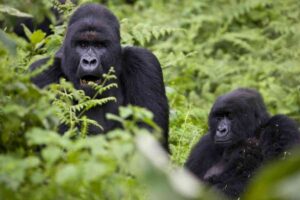
Mountain gorillas are among the most fascinating animals on Earth. Their intelligence, close family bonds, expressive faces and remarkable similarities to humans make them one of Africa’s most sought-after wildlife encounters.
But there is a question that many wildlife lovers ask:
Why can’t mountain gorillas be kept in zoos?
The answer is more complicated than simply saying that mountain gorillas cannot survive in captivity. In exceptional circumstances, rescued or orphaned gorillas may require specialized human care. However, healthy wild mountain gorillas are not normally captured and placed in conventional zoo environments.
For conservation, the priority is to protect mountain gorillas in the wild, where they can live with their families, follow natural behaviors and remain part of the forest ecosystem.
For travelers who want to see these extraordinary animals, gorilla trekking in Uganda provides the opportunity to observe habituated mountain gorilla families in their natural habitat.
Uganda is one of the world’s most important mountain gorilla destinations, with trekking available in Bwindi Impenetrable National Park and Mgahinga Gorilla National Park.
Can Mountain Gorillas Live in Captivity?
Yes, mountain gorillas can survive in specialized human care under certain circumstances.
However, this does not mean that keeping healthy wild mountain gorillas in zoos is the best conservation approach.
There is an important difference between:
- A healthy wild gorilla living with its natural family
- A rescued or orphaned gorilla requiring specialized care
- A gorilla maintained in a conventional captive environment
A rescued gorilla may sometimes need lifelong human care if returning it to the wild is unsafe or impossible.
That is very different from capturing a healthy wild gorilla for public display.
For wild mountain gorillas, conservation efforts focus on protecting their forests, families and natural populations.
Where Do Mountain Gorillas Live?
Mountain gorillas live in a very restricted part of East-Central Africa.
Their remaining wild populations are found in protected landscapes in:
- Uganda
- Rwanda
- Democratic Republic of Congo
In Uganda, mountain gorillas are found in:
- Bwindi Impenetrable National Park
- Mgahinga Gorilla National Park
Uganda Wildlife Authority identifies these two parks as Uganda’s mountain gorilla trekking destinations. Bwindi contains four major trekking sectors: Buhoma, Ruhija, Rushaga and Nkuringo.
This extremely limited distribution makes protecting natural habitat especially important.
Why Can’t Mountain Gorillas Be Kept in Zoos?
There is no single reason. Several factors make wild mountain gorillas particularly suited to conservation in their natural habitat.
1. Mountain Gorillas Need a Natural Forest Environment
Mountain gorillas are adapted to the high-altitude forests of the Albertine Rift.
Their natural environment provides:
- Natural vegetation and food
- Forest cover
- Space for movement
- Social interaction
- Places to rest and raise young
- Natural environmental conditions
- Opportunities to display normal behaviors
A modern zoo can provide sophisticated animal care, but it cannot fully recreate the ecological complexity of a wild mountain forest.
Protecting the forest is therefore an essential part of protecting the gorillas.
Bwindi Impenetrable National Park
Bwindi is one of Uganda’s most important mountain gorilla habitats and a major destination for gorilla trekking.
Uganda Wildlife Authority describes Bwindi as home to roughly half of the world’s mountain gorilla population and identifies four principal trekking sectors: Buhoma, Ruhija, Rushaga and Nkuringo.
This makes Bwindi much more than a tourist destination. It is a critical conservation landscape.
2. Mountain Gorillas Are Highly Social Animals
Mountain gorillas are highly social primates.
They live in family groups containing individuals such as:
- Silverbacks
- Adult females
- Blackbacks
- Juveniles
- Infants
A dominant silverback generally provides leadership and protection, while younger gorillas learn important behaviors through interaction with other members of their group.
Gorillas therefore need more than food, water and shelter.
They need appropriate social relationships and opportunities to express natural behaviors.
Captive management can provide social care in exceptional circumstances, but preserving natural gorilla families in their native habitat remains the conservation priority.
3. Mountain Gorillas Are Vulnerable to Human Diseases
Disease transmission is another major concern.
Humans and gorillas are closely related, meaning certain diseases can pass between people and gorillas.
This is particularly important for mountain gorillas because their wild populations occupy a relatively small geographical range.
For this reason, responsible gorilla tourism includes rules designed to reduce unnecessary contact and health risks.
Visitors should:
- Avoid visiting when sick
- Maintain the required distance from gorillas
- Follow ranger and guide instructions
- Avoid touching the animals
- Avoid unnecessary noise
- Never feed gorillas
- Follow all current park regulations
Uganda Wildlife Authority’s gorilla management guidelines emphasize observing gorillas in their natural habitat under controlled conditions.
The aim is to allow people to experience gorillas without compromising their welfare.
4. Captivity Cannot Replace Wild Gorilla Conservation
Keeping individual gorillas in human care does not solve the main conservation challenge.
Mountain gorilla conservation requires protection of entire ecosystems.
That means protecting:
- Forest habitat
- Gorilla families
- Natural food sources
- Wildlife populations
- Local communities
- Veterinary programs
- Anti-poaching activities
- Responsible tourism
The goal is to maintain healthy, self-sustaining wild populations.
For this reason, protecting wild mountain gorillas and their habitat is more important than simply maintaining individual animals in captivity.
5. Mountain Gorilla Habitat Is Extremely Limited
Mountain gorillas have one of the most restricted ranges among the world’s great apes.
Uganda Wildlife Authority reports that mountain gorillas occur in two main areas: the Virunga region shared by Uganda, Rwanda and the Democratic Republic of Congo, and the Bwindi-Sarambwe landscape.
Their limited range means that every protected forest is extremely important.
When a forest is protected, conservation benefits an entire ecosystem rather than a single animal.
These forests support:
- Mountain gorillas
- Other primates
- Birds
- Antelopes
- Reptiles
- Amphibians
- Insects
- Trees and other plants
Protecting mountain gorillas therefore means protecting biodiversity.
6. Removing a Gorilla Can Affect Its Family
A mountain gorilla is not an isolated animal.
It is part of a complex social group.
Infants depend on adults for protection and care. Young gorillas learn from older members of the group, while adults maintain relationships through grooming, communication and other social behaviors.
Removing an individual from its family can therefore have consequences beyond that one animal.
This is another reason why conservationists prioritize keeping healthy wild gorillas with their natural groups.
7. Rescue Is Different From Capturing Wild Gorillas
This distinction is extremely important.
If a mountain gorilla is:
- Orphaned
- Injured
- Rescued from illegal wildlife trade
- Unable to survive independently
specialized human care may be necessary.
But that is completely different from capturing a healthy wild gorilla for a zoo.
A rescued gorilla may require:
- Veterinary treatment
- Quarantine
- Specialized nutrition
- Social care
- Long-term monitoring
- Specialized caregivers
In some cases, returning the animal to the wild may not be possible.
Specialized rescue facilities can therefore play an important role in individual animal welfare without changing the broader conservation principle that healthy wild gorillas should remain in their natural habitat.
Why Gorilla Trekking Is Better Than Seeing Gorillas in a Zoo
Rather than removing mountain gorillas from the forest, travelers can visit them where they naturally live.
This is the principle behind gorilla trekking in Uganda.
During a regulated gorilla trek, visitors enter the forest with trained guides and trackers to observe a habituated gorilla family.
You may see gorillas:
- Feeding on natural vegetation
- Grooming one another
- Resting
- Playing
- Caring for infants
- Communicating
- Moving through the forest
The experience is completely different from viewing an animal in an artificial enclosure.
You are seeing the gorilla as part of a living ecosystem.
Gorilla Trekking in Uganda With Mambo Gorilla Safaris
At Mambo Gorilla Safaris, travelers can arrange Uganda gorilla trekking experiences focused on some of the country’s most important wildlife destinations.
One of Mambo’s published experiences is its 3 Days Bwindi Gorilla Tour, which combines gorilla trekking with the opportunity for a Batwa cultural experience. The itinerary is designed around a short Uganda gorilla safari and includes services such as accommodation, meals, park fees and guide support.
For travelers who want to experience mountain gorillas without spending a long time on the road, Mambo also offers a flying gorilla safari in Uganda, providing an alternative way to reach southwestern Uganda.
This makes it possible to choose a gorilla safari according to your available time, travel style and wider Uganda itinerary.
What Happens During Gorilla Trekking?
A gorilla trekking experience normally begins with a briefing before visitors enter the forest.
Guides and trackers explain the rules and lead visitors toward the assigned gorilla family.
The trek may involve:
- Walking along forest trails
- Following signs of the gorilla family
- Hiking through dense vegetation
- Navigating steep or muddy terrain
- Locating the habituated gorilla group
- Observing the gorillas under controlled conditions
- Returning from the forest after the permitted viewing period
Uganda Wildlife Authority states that gorilla treks can take approximately 2 to 7 hours, depending on circumstances, with visitors generally receiving one hour of observation with a habituated gorilla family.
This is why gorilla trekking should be approached as a genuine forest adventure rather than an ordinary wildlife viewing activity.
How Difficult Is Gorilla Trekking in Uganda?
Gorilla trekking can be physically demanding.
Bwindi is a mountainous rainforest, and trails may involve:
- Steep slopes
- Mud
- Uneven terrain
- Dense vegetation
- Wet conditions
- Long periods of walking
Uganda Wildlife Authority recommends moderate fitness for gorilla trekking.
Travelers should prepare accordingly.
What to Pack for Gorilla Trekking
Consider bringing:
- Sturdy hiking boots
- Long trousers
- Long-sleeved shirts
- Waterproof jacket
- Waterproof trousers where appropriate
- Gardening or trekking gloves
- Drinking water
- Snacks
- Insect repellent
- Camera
- Walking stick or trekking poles if needed
- Small backpack
A good pair of waterproof hiking boots can make a significant difference on wet forest trails.
When Is the Best Time for Gorilla Trekking in Uganda?
Gorilla trekking takes place throughout the year.
Many travelers prefer the relatively drier periods, particularly June to September and December to February, but rainforest weather can change quickly.
The best time for your trip therefore depends on your schedule, budget and preferred travel conditions.
There is also a benefit to visiting during wetter periods: the forest can be exceptionally lush and green, creating a beautiful environment for photography and wildlife viewing.
Instead of waiting for perfect weather, it is often more useful to choose a travel period that fits your wider Uganda safari plans.
Gorilla Trekking Rules That Protect Mountain Gorillas
Responsible tourism is essential for the long-term protection of mountain gorillas.
Before trekking, visitors should familiarize themselves with the current rules issued by Uganda Wildlife Authority and follow the instructions of their guides and trackers.
Important principles include:
Keep the required distance
Never attempt to approach, touch or interact physically with a gorilla.
Do not trek when sick
If you are unwell, especially with an infectious illness, speak to your safari operator and follow the relevant park guidance.
Never feed the gorillas
Gorillas should continue their natural feeding behavior.
Keep noise to a minimum
Avoid unnecessary shouting or sudden movements.
Follow photography rules
Use cameras responsibly and follow the instructions given by your guide.
Do not leave rubbish behind
Keep the forest clean and carry waste out with you.
Follow your guide’s instructions
Your guide and trackers understand the gorilla family’s behavior and the park’s conservation procedures.
These precautions help protect both visitors and gorillas.
How Gorilla Tourism Supports Conservation
Responsible tourism can play an important role in conservation.
Gorilla tourism supports an economic system involving:
- Guides
- Trackers
- Drivers
- Accommodation providers
- Restaurants
- Local communities
- Cultural experiences
- Conservation services
Uganda Wildlife Authority has also highlighted tourism and other revenue streams as part of efforts to support conservation activities in Uganda’s gorilla parks.
When travelers visit responsibly, their spending can contribute to a broader tourism economy connected to protected areas and local communities.
Experience Bwindi With Mambo Gorilla Safaris
If your goal is to see mountain gorillas in their natural environment, Bwindi Impenetrable National Park should be high on your Uganda itinerary.
Mambo Gorilla Safaris can organize gorilla trekking experiences in Bwindi and combine them with other activities depending on your travel plans.
A short gorilla safari can be extended with:
- Chimpanzee trekking
- Queen Elizabeth National Park
- Lake Mburo National Park
- Murchison Falls National Park
- Cultural experiences
- Nature walks
- Other Uganda wildlife experiences
This allows you to transform a gorilla trek into a broader Uganda safari.
Flying Gorilla Safaris in Uganda
Travelers with limited time can consider a flying gorilla safari.
Bwindi is accessible by air through Kihihi and Kisoro airstrips, depending on the trekking sector and itinerary. Uganda Wildlife Authority notes that scheduled and chartered flights serve these approaches from Entebbe.
A flying safari can reduce road travel and give travelers more time for the actual safari experience.
Mambo Gorilla Safaris offers flying gorilla safari options that can be tailored around the traveler’s schedule and preferred itinerary.
Can Gorilla Trekking Be Combined With a Wildlife Safari?
Absolutely.
One of the advantages of choosing Uganda is the ability to combine mountain gorilla trekking with classic African wildlife experiences.
For example, your itinerary could include:
Bwindi + Queen Elizabeth National Park
Combine gorilla trekking with game drives and other wildlife experiences.
Bwindi + Kibale Forest
Add chimpanzee trekking to your primate adventure.
Bwindi + Lake Mburo
Combine gorilla trekking with a shorter southern Uganda wildlife experience.
Bwindi + Murchison Falls
Create a longer Uganda safari featuring game drives and the Nile.
This allows you to experience much more of Uganda beyond mountain gorillas.
Uganda Gorilla Trekking From Rwanda
Travelers visiting Rwanda can also consider a regional itinerary that includes Uganda, depending on their entry requirements, border arrangements and travel plans.
Mambo Gorilla Safaris also organizes Rwanda gorilla safari experiences in Volcanoes National Park.
This provides travelers with flexibility when designing a wider East African gorilla itinerary.
Mountain Gorillas in Zoos vs Gorilla Trekking in Uganda
| Mountain gorillas in conventional captivity | Gorilla trekking in Uganda |
|---|---|
| Gorillas live in a managed human environment | Gorillas remain in their natural habitat |
| Space is artificially provided | Gorillas move through natural forests |
| Social groups require managed care | Wild groups maintain natural social relationships |
| Human care is essential | Guides and conservation teams monitor wild populations |
| Does not replace natural habitat | Depends on protection of natural habitat |
| Mainly relevant to exceptional rescue situations | Provides regulated wildlife tourism |
The important distinction is that responsible gorilla trekking is not about turning wild animals into entertainment.
It is about allowing visitors to observe protected wildlife under controlled conditions while contributing to a tourism system connected to conservation.
Why Mountain Gorillas Should Remain in the Wild
The strongest answer to the question “Why can’t mountain gorillas be kept in zoos?” is that healthy wild mountain gorillas have everything they need to live naturally in their protected forest habitats.
In the wild, they can:
- Form family groups
- Raise their young
- Search for natural food
- Move through large forest environments
- Develop natural social relationships
- Communicate naturally
- Reproduce within wild populations
The conservation objective should therefore be to protect the conditions that allow wild gorillas to continue doing these things.
A Healthy Wild Gorilla Belongs in the Forest
A rescued animal that cannot return to nature is a different situation.
The ethical and conservation question is not simply whether a gorilla can survive in captivity.
It is whether keeping that particular animal in human care is necessary for its welfare and conservation.
For healthy wild mountain gorillas, the answer is clear from a conservation perspective: protect the forest and keep the animals in their natural environment.
Frequently Asked Questions
Why can’t mountain gorillas be kept in zoos?
Healthy mountain gorillas are not normally captured for conventional zoo display. Their conservation priority is protecting wild populations, natural habitat and family groups. Exceptional rescued or orphaned gorillas may require specialized human care.
Are mountain gorillas ever kept in captivity?
Yes. Individual rescued or orphaned mountain gorillas may require specialized care when returning to the wild is not possible or safe. This is different from maintaining a conventional captive population.
Can mountain gorillas survive outside the wild?
Some individuals can survive under expert human care, but captivity does not replace the ecological and social benefits of their natural habitat.
Where can I see mountain gorillas in Uganda?
Mountain gorilla trekking takes place in Bwindi Impenetrable National Park and Mgahinga Gorilla National Park.
Which sectors of Bwindi offer gorilla trekking?
Uganda Wildlife Authority identifies four principal Bwindi trekking sectors: Buhoma, Ruhija, Rushaga and Nkuringo.
How long does gorilla trekking take?
Uganda Wildlife Authority indicates that treks can take approximately 2 to 7 hours, depending on the circumstances, followed by the permitted observation period.
Is gorilla trekking ethical?
Responsible gorilla trekking is designed to minimize disturbance and health risks. Travelers should follow all current UWA regulations, maintain the required distance, avoid visiting when sick and follow their guide’s instructions.
What should I bring for gorilla trekking?
Bring sturdy hiking boots, long clothing, waterproof gear, drinking water, snacks, gloves, insect repellent and a camera. A walking stick can also be useful on steep or muddy trails.
Can I combine gorilla trekking with a Uganda safari?
Yes. Gorilla trekking can be combined with destinations such as Queen Elizabeth National Park, Kibale Forest, Lake Mburo and Murchison Falls National Park.