Email: info@mambogorillasafarisuganda.com | Call: +256772666331

Shoebill Stork Uganda: Complete Guide to Shoebill Tracking in Mabamba Swamp

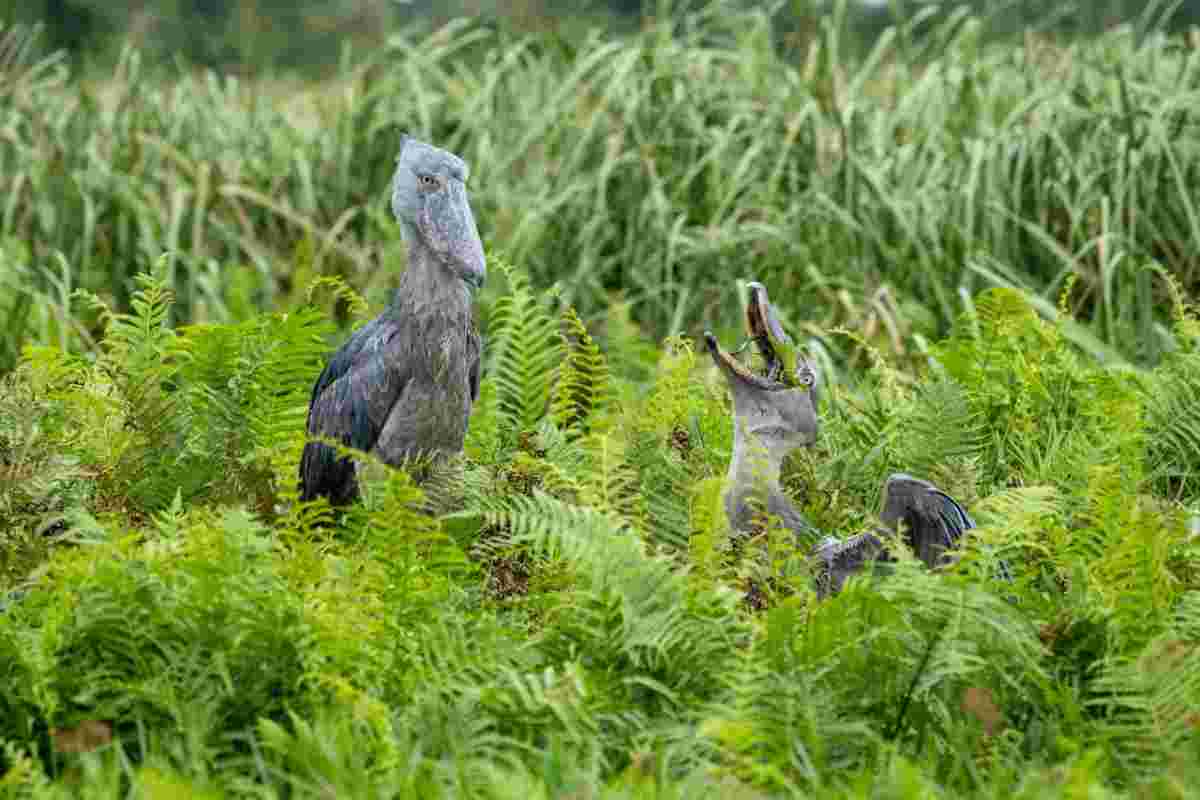
The Shoebill Stork in Uganda is one of Africa’s most fascinating and unusual birds. With its enormous shoe-shaped bill, tall body, grey feathers and prehistoric appearance, the Shoebill is a dream sighting for birdwatchers, wildlife photographers and nature lovers.
Uganda is one of the best destinations in Africa for seeing this remarkable bird in its natural wetland habitat. One of the most accessible places to look for the Shoebill is Mabamba Swamp, a vast papyrus wetland on the shores of Lake Victoria, close to Entebbe.
A Shoebill tracking tour in Uganda combines bird watching, a scenic boat ride and an opportunity to explore one of the country’s most important wetland ecosystems.
If you are planning a Uganda safari and want to see the Shoebill, this guide explains where to find it, the best time to visit, what to expect and how to plan your Mabamba Swamp experience.
What Is a Shoebill Stork?
The Shoebill, scientifically known as Balaeniceps rex, is a large African wetland bird famous for its enormous bill.
Although it is commonly called the Shoebill Stork, the Shoebill is not actually a true stork. Its unusual appearance and behavior make it one of the most distinctive birds found in Africa.
The bird is also sometimes called the Whalehead because of its massive bill, which resembles the shape of a whale’s head.
Shoebills prefer quiet freshwater wetlands, swamps, marshes and areas dominated by papyrus and other aquatic vegetation. They are particularly well adapted to hunting in shallow water.
Shoebill Stork Facts
- Scientific name: Balaeniceps rex
- Common name: Shoebill
- Also known as: Whalehead
- Habitat: Freshwater swamps and wetlands
- Diet: Mainly fish and other aquatic prey
- Distribution: Central and East Africa
- Best-known Shoebill destination in Uganda: Mabamba Swamp
- Best activity: Guided Shoebill tracking and bird watching
Where to See the Shoebill Stork in Uganda
If you are asking where to see a Shoebill Stork in Uganda, Mabamba Swamp is one of the best places to start.
Located on the northern shore of Lake Victoria near Entebbe, Mabamba Swamp provides an important wetland habitat for the Shoebill and many other bird species.
The wetland can be explored by traditional motorized canoe or boat, allowing visitors to travel through narrow channels surrounded by papyrus vegetation.
A local birding guide familiar with the wetland is highly recommended. Guides know the channels, feeding areas and locations where Shoebills are regularly encountered.
Mabamba Swamp Shoebill Tracking
Mabamba Swamp Shoebill tracking is one of the most popular birding experiences near Entebbe.
The adventure normally begins with a boat journey into the wetland. As the boat moves slowly through the papyrus channels, your guide searches for the Shoebill while identifying other birds along the way.
The experience is not simply about finding one bird. Mabamba is a beautiful wetland ecosystem, and the journey provides opportunities to observe numerous species in their natural environment.
When a Shoebill is located, the boat is positioned carefully so visitors can observe and photograph the bird without causing unnecessary disturbance.
Why Visit Mabamba Swamp for Shoebill Tracking?
There are several reasons why Mabamba Swamp is popular with birdwatchers.
1. It Is Close to Entebbe
Mabamba is conveniently located near Entebbe, making it possible to include Shoebill tracking in a short Uganda itinerary.
Travelers staying in Entebbe can take a day trip to the wetland without traveling long distances to one of Uganda’s national parks.
2. Excellent Wetland Habitat
The extensive papyrus wetlands provide suitable habitat for Shoebills and many other water-dependent bird species.
3. Excellent for Birdwatching
Mabamba is not only about Shoebills. Birdwatchers can encounter a variety of wetland and waterbird species during the excursion.
4. Great for Photography
The unusual appearance of the Shoebill makes it one of Africa’s most sought-after birds for wildlife photography.
5. Community-Based Tourism
Local guides and boat operators play an important role in helping visitors explore the wetland while supporting communities around Mabamba.
What Makes the Shoebill Stork Special?
The Shoebill looks almost prehistoric.
Its huge bill, piercing eyes, tall body and slow movements have earned it a reputation as one of Africa’s most unusual birds.
One of its most impressive characteristics is its hunting technique.
A Shoebill can remain completely still for long periods, watching the water carefully. When the right opportunity appears, it can strike suddenly and powerfully with its enormous bill.
Its diet consists mainly of fish, although it can also prey on other aquatic animals.
For photographers and bird enthusiasts, watching this behavior in the wild can be an unforgettable experience.
Best Time to See the Shoebill Stork in Uganda
Shoebill tracking is possible throughout the year, but early morning excursions are generally preferred for birdwatching.
Starting early allows visitors to explore the wetland during cooler hours when bird activity can be rewarding.
However, wildlife sightings can never be guaranteed. Shoebills are wild birds and may move between different parts of the wetland.
This is why having an experienced local birding guide is important.
How to Get to Mabamba Swamp
Mabamba Swamp can be accessed from Entebbe and Kampala.
Boat Trip from Entebbe
One of the most enjoyable ways to reach Mabamba is by boat from the Entebbe area.
The journey takes visitors across part of Lake Victoria before entering the wetland channels. Along the way, you may see additional waterbirds and enjoy views of the lake.
By Road
Mabamba can also be reached by road before connecting with local boats operating within the wetland.
Your safari operator can arrange transportation, boat services and a local guide as part of the tour.
Shoebill Tracking from Entebbe
For visitors staying in Entebbe, a Shoebill tracking tour from Entebbe is an excellent way to experience Uganda’s birdlife without committing to a long safari.
The excursion can be particularly convenient for:
- Travelers with a short Uganda itinerary
- Visitors arriving through Entebbe International Airport
- Birdwatchers with a free day
- Wildlife photographers
- Travelers waiting for an international flight
- Visitors combining Entebbe with Kampala
A Mabamba experience can also be combined with other attractions around Entebbe.
Birds You Can See at Mabamba Swamp
While the Shoebill is usually the main target, Mabamba Swamp supports a wide range of birdlife.
Depending on the season and location, you may encounter species such as:
- African Fish Eagle
- African Jacana
- African Purple Swamphen
- African Water Rail
- Goliath Heron
- Papyrus Gonolek
- Lesser Jacana
- African Pygmy Goose
- White-faced Whistling Duck
- Swamp Flycatcher
- Other wetland and migratory birds
This makes Mabamba an excellent destination for both specialist birdwatchers and first-time visitors interested in African birds.
Shoebill Stork Photography in Uganda
The Shoebill is an exceptional subject for wildlife photography.
Its distinctive appearance makes even a simple portrait photograph memorable.
If photography is one of your main reasons for visiting Mabamba, consider carrying:
- A telephoto lens
- Binoculars
- Spare camera batteries
- Extra memory cards
- Lens cleaning equipment
- Waterproof protection for your camera
- A comfortable camera bag
Patience is equally important.
The Shoebill can stand motionless for extended periods, so photographers should be prepared to wait quietly for the perfect pose or hunting behavior.
What to Bring on a Shoebill Tracking Tour
For a comfortable Shoebill Stork tour in Uganda, we recommend carrying:
- Binoculars
- Camera
- Telephoto lens
- Sun hat
- Sunscreen
- Insect repellent
- Light rain jacket
- Comfortable clothing
- Drinking water
- Waterproof bag
- Comfortable shoes
Because you will be traveling through a wetland environment, protecting cameras, phones and other electronics from water is especially important.
How Long Does a Mabamba Shoebill Tour Take?
The duration depends on your travel schedule and the type of experience you choose.
A half-day Shoebill tour can work well for travelers with limited time.
A full-day experience provides more flexibility for birdwatching and exploring the wetland.
Dedicated birdwatchers may prefer a longer birding program that allows additional time to search for Shoebills and other wetland species.
Is the Shoebill Stork Endangered?
The Shoebill faces conservation challenges because it depends on wetland habitats that are increasingly affected by human activity.
Wetland degradation, habitat loss and disturbance can affect Shoebill populations.
Responsible tourism can help raise awareness about the importance of protecting wetlands.
Visitors should always follow their guide’s instructions, avoid approaching birds too closely and never attempt to disturb wildlife for photographs.
Why Choose a Guided Shoebill Tour?
Finding a Shoebill in a large wetland can be difficult without local knowledge.
Experienced guides understand the landscape and know where Shoebills are commonly encountered.
A professional guide can also help identify other birds, explain the wetland ecosystem and ensure that visitors follow responsible wildlife-viewing practices.
This makes a guided Mabamba Swamp Shoebill tour more rewarding than exploring the wetland independently.
Combine Shoebill Tracking With a Uganda Safari
A Shoebill experience can easily be incorporated into a longer Uganda safari.
Depending on your interests, you can combine Mabamba with:
- Gorilla trekking in Bwindi Impenetrable National Park
- Chimpanzee tracking in Kibale Forest
- Wildlife safaris in Queen Elizabeth National Park
- Murchison Falls National Park
- Birding tours across Uganda
- Lake Victoria experiences
- Entebbe tours
- Kampala city tours
For serious birdwatchers, Uganda offers an exceptional combination of forest, savannah, mountain and wetland birding environments.
Book a Shoebill Stork Tour in Uganda
Seeing a Shoebill Stork in Uganda is a memorable wildlife experience and an excellent addition to a Uganda safari.
From the boat ride across Lake Victoria to the quiet papyrus channels of Mabamba Swamp, every part of the experience offers something special.
Whether you are an experienced birder, wildlife photographer or simply a traveler hoping to see one of Africa’s most unusual birds, Mabamba Swamp Shoebill tracking is an experience worth adding to your Uganda itinerary.
Ready to see the Shoebill Stork in Uganda?
Explore our Mabamba Swamp Shoebill Tracking Tour and contact Realm Africa Safaris to plan your birding experience.
Explore Mabamba Swamp Shoebill Tracking
Frequently Asked Questions About Shoebill Storks in Uganda
Where is the best place to see a Shoebill in Uganda?
Mabamba Swamp near Entebbe is one of the best-known and most accessible places to search for Shoebills in Uganda.
Can I see the Shoebill from Entebbe?
Yes. Mabamba Swamp can be visited from Entebbe, making it a convenient destination for travelers staying in the area.
How do you track a Shoebill in Mabamba Swamp?
Shoebill tracking is normally done by boat through the wetland’s papyrus channels with the assistance of a local birding guide.
What is the scientific name of the Shoebill?
The scientific name of the Shoebill is Balaeniceps rex.
Is the Shoebill actually a stork?
Despite its common name, the Shoebill is not a true stork. It belongs to a different bird group and is more closely related to pelicans and other pelecaniform birds.
What does a Shoebill eat?
Shoebills primarily feed on fish and other aquatic prey found in their wetland habitat.
Can beginners enjoy Shoebill tracking?
Absolutely. You do not need to be an expert birder. A knowledgeable local guide can help you identify the Shoebill and other birds encountered during the tour.