Email: info@mambogorillasafarisuganda.com | Call: +256772666331

Fly-In or Driving Safari to Bwindi: Which Is Best for Gorilla Trekking?

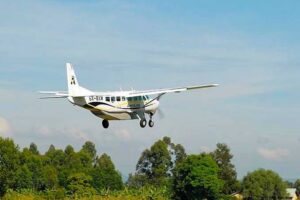
Planning a gorilla trekking safari in Uganda involves an important decision: should you fly to Bwindi Impenetrable National Park or travel by road?
Both options can lead to an unforgettable encounter with Uganda’s endangered mountain gorillas, but they offer different advantages in terms of travel time, cost, comfort and the overall safari experience.
A fly-in safari to Bwindi is ideal for travelers who want to minimize road travel and make the most of a short holiday. A driving safari to Bwindi is often better for travelers who prefer a road adventure, want to explore Uganda’s countryside or plan to combine gorilla trekking with other national parks.
At Mambo Gorilla Safaris Uganda, we help travelers compare these options and choose a route that matches their travel dates, budget, accommodation preferences and gorilla trekking plans.
Quick Answer: Should You Fly or Drive to Bwindi?
Choose a fly-in safari if you have limited time, prefer a quicker transfer or want a more comfortable journey to the gorilla trekking region.
Choose a driving safari if you want a more budget-conscious itinerary, enjoy scenic road travel or plan to visit destinations such as Queen Elizabeth National Park along the way.
Neither option is universally better. The right choice depends on your priorities.
1. What Is a Fly-In Gorilla Safari to Bwindi?
A fly-in gorilla safari involves taking a domestic flight from Entebbe International Airport or the Kajjansi area near Kampala to an airstrip serving your chosen part of Bwindi.
After landing, a safari vehicle transfers you to your lodge or the appropriate trekking area.
The Uganda Wildlife Authority identifies Kihihi and Kisoro as airstrips serving different approaches to Bwindi. The most suitable airstrip depends on your gorilla trekking sector and accommodation. A road transfer is still required after landing.
How does a fly-in safari work?
A typical itinerary follows these steps:
- Arrive at the departure airport or airfield at the time specified by your airline.
- Take your scheduled or charter flight to the appropriate airstrip.
- Meet your safari driver for the onward road transfer.
- Check into your lodge and prepare for the gorilla trekking briefing the following day.
- Trek the gorillas and continue with your planned safari or return journey.
Flights are subject to schedules, weather, aircraft operations and availability, so the itinerary should be confirmed before booking.
Advantages of flying to Bwindi
You save travel time. A flight can replace a long road journey with a much shorter time in the air, although airport procedures and the onward transfer must also be considered.
You may arrive less tired. Reducing hours on the road can help you settle into your lodge before trekking.
You can make a short safari more practical. Flying is especially useful when you have only two or three days for a gorilla experience.
You can enjoy aerial scenery. The journey may provide views of Uganda’s landscapes, depending on the route and conditions.
Disadvantages of a fly-in safari
Flying generally costs more than traveling by road. You also need to coordinate flights, ground transfers and lodge check-in times.
Small aircraft often have strict baggage limits, and excess luggage may not be accepted. Confirm the applicable weight, dimensions and luggage policy directly with the operator before packing.
Flight schedules may also limit your flexibility, and bad weather or operational changes can affect departure times.
2. What Is a Driving Safari to Bwindi?
A driving safari involves traveling to Bwindi in a safari vehicle, usually with a professional driver-guide.
Most road journeys from Kampala or Entebbe take a substantial part of the day. The exact duration depends on your starting point, chosen trekking sector, traffic, road conditions and stops along the way.
The journey can take you through changing landscapes, including towns, farming communities, rolling hills and the highlands of southwestern Uganda.
Advantages of driving to Bwindi
It can be more economical. For some itineraries, especially groups sharing a vehicle, driving may cost less than buying several flight seats.
You enjoy Uganda’s countryside. Road travel offers opportunities to see landscapes and communities that you would otherwise fly over.
You have greater flexibility for stops. Depending on the route and schedule, you can arrange breaks for meals, photographs and suitable attractions.
You can combine destinations. A driving safari is practical for itineraries linking Bwindi with Queen Elizabeth National Park, Lake Bunyonyi, Kibale Forest or other destinations.
Luggage is often easier to manage. A road vehicle may accommodate more luggage than a small aircraft, although capacity depends on the vehicle and passenger numbers.
Disadvantages of driving to Bwindi
The journey can be long and tiring, especially for travelers arriving after an international flight.
Road conditions vary, and the final approaches to some lodges or trekking areas can involve winding, unpaved roads. A suitable vehicle, often a four-wheel-drive safari vehicle, is recommended.
Travelers should avoid scheduling a long road transfer immediately before an important activity without allowing sufficient rest.
3. Fly-In vs Driving Safari to Bwindi: Key Differences
| Feature | Fly-in safari | Driving safari |
|---|---|---|
| Travel time | Usually much shorter for the main transfer | Often takes most of a day from Kampala or Entebbe |
| Cost | Generally higher | Often more economical, especially for shared vehicles |
| Comfort | Reduces time spent on the road | More time seated in a vehicle |
| Scenery | Aerial views, depending on route | Countryside, towns and highland landscapes |
| Luggage | Aircraft weight and size restrictions apply | Depends on vehicle capacity |
| Flexibility | Depends on flight schedules | More flexibility for planned road stops |
| Multi-park trips | Useful for distant transfers | Useful for connecting nearby destinations |
| Best for | Short trips and travelers prioritizing time | Longer itineraries and travelers who enjoy road travel |
Important: Total journey time includes check-in, waiting, baggage handling and the transfer from the airstrip to your lodge. Compare complete door-to-door arrangements rather than flight time alone.
4. How Long Does It Take to Reach Bwindi by Air or Road?
Travel time depends on your departure point and the part of Bwindi you are visiting.
By air
The flight to a nearby airstrip is relatively short compared with the road journey. Scheduled flights to Kihihi or Kisoro may take around an hour or slightly longer, depending on the service and route.
After landing, allow additional time for the road transfer to your lodge. Transfer times vary according to the airstrip, trekking sector, accommodation location and road conditions.
By road
A road transfer from Kampala or Entebbe generally takes most of a day, with journey times often around eight to ten hours or more depending on the destination and conditions.
A journey to Buhoma may follow a different route from one to Rushaga, Nkuringo or Ruhija. Do not assume every Bwindi lodge has the same driving time.
If you are arriving internationally, consider an overnight stay near Entebbe before a road transfer rather than starting a long journey immediately after a tiring flight.
For official park access information, see the Uganda Wildlife Authority’s Bwindi National Park guide.
5. Which Airstrip Should You Use for Bwindi Gorilla Trekking?
Choosing the right airstrip is important because Bwindi has several trekking sectors spread across a large, mountainous area.
Kihihi Airstrip
Kihihi commonly serves travelers heading to the northern parts of the Bwindi region, including Buhoma and some lodges serving Ruhija, depending on the exact location.
A ground transfer is needed after landing, and the distance varies between accommodation and trailhead.
Kisoro Airstrip
Kisoro is commonly used for access to the southern parts of Bwindi, including Rushaga and Nkuringo, as well as the wider Kisoro area.
The road transfer involves mountainous terrain, and actual journey times depend on your lodge and conditions.
How do you choose the correct airstrip?
Before reserving a flight, provide your safari planner with:
- Your confirmed gorilla trekking sector
- Your lodge name
- Your trekking date
- Your arrival and departure details
- Your luggage requirements
Your flight and ground transfer should be coordinated with your accommodation and gorilla permit arrangements.
6. Which Option Is Better for a Two-Day Gorilla Safari?
For a two-day gorilla safari, flying is often the more practical option because it reduces the time spent traveling between Entebbe and southwestern Uganda.
A possible itinerary is:
Day 1: Fly to Bwindi
Take a scheduled or charter flight to the appropriate airstrip. Meet your driver, transfer to your lodge and prepare for the trek.
Day 2: Gorilla Trekking and Departure
After breakfast, attend the gorilla trekking briefing and join your assigned trek. Return to the lodge or airstrip according to your confirmed itinerary.
However, a same-day return flight after trekking should not be assumed to be possible. Trek duration can vary, and the return journey depends on flight schedules and transfer times. An overnight stay after trekking may be necessary.
For travelers who prefer to drive, a two-day itinerary can be very rushed. The road transfer takes considerable time, so allowing extra days is generally more comfortable.
7. Which Option Is Better for a Three-Day Gorilla Safari?
Both options can work for a three-day gorilla safari, depending on your priorities.
Fly-in option
- Day 1: Fly to the Bwindi region and transfer to your lodge.
- Day 2: Gorilla trekking.
- Day 3: Return by air or continue with a pre-arranged itinerary.
This option maximizes time at the destination and reduces the amount of time spent on the road.
Driving option
- Day 1: Drive from Kampala or Entebbe toward Bwindi, allowing time for breaks and arrival.
- Day 2: Gorilla trekking.
- Day 3: Begin the return journey or continue to another destination if the schedule allows.
A three-day driving safari can be demanding because the arrival and departure days involve long transfers. Consider a longer itinerary if you want a more relaxed pace.
Explore Mambo Gorilla Safaris Uganda’s 3 Days Bwindi Gorilla Trekking Tour for an example of a short gorilla-focused trip.
8. Which Option Is Better for a Luxury Gorilla Safari?
A fly-in safari is often attractive for luxury travelers because it reduces road travel and allows more time at the lodge and destination.
It can be combined with comfortable accommodation, private ground transfers and a carefully arranged trekking itinerary.
However, a luxury road safari can also be rewarding. Travelers can enjoy private transport, scenic stops, comfortable overnight accommodation and a flexible route.
The best choice depends on whether your priority is minimizing travel time or enjoying the journey through Uganda.
9. Which Option Is Better for Families and Older Travelers?
Flying may be preferable for travelers who find long road journeys tiring, including some older travelers and families with limited time.
However, a fly-in safari does not remove the physical demands of gorilla trekking itself. The trek may involve steep slopes, mud, uneven ground and several hours of walking.
Families should check airline policies for children, baggage limits and lodge suitability. Older travelers should discuss their mobility needs with the safari planner and ask about available trekking support.
For either option, allow enough time to rest before the trek and avoid an itinerary that leaves you exhausted before the main activity.
10. Can You Combine Bwindi With Other National Parks?
Yes. Bwindi can be combined with several other Ugandan destinations, and your transport choice should reflect the full itinerary.
Bwindi and Queen Elizabeth National Park
This combination is ideal for travelers who want mountain gorillas and savannah wildlife.
A road safari can connect Bwindi with Queen Elizabeth National Park, including the Ishasha sector when appropriate for your route. Depending on the itinerary, you may enjoy game drives and a boat cruise on the Kazinga Channel.
Bwindi and Kibale Forest
Kibale is a major destination for chimpanzee tracking. Combining Kibale with Bwindi gives travelers the opportunity to experience two of Uganda’s most famous primate destinations.
Road transfers can be lengthy, so plan enough days for both activities.
Bwindi and Lake Bunyonyi
Lake Bunyonyi is a popular scenic extension in southwestern Uganda. It can provide a relaxing contrast to forest trekking and is often included in longer road itineraries.
Should you fly one way and drive the other?
A hybrid safari can be a useful compromise. You might fly to Bwindi to save time and return by road through another destination, or drive into southwestern Uganda and fly back if the itinerary and flight schedules permit.
The route should be designed around your confirmed trekking sector, lodge, activities and available days.
11. Is a Fly-In Gorilla Safari More Expensive?
Flying generally adds a transport cost compared with traveling by road, but the total price depends on the complete itinerary.
Factors affecting the cost include:
- Number of travelers
- Scheduled flight or private charter
- One-way or return flights
- Ground transfers
- Luggage requirements
- Accommodation category
- Gorilla permits
- Meals and other activities
- Additional national parks
For couples or small groups with limited time, the extra cost of flying may be worthwhile. For larger groups sharing a safari vehicle, road travel may offer better value.
Request an itemized quotation showing flights, transfers, accommodation, permits and activities separately. This makes it easier to compare equivalent itineraries.
Flight prices and baggage rules can change, so confirm the current details before booking.
12. What Should You Pack for a Fly-In or Driving Gorilla Safari?
Your basic gorilla trekking packing list is similar for both transport options.
Bring:
- Waterproof hiking boots
- Long trousers and long-sleeved shirts
- Waterproof jacket
- Warm clothing for cool mornings
- Gardening gloves if preferred for vegetation
- Reusable water bottle
- Small daypack
- Sunscreen and insect repellent
- Camera and spare batteries
- Personal medication
- Binoculars if you enjoy bird watching
Additional tips for fly-in travelers
Check your airline’s luggage allowance before packing. Use soft-sided luggage if required by the operator and keep essential medication and important documents accessible.
Additional tips for road travelers
Keep items you need during the drive within easy reach, and pack a small day bag separately from your main luggage. Plan breaks and bring any personal items needed for a long journey.
13. When Should You Book Your Bwindi Safari?
Book your gorilla permit before committing to a fixed itinerary, particularly if you have a specific trekking date or sector in mind.
Once the permit arrangements are confirmed, coordinate your transport, accommodation and any additional activities.
For fly-in safaris, confirm flight availability, departure and arrival times, luggage allowances and ground transfers.
For driving safaris, allow realistic travel times and check the route to your lodge. A four-wheel-drive vehicle is recommended for many approaches, particularly when road conditions are difficult.
Why Book Your Bwindi Gorilla Safari With Mambo Gorilla Safaris Uganda?
Choosing between flying and driving is only one part of planning a successful gorilla trekking trip. Your itinerary also needs to match your permit, lodge, trekking sector and available time.
Mambo Gorilla Safaris Uganda can help you compare transport options and organize a safari around your preferences.
Your itinerary can include:
- Gorilla trekking in Bwindi Impenetrable National Park
- Domestic flights to a suitable airstrip
- Private road transfers
- Comfortable accommodation
- Queen Elizabeth National Park
- Kibale Forest chimpanzee tracking
- Lake Bunyonyi
- Cultural experiences and scenic stops
Whether you prefer a short fly-in gorilla safari or a longer overland journey through Uganda, the aim is to create a practical itinerary that makes the most of your time.
Explore our 3 Days Bwindi Gorilla Trekking Tour or 10 Days Wildlife and Primate Trekking Safari in Uganda.
Frequently Asked Questions About Flying or Driving to Bwindi
Is it better to fly or drive to Bwindi Impenetrable National Park?
Flying is usually best for travelers with limited time who want to reduce road travel. Driving is often better for travelers who want to explore Uganda’s countryside, manage costs or visit multiple destinations by road.
How long does it take to drive to Bwindi from Kampala?
The journey often takes around eight to ten hours or more, depending on the trekking sector, road conditions, traffic and stops. Allow sufficient time rather than relying on a precise estimate.
How long is the flight to Bwindi?
Flights to airstrips serving Bwindi generally take around an hour or slightly longer, depending on the route and service. You must also allow time for airport procedures and the transfer from the airstrip to your lodge.
Which airstrip is best for Bwindi gorilla trekking?
Kihihi commonly serves northern approaches, including Buhoma, while Kisoro commonly serves southern approaches such as Rushaga and Nkuringo. The correct choice depends on your lodge and confirmed trekking sector.
Is flying to Bwindi worth the extra cost?
It can be worthwhile if saving time and reducing road travel are important to you. Travelers on a longer itinerary or those sharing a vehicle may prefer driving.
Can I fly to Bwindi and drive back to Entebbe?
Yes, a one-way flight and one-way road transfer may be possible. The best arrangement depends on flight availability, your schedule and whether you want to visit other destinations along the way.
Does flying make gorilla trekking easier?
Flying reduces the time spent traveling to the region, but it does not make the forest trek itself easier. Trek difficulty depends on the gorillas’ location, terrain, weather and your physical abilities.
Do I need a four-wheel-drive vehicle for Bwindi?
A four-wheel-drive safari vehicle is recommended for many routes, particularly on unpaved or steep roads and in wet conditions. Confirm the appropriate vehicle with your safari operator.
How far in advance should I book a fly-in gorilla safari?
Book as early as practical, especially for popular dates. Confirm the gorilla permit first, then coordinate flights, lodge accommodation and transfers.
Final Verdict: Fly-In or Driving Safari to Bwindi?
Both transport options can lead to an unforgettable gorilla trekking experience.
Choose a fly-in safari if you want to save travel time, have only a few days or prefer to minimize long road journeys.
Choose a driving safari if you enjoy scenic travel, want greater flexibility for road stops or plan to explore other Ugandan destinations along the way.
If you want the benefits of both, consider a hybrid itinerary that combines a flight with a road journey through suitable destinations.
Plan your Bwindi gorilla trekking safari with Mambo Gorilla Safaris Uganda. Share your travel dates, budget, preferred accommodation and trekking sector to receive guidance on the most suitable fly-in or driving option.