Email: info@mambogorillasafarisuganda.com | Call: +256772666331

What to See in Bwindi Impenetrable National Park, Uganda

Bwindi Impenetrable National Park is one of Uganda’s most remarkable wildlife destinations, famous for its endangered mountain gorillas, ancient rainforest, exceptional birdlife and rich cultural heritage. Located in southwestern Uganda, this UNESCO World Heritage Site offers much more than a gorilla trekking experience.
Visitors can explore forest trails, search for rare birds, discover waterfalls, enjoy scenic mountain views and learn about the traditions of communities living around the forest. Whether you are planning your first gorilla trekking safari or looking for a longer nature holiday, Bwindi offers a variety of experiences worth including in your itinerary.
So, what should you see when visiting Bwindi Impenetrable National Park? The highlights include mountain gorillas, forest birds, other wildlife, beautiful rainforest scenery, guided nature walks and community-led cultural experiences.
In this guide, Mambo Gorilla Safaris Uganda explains the main attractions, where to experience them, when to visit and how to plan a rewarding Bwindi safari.
1. Mountain Gorillas: Bwindi’s Most Famous Attraction
The mountain gorilla is the main reason many travellers visit Bwindi Impenetrable National Park. The park protects a significant proportion of the world’s remaining mountain gorillas, making it one of the most important destinations for responsible gorilla tourism.
Seeing a mountain gorilla in its natural habitat is a powerful wildlife experience. During a guided trek, visitors walk through the forest with trained guides and trackers in search of an assigned habituated gorilla family.
Once the gorillas are located, visitors can observe their natural behaviour under the applicable park rules. Depending on the family and the circumstances, you may see gorillas feeding, grooming, resting, moving through vegetation or interacting with other members of their group.
The encounter is different every time because gorillas are wild animals, and their behaviour cannot be guaranteed.
Where can you see mountain gorillas in Bwindi?
Gorilla trekking takes place through four main sectors:
- Buhoma: Located in the northern part of Bwindi, with access to gorilla trekking and additional nature and community activities.
- Ruhija: Located in the eastern part of the park, known for its forest scenery and excellent birdwatching opportunities.
- Rushaga: Located in the southern part of Bwindi, offering gorilla trekking and access to selected gorilla habituation experiences, subject to availability.
- Nkuringo: Located in the southern part of the park, known for challenging terrain and impressive views of the surrounding highlands.
Your permit and trekking arrangements determine where you report for the activity. Choose accommodation near your assigned sector to reduce unnecessary travel on trekking day.
Important: Gorilla trekking permits should be arranged in advance, especially for popular travel dates. Confirm current permit availability, prices, age requirements and rules with the Uganda Wildlife Authority or your authorised safari operator.
2. Rare Birds and Albertine Rift Endemic Species
Bwindi is an outstanding destination for birdwatchers. Its varied elevations, dense vegetation and location within the Albertine Rift support a remarkable range of forest birds, including species that are difficult to find elsewhere.
Birdwatching can be rewarding for experienced birders and visitors who simply enjoy seeing colourful birds in their natural habitat.
Species of interest include:
- African green broadbill.
- Shelley’s crimsonwing.
- African wood owl and other forest owls.
- Ruwenzori batis.
- Various turacos, sunbirds, greenbuls and forest warblers.
These are examples of species that birdwatchers may seek in the wider Bwindi area; sightings depend on the location, season and conditions.
Where is the best place for birdwatching in Bwindi?
Ruhija is especially well known among birdwatchers, with the Mubwindi Swamp trail and bamboo forest area offering opportunities to search for forest specialists. Buhoma and other sectors also have rewarding birding routes.
A knowledgeable local bird guide can help identify species by their calls, plumage and behaviour. Bring binoculars, wear comfortable walking shoes and allow enough time to move quietly through the forest.
If birdwatching is a major reason for your visit, tell your safari operator before booking so that the accommodation and itinerary can be arranged around the most suitable location.
3. Bwindi’s Beautiful Rainforest and Forest Vegetation
The rainforest itself is one of the most impressive things to see in Bwindi Impenetrable National Park.
The forest contains an extraordinary variety of trees, ferns, flowering plants, mosses and other vegetation. Tall trees create a shaded canopy, while vines and dense undergrowth give many trails the feeling of entering a different world.
Moist forest conditions also support colourful fungi, butterflies and numerous small organisms that are easy to overlook when visitors focus only on large animals.
Walking through Bwindi offers a chance to appreciate the ecological importance of this ancient forest. Its vegetation helps support wildlife, protect soils and maintain the natural systems on which the surrounding landscape depends.
Guided forest walks are an excellent option for travellers who want to explore this biodiversity without making gorilla trekking the only activity of their visit.
4. Forest Waterfalls and Scenic Walking Trails
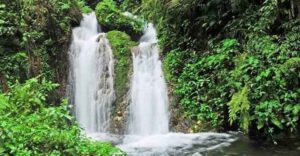
Bwindi’s forest trails reveal more than wildlife. Some walks lead through beautiful vegetation and towards waterfalls, streams and quiet forest viewpoints.
The waterfall and nature walks around the Buhoma area are particularly worth asking about when planning a visit. The exact route, trail condition and walking time should be confirmed locally.
During a guided walk, you may encounter colourful butterflies, forest plants, birds and signs of other wildlife. The sound of running water and the cool forest atmosphere make these trails a rewarding addition to a gorilla trekking safari.
What should you bring on a forest walk?
Pack:
- Comfortable hiking shoes with good grip.
- A light waterproof jacket.
- Drinking water.
- Insect repellent suitable for your needs.
- A camera or binoculars if desired.
- A small daypack.
Some trails can be steep or slippery, particularly after rain. Follow your guide’s instructions and choose a walk that matches your fitness and available time.
5. Scenic Views of the Bwindi Highlands
Bwindi is not just a rainforest; it is also a landscape of steep hills, forested ridges and valleys. The surrounding highlands provide beautiful views, especially where roads and walking trails cross elevated ground.
Depending on the weather and location, visitors may enjoy views across the forest, neighbouring hills and parts of the wider Albertine Rift landscape.
The Nkuringo area is particularly known for its ridge-top scenery, while walks around Ruhija can offer a different perspective on Bwindi’s high-elevation forest.
Cloud, mist and rainfall can change visibility quickly, so clear panoramic views are never guaranteed. Nevertheless, the scenery makes the journey between activities part of the experience.
Travellers who enjoy landscape photography should allow time for scenic stops and protect their equipment against rain and humidity.
6. The Batwa Cultural Experience
A visit to the Batwa community can add an important cultural dimension to your Bwindi safari.
The Batwa are Indigenous people with a longstanding history and cultural connection to the forest. Traditionally, Batwa communities relied on forest resources for their livelihoods. The establishment of the national park and restrictions on access to the forest profoundly changed their way of life.
Community-led cultural experiences offer visitors an opportunity to learn about Batwa history, traditional knowledge, forest-related practices and cultural heritage.
Depending on the programme, activities may include guided walks, storytelling, demonstrations of traditional skills and music or dance performances.
Choose a respectful, locally led experience that explains the community’s history accurately and recognises that Batwa people are living communities with diverse experiences and contemporary needs.
Ask how visitor payments support the people delivering the experience. This helps you understand the local benefits of your visit.
7. Bakiga Culture and Community Village Walks
The communities surrounding Bwindi also offer opportunities to learn about local life and traditions.
Community-led village walks, particularly around areas such as Buhoma and Nkuringo, may introduce visitors to local farming, crafts, food preparation, household activities and community projects.
The Bakiga are among the communities associated with the surrounding highlands. Cultural activities vary by location and organiser, so check what a particular walk includes before booking.
These experiences can help visitors understand the relationship between tourism, local livelihoods and forest conservation.
They also offer a chance to support community enterprises through guided walks, craft purchases and locally organised cultural activities.
Always ask permission before photographing people and respect any requests about privacy or participation.
8. Butterflies, Primates and Other Forest Wildlife
Although mountain gorillas are Bwindi’s most famous residents, the forest supports many other forms of wildlife.
Visitors may encounter monkeys, butterflies, reptiles and a variety of smaller forest animals during guided walks. Birdwatching and nature walks can reveal details of the ecosystem that are easy to miss during a trek focused on finding gorillas.
Other mammals inhabit the wider forest, but sightings are not guaranteed. Dense vegetation and the animals’ natural behaviour can make them difficult to observe.
Do not assume that every animal listed in a park guide will be visible during your visit. A responsible guide will explain what may be encountered and help you recognise signs of wildlife without disturbing it.
For many nature lovers, the variety of life in the forest is a highlight in its own right.
9. Gorilla Habituation Experience
For travellers who want a longer and more detailed encounter with mountain gorillas, Bwindi offers a gorilla habituation experience in designated areas, subject to current availability and permit arrangements.
Habituation involves gradually helping gorillas become accustomed to the controlled presence of people for conservation and research-related purposes.
Unlike standard gorilla trekking, which allows a maximum of one hour with the gorillas once they are located, the habituation experience can allow visitors to spend up to four hours with a designated group under the applicable rules.
This experience is not simply a longer photo session. Visitors must follow specialist guidance and respect the gorillas’ welfare throughout the encounter.
Availability, cost, permitted group size and eligibility may differ from standard trekking. Confirm the latest details before making travel arrangements.
10. The Mubwindi Swamp Trail and Ruhija’s Forest Environment
The Mubwindi Swamp trail in the Ruhija area is a notable choice for visitors interested in birdwatching and the wider forest ecosystem.
The trail passes through changing vegetation and offers opportunities to look for forest birds, including species associated with the Albertine Rift. Its length and terrain make it important to assess the route before setting out.
This is not necessarily the best option for every visitor, especially if you have limited time or prefer a short, easy walk. Ask your guide about current trail conditions, the expected duration and the level of physical effort required.
If you are primarily interested in birding, plan enough time to move slowly and observe the forest carefully.
11. Forest Elephants and Other Elusive Mammals
Bwindi’s forest ecosystem supports mammals beyond mountain gorillas, including forest elephants and several other elusive species.
However, seeing these animals is not guaranteed. Dense vegetation and the natural movements of wildlife mean that many mammals remain hidden during a typical visitor’s stay.
The best approach is to treat sightings as a bonus rather than the main objective of a walk unless your guide has recommended a suitable wildlife-focused activity.
Always maintain a safe distance from wildlife and follow your guide’s instructions. Never attempt to approach or pursue an animal for a photograph.
12. Local Crafts and Community Projects
Craft shops and community enterprises around some of Bwindi’s visitor areas offer opportunities to purchase handmade items and learn about local initiatives.
Depending on what is available, visitors may find baskets, decorative items, textiles and other locally produced crafts.
Buying directly from a local maker or community enterprise can help support livelihoods. Take time to ask about the products and the people who create them.
If you plan to visit a community project, confirm opening times and arrangements with your guide or accommodation provider.
Community activities are best approached as opportunities for respectful learning and exchange rather than as performances that local people must provide on demand.
Which Bwindi Sector Should You Visit?
Bwindi has four main gorilla trekking sectors, and the best choice depends on your permit, interests and itinerary.
| Sector | What to look forward to |
|---|---|
| Buhoma | Gorilla trekking, community walks, forest trails and birdwatching |
| Ruhija | Birdwatching, high-elevation forest and the Mubwindi Swamp trail |
| Rushaga | Gorilla trekking, selected habituation experiences and community activities |
| Nkuringo | Gorilla trekking, challenging terrain, village experiences and scenic ridge views |
These are broad highlights rather than guarantees of particular wildlife sightings or activity availability. Confirm the location of each activity and the transport needed to reach it before choosing accommodation.
If gorilla trekking is your main objective, arrange your permit first and then select a lodge near the designated briefing point.
Best Time to Visit Bwindi Impenetrable National Park
Bwindi can be visited throughout the year, but the weather can affect trail conditions, visibility and the comfort of outdoor activities.
The relatively drier periods are commonly around June to August and December to February. These months are popular with many travellers, so accommodation and permit availability should be checked early.
The wetter periods, often around March to May and September to November, can bring muddy trails and more challenging walking conditions. However, the forest remains beautiful, and birdwatching and other nature experiences may still be rewarding.
There is no guarantee of perfect weather in any month. Choose your dates according to your priorities, allow flexibility in your itinerary and pack suitable rain protection.
How Many Days Should You Spend in Bwindi?
The ideal length of stay depends on your interests and how much time you have available.
Two days: May work for travellers focusing on gorilla trekking, provided the arrival and departure arrangements are realistic.
Three days: Allows more time for gorilla trekking and a community walk, nature walk or other activity, depending on your sector and schedule.
Four days or longer: Offers greater flexibility for gorilla trekking, birdwatching, cultural experiences and additional destinations in southwestern Uganda.
Remember that Bwindi is a large, mountainous park with different trekking sectors. Travel between sectors can take considerable time, so avoid planning several distant activities in a single day.
Sample Three-Day Bwindi Safari Itinerary
Day 1: Travel to Bwindi and Explore the Surroundings
Travel to the accommodation area that matches your trekking sector. After check-in, relax and, if time allows, arrange a community walk or a short guided nature activity.
Enjoy the forest scenery and prepare your trekking equipment for the following morning.
Day 2: Gorilla Trekking in Bwindi
Attend the official briefing and follow your ranger guide into the forest to search for your assigned gorilla family.
The duration of the trek depends on the gorillas’ movements and the conditions on the trail. Once the gorillas are found, observe them according to the current park rules.
Return to your accommodation to rest after the trek.
Day 3: Birdwatching, Nature Walk or Cultural Experience
Choose an activity suited to your interests and the sector where you are staying.
Birdwatchers may prefer a guided forest walk, while travellers interested in cultural heritage may arrange a community-led experience. Alternatively, enjoy the surrounding scenery before continuing to your next destination.
This is a sample itinerary, and the actual schedule should be adjusted to your travel arrangements, activity availability and permit details.
What to Pack for a Visit to Bwindi
The forest environment can be wet, muddy and humid, so suitable clothing and equipment make a difference.
Recommended items include:
- Sturdy hiking boots with good grip.
- Long trousers and a long-sleeved shirt.
- A waterproof jacket.
- A backpack cover or waterproof bags.
- Drinking water.
- Insect repellent.
- Binoculars for birdwatching.
- A camera with protected batteries and memory cards.
- Personal medication and any necessary travel documents.
- Some cash for appropriate local purchases or tips.
Follow your guide’s advice about food and other items during gorilla encounters. Never litter or leave equipment behind in the forest.
Why Visit Bwindi With Mambo Gorilla Safaris Uganda?
Bwindi offers a combination of rare wildlife, rainforest biodiversity, scenic landscapes and meaningful cultural experiences. Planning the right itinerary helps you make the most of your visit without rushing between distant activities.
Mambo Gorilla Safaris Uganda can help you organise a gorilla trekking holiday around your travel dates, budget, accommodation preferences and wider wildlife interests.
Explore these related safari itineraries:
- 3 Days Gorilla Trekking in Bwindi
- 4 Days Bwindi Gorillas and Lake Mburo Safari
- 10 Days of Wildlife and Primate Trekking in Uganda
When requesting a quotation, share your preferred travel dates, number of travellers, accommodation level and activities of interest. This helps you receive an itinerary suited to your needs.
Frequently Asked Questions About What to See in Bwindi Impenetrable National Park
1. What is Bwindi Impenetrable National Park famous for?
Bwindi is best known for mountain gorilla trekking. It is also recognised for its rich biodiversity, rare forest birds, nature trails, rainforest vegetation and cultural experiences offered by communities around the park.
2. Besides gorilla trekking, what can I do in Bwindi?
You can enjoy birdwatching, guided forest walks, waterfall walks where available, scenic hikes, community village walks and Batwa cultural experiences. Activity availability depends on your location and the current arrangements.
3. Can I see chimpanzees in Bwindi?
Bwindi is primarily known for mountain gorillas and other forest wildlife. It is not a standard destination for organised chimpanzee trekking comparable to Kibale Forest National Park. If chimpanzee trekking is important to your trip, consider adding a destination where that activity is officially offered.
4. Where can I see rare birds in Bwindi?
Ruhija, including the Mubwindi Swamp trail and bamboo forest area, is particularly well known for birdwatching. Other sectors also offer birding opportunities. A local bird guide can help you choose a suitable route.
5. Can I visit the Batwa community near Bwindi?
Yes. Community-led Batwa cultural experiences are available through designated programmes around Bwindi. Choose a respectful experience that explains Batwa history and supports local participation.
6. How long does gorilla trekking take?
The total trek can take several hours, depending on the gorilla family’s location, terrain and weather. The time spent with the gorillas during standard trekking is limited to a maximum of one hour once they are found, subject to ranger instructions.
7. Is Bwindi suitable for birdwatching?
Yes. Bwindi is an important birding destination with many forest species, including Albertine Rift endemics. Birdwatchers should bring binoculars and consider hiring a knowledgeable local guide.
8. What is the best time to visit Bwindi?
Bwindi can be visited year-round. Relatively drier periods are often preferred for trekking, but weather is unpredictable. Book permits and accommodation in advance and prepare for rain at any time.
9. How many days do I need in Bwindi?
Two or three days may suit visitors focusing on gorilla trekking, while a longer stay allows more time for birdwatching, nature walks and cultural activities. Your ideal itinerary depends on your interests and travel arrangements.
10. Can I combine Bwindi with other Uganda safari destinations?
Yes. Bwindi can be combined with destinations such as Queen Elizabeth National Park, Lake Mburo National Park or Kibale Forest National Park. Allow enough time for transfers and avoid planning activities that require long journeys on the same day.
Plan Your Bwindi Impenetrable National Park Safari
Bwindi is far more than a destination for seeing mountain gorillas. Its ancient rainforest, rare birds, diverse wildlife, scenic trails and community-led cultural experiences make it a rewarding destination for nature lovers.
For the best experience, choose your trekking sector carefully, arrange permits in advance, pack for wet forest conditions and leave enough time to enjoy the park beyond your gorilla encounter.
Contact Mambo Gorilla Safaris Uganda to plan your Bwindi safari and discover the wildlife, forest scenery and cultural experiences of southwestern Uganda.


