Email: info@mambogorillasafarisuganda.com | Call: +256772666331

Where to See Big Cats on a Rwanda Safari: Lions, Leopards and the Best Wildlife Experiences

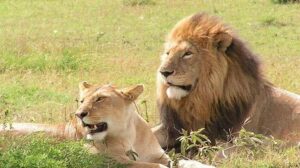
Rwanda is widely known for mountain gorilla trekking, but the country also offers rewarding opportunities to discover Africa’s iconic big cats. For travelers hoping to see lions and leopards on a Rwanda safari, Akagera National Park is the primary destination to include in their itinerary.
Located in eastern Rwanda along the border with Tanzania, Akagera protects a diverse landscape of savannah grasslands, woodland, wetlands and lakes. These habitats support lions, leopards and other wildlife, including elephants, buffaloes, giraffes, zebras and numerous antelope species.
A Rwanda safari can therefore combine big-cat viewing with boat cruises, bird watching, scenic drives and cultural experiences. Travelers with more time can also combine Akagera with mountain gorilla trekking in Volcanoes National Park, creating a varied holiday that includes both savannah wildlife and rainforest primates.
At Mambo Gorilla Safaris Uganda, we help travelers plan personalized Rwanda and East African safaris that bring together wildlife viewing, gorilla trekking and other memorable experiences.
Where Can You See Big Cats on a Rwanda Safari?
Akagera National Park is the best place to start when looking for big cats in Rwanda. It is the country’s only savannah national park and the principal destination for traditional game drives.
The park supports two of Africa’s most sought-after big cats:
- Lions: These powerful predators live in Akagera’s savannah and woodland habitats.
- Leopards: These elusive cats inhabit suitable areas of woodland and other habitats, but their secretive behaviour makes sightings unpredictable.
Akagera is also home to other impressive wildlife, including elephants, rhinoceroses, buffaloes, hippos, crocodiles, giraffes and zebras.
The park’s conservation recovery has helped restore its status as a major wildlife destination. Lions were reintroduced in 2015, followed by black rhinoceroses in 2017, helping restore the Big Five to Rwanda’s safari experience.
For official park information, visit Akagera National Park or Visit Rwanda’s Akagera guide.
1. See Lions in Akagera National Park
Lions are among the most exciting animals to look for on a Rwanda safari. As powerful predators, they play an important role in the savannah ecosystem and are a major attraction for wildlife enthusiasts.
Akagera National Park is the principal place to look for wild lions in Rwanda. The species was reintroduced to the park in 2015 after having disappeared from the area for approximately two decades.
What is the best way to see lions?
A guided game drive is one of the most effective ways to search for lions in Akagera.
Experienced guides use their knowledge of the park, recent wildlife activity and suitable habitats to help visitors search for animals. Early-morning drives can be particularly rewarding because predators may still be active after the cooler nighttime hours.
Depending on conditions, you may see lions resting in grass, moving through woodland or interacting with other members of their pride.
However, lion sightings are never guaranteed. These animals move freely across the park, and their location can change from day to day.
What should you expect during a lion safari?
Your experience may include:
- Searching for lions with a knowledgeable guide
- Observing natural predator behaviour from a safari vehicle
- Photographing lions in their habitat
- Learning about lion conservation in Rwanda
- Looking for other wildlife during the same game drive
For the best experience, allow sufficient time for more than one game drive if your budget and schedule permit.
2. Look for Leopards in Akagera National Park
Leopards are among Africa’s most elusive big cats. Their spotted coats provide excellent camouflage, and they often rest in vegetation or move through the landscape without being easily noticed.
Akagera National Park is Rwanda’s main destination for travelers hoping to encounter a wild leopard.
Unlike lions, which may sometimes be observed in open areas or in groups, leopards are often solitary and difficult to locate.
Where should you look for leopards?
Leopards use a variety of habitats, including woodland, thickets and areas with suitable prey and cover. Their movements are influenced by food availability, disturbance and other environmental factors.
A knowledgeable safari guide can help identify suitable areas to search, based on local experience and recent information.
Night drives, where officially available and properly guided, may provide additional opportunities to search for nocturnal wildlife. Confirm the activity’s availability with park management before booking.
Tips for spotting leopards
- Choose a guide familiar with Akagera’s wildlife.
- Allow enough time for game drives.
- Scan trees, shaded areas and the edges of woodland.
- Carry binoculars and a camera with a suitable zoom lens.
- Keep noise low and follow your guide’s instructions.
- Be patient and avoid expecting a guaranteed sighting.
Seeing a leopard is a privilege rather than a certainty. A safari can still be rewarding even if you do not encounter one.
3. Enjoy Guided Game Drives in Akagera
Game drives are the main way to explore Akagera’s diverse wildlife habitats.
Traveling through the park in a suitable safari vehicle allows you to cover different areas while looking for predators, herbivores and birds.
A guided drive also helps you understand the relationship between wildlife, vegetation, water sources and the wider ecosystem.
Morning game drives
Morning drives can be particularly productive because some animals are active during the cooler hours.
Visitors may encounter lions, elephants, giraffes, zebras, buffaloes, antelopes and many bird species, depending on the route and conditions.
Afternoon game drives
Afternoon drives provide another opportunity to explore the park and observe wildlife as temperatures begin to change.
The scenery can also be excellent for photography, particularly when the light becomes softer later in the day.
Full-day wildlife exploration
If your main goal is to find big cats, consider allowing a full day or multiple drives rather than relying on a brief visit.
The longer you have to explore suitable habitats, the more opportunities you have to encounter different species. Nevertheless, even a longer safari cannot guarantee a lion or leopard sighting.
4. Explore Akagera’s Northern Savannah Plains
Akagera contains several different habitats, and the northern plains are among the areas associated with open savannah wildlife viewing.
These landscapes provide opportunities to search for large mammals, including lions and other predators, as well as herbivores such as zebras, giraffes and antelopes.
The northern part of the park can involve substantial driving, so it is important to plan your route carefully.
Ask your guide or park management about current road conditions, suitable wildlife-viewing areas and how much time you should allow.
Rather than following a fixed route solely because it is popular, a flexible plan based on current conditions can make your visit more enjoyable.
5. Combine Big-Cat Viewing With the Big Five
A major advantage of visiting Akagera is that the park offers more than lions and leopards.
It is Rwanda’s principal Big Five destination, with the potential to encounter:
- Lion
- Leopard
- African elephant
- Rhinoceros
- Cape buffalo
The term Big Five originally referred to five animals considered especially difficult and dangerous to hunt on foot. Today, it is commonly used in wildlife tourism to describe these iconic safari species.
You may also encounter giraffes, zebras, hippos, crocodiles, antelopes and numerous bird species.
Seeing all five Big Five animals during a single visit is possible but not guaranteed. Each species has different habits, habitat preferences and movement patterns.
A well-planned safari should focus on enjoying the complete wildlife experience rather than treating a sighting of every species as a requirement.
6. Take a Boat Cruise on Lake Ihema
Although boat cruises are not specifically a big-cat activity, they provide a valuable addition to an Akagera safari.
Lake Ihema offers opportunities to observe aquatic and wetland wildlife from the water. Depending on conditions, visitors may see hippos, crocodiles, waterbirds and other animals along the shoreline.
The experience provides a contrast to game drives across the savannah.
A boat excursion is particularly worthwhile for travelers interested in photography, bird watching and seeing how wildlife uses the park’s lakes and wetlands.
Confirm cruise departure times, availability and booking requirements with the park before your visit.
7. Consider a Night Game Drive
Some safari operators and park programs offer guided night drives, which provide opportunities to search for nocturnal wildlife.
Depending on availability, conditions and luck, these excursions may reveal animals that are less active or more difficult to observe during daylight.
Night drives can be especially interesting for travelers hoping to learn more about the behaviour of predators and other nocturnal species.
However, a night drive does not guarantee a leopard or lion sighting. Animals remain unpredictable, and all viewing must follow park regulations.
Before booking, confirm whether the activity is available during your travel dates, whether a guide and vehicle are included, and how long the excursion lasts.
8. Photograph Big Cats Responsibly
Akagera offers excellent opportunities for wildlife photography, although conditions vary according to weather, light, vegetation and animal movements.
If photographing lions or leopards is one of your main goals, prepare your equipment before the safari.
Useful items include:
- A camera with a suitable zoom lens
- Spare batteries and memory cards
- Binoculars
- A lens cloth
- A camera bag that protects equipment from dust
- A notebook for recording wildlife observations
Always prioritize safety and the welfare of the animals. Stay inside the vehicle when required, follow your guide’s directions and avoid loud noises or movements intended to attract an animal’s attention.
Responsible photography helps protect wildlife while allowing visitors to enjoy authentic encounters.
Best Time to See Big Cats in Rwanda
Akagera can be visited throughout the year, but weather and vegetation conditions may affect wildlife viewing.
The main drier periods generally occur from June to September and December to February. These months can offer favourable conditions for game drives, although exact conditions vary.
During drier periods, some animals may be easier to locate near water sources, and grass may be less dense in certain areas. This does not mean that every sighting is easier or that wildlife disappears during wetter months.
The wetter periods can bring lush landscapes and excellent birding opportunities, but rain may affect road conditions and visibility.
When choosing your travel dates, consider:
- Your preferred safari length
- Current park and road conditions
- Accommodation availability
- The availability of guided game drives
- Your wider Rwanda itinerary
- Whether you want to combine Akagera with gorilla trekking
For current conditions and booking guidance, consult the official Akagera National Park website.
Suggested 3-Day Big-Cat Safari in Rwanda
Three days can provide a useful introduction to Akagera’s wildlife, with time for multiple game drives and a boat excursion if available.
Day 1: Travel to Akagera National Park
Travel from Kigali toward Akagera National Park.
After arrival and the required entry arrangements, begin a game drive if your schedule permits. Look for the park’s diverse wildlife while enjoying the scenery.
Overnight: Accommodation in or near Akagera, according to your booking.
Day 2: Morning and Afternoon Game Drives
Start with a morning game drive to search for lions, leopards and other wildlife.
Your guide will help you explore suitable habitats based on the conditions and available information.
After a break, enjoy another game drive or a boat cruise on Lake Ihema if available and appropriate for your itinerary.
Overnight: Akagera area.
Day 3: Final Wildlife Experience and Return to Kigali
Enjoy a final morning wildlife activity if time permits, then leave the park and travel back toward Kigali.
This itinerary can be adjusted according to your arrival and departure times, accommodation, road conditions and selected activities.
For travelers whose main priority is big-cat photography, a longer stay may provide more flexibility to search different habitats.
Can You Combine Akagera With Gorilla Trekking in Rwanda?
Yes. Akagera and Volcanoes National Park provide very different wildlife experiences and can be combined in a longer Rwanda safari.
Akagera is known for savannah wildlife, including lions and leopards. Volcanoes National Park is famous for mountain gorilla trekking and golden monkey tracking in the Virunga Mountains.
A combined itinerary might include:
Kigali → Akagera National Park → Volcanoes National Park → Kigali.
This combination allows travelers to experience both classic African game drives and guided primate trekking.
The route should be planned around your permit date, travel time and accommodation. Gorilla trekking permits need to be confirmed for the intended date, and the itinerary should leave enough time to reach the park briefing point.
For further planning, visit Mambo Gorilla Safaris Uganda’s Rwanda safari page.
Can You Combine Rwanda and Uganda for a Big-Cat and Gorilla Safari?
Yes, a cross-border safari can combine Rwanda’s savannah wildlife with Uganda’s primate experiences.
For example, travelers can explore Akagera for lions and leopards, then continue to Uganda for mountain gorilla trekking in Bwindi Impenetrable National Park or Mgahinga Gorilla National Park.
Depending on the length of the trip, additional destinations may include Queen Elizabeth National Park, Kibale Forest or Murchison Falls National Park.
This option is suitable for travelers who want a broader East African experience rather than concentrating on a single national park.
Cross-border travel requires careful coordination of immigration requirements, transportation, permits and accommodation. Confirm the requirements applicable to your nationality and travel dates before booking.
What to Pack for a Big-Cat Safari in Rwanda
For a game-drive safari in Akagera, consider packing:
- Lightweight neutral-coloured clothing
- Comfortable walking shoes
- A sun hat
- Sunscreen
- Insect repellent
- Binoculars
- A camera and zoom lens
- Spare batteries and memory cards
- A reusable water bottle
- A light jacket for cooler mornings
- Personal medication
- A small daypack
A pair of binoculars can be especially useful when viewing leopards or other animals at a distance.
Keep your belongings secure in the vehicle and follow your guide’s instructions about when it is safe to exit.
Responsible Wildlife Tourism in Akagera
Responsible tourism helps conserve wildlife and supports the long-term protection of Akagera’s habitats.
Follow these guidelines during your safari:
- Stay within authorized routes and follow park rules.
- Never attempt to approach, feed or touch wild animals.
- Keep a safe distance from predators and other wildlife.
- Follow your guide’s instructions at all times.
- Avoid excessive noise that may disturb animals.
- Take all rubbish out of the park.
- Choose responsible safari providers who respect conservation rules.
Wild animals must be allowed to behave naturally. A respectful viewing experience is more valuable than getting too close for a photograph.
Why Book Your Rwanda Big-Cat Safari With Mambo Gorilla Safaris Uganda?
Planning a successful wildlife safari involves more than choosing a national park. You need to coordinate transport, accommodation, park entry, game drives and any additional activities.
Mambo Gorilla Safaris Uganda can help you build a customized itinerary based on your travel dates, budget, group size and wildlife interests.
Your safari can be planned around:
- Akagera National Park game drives
- Searching for lions and leopards
- Big Five wildlife viewing
- A boat cruise on Lake Ihema
- Rwanda cultural experiences
- Mountain gorilla trekking
- Golden monkey tracking
- A Rwanda-Uganda cross-border safari
Whether you want a short wildlife getaway or a longer East African adventure, the itinerary can be adapted to your interests and available time.
Explore our Rwanda safari experiences and discuss your preferred travel dates with our team.
Frequently Asked Questions About Big Cats on a Rwanda Safari
Where is the best place to see big cats in Rwanda?
Akagera National Park is the main destination for seeing wild lions and leopards in Rwanda. Guided game drives provide opportunities to search for these predators and other wildlife.
Can I see lions in Rwanda?
Yes. Wild lions live in Akagera National Park, where they were reintroduced in 2015. Sightings are possible but cannot be guaranteed.
Can I see leopards in Rwanda?
Yes. Leopards are found in Akagera National Park. They are elusive and often difficult to spot, so sightings depend on their movements, habitat and other conditions.
What is the best time to see lions and leopards in Akagera?
Akagera can be visited throughout the year. Drier periods may offer favourable game-drive conditions, but the best time for a particular sighting varies. Ask your guide about current conditions and suitable routes.
How many days do I need for a Rwanda big-cat safari?
Two to three days can provide a good introduction to Akagera. Additional days allow more time for game drives, photography, boat excursions and other wildlife experiences.
Can I see the Big Five in Rwanda?
Akagera National Park is Rwanda’s Big Five safari destination. Lions, leopards, elephants, rhinoceroses and buffaloes are present, but seeing every species on one trip is not guaranteed.
Are night game drives available in Akagera?
Night drives may be available through authorized park or safari arrangements. Confirm current availability and booking requirements before travel.
Can I combine a big-cat safari with gorilla trekking?
Yes. You can combine Akagera National Park with Volcanoes National Park for gorilla trekking. A cross-border itinerary can also include Uganda’s gorilla trekking destinations, depending on permits, travel time and immigration requirements.
Is Akagera suitable for first-time safari travelers?
Yes. Akagera is a well-known wildlife destination with game drives, accommodation options and other activities. A guided safari can help first-time visitors understand the park and search for wildlife safely.
Final Thoughts: Where to See Big Cats on a Rwanda Safari
Rwanda offers more than its famous mountain gorillas. For travelers hoping to see lions and leopards, Akagera National Park is the place to prioritize.
Guided game drives provide opportunities to search for these elusive predators while discovering the park’s elephants, buffaloes, giraffes, zebras, wetlands and birdlife.
For a more varied holiday, combine Akagera with a boat cruise, cultural experiences or mountain gorilla trekking in Volcanoes National Park. With realistic expectations and enough time for wildlife viewing, Rwanda can provide a memorable safari experience.
Plan your Rwanda wildlife safari with Mambo Gorilla Safaris Uganda and create an itinerary focused on big cats, the Big Five, gorilla trekking or a wider East African adventure.


